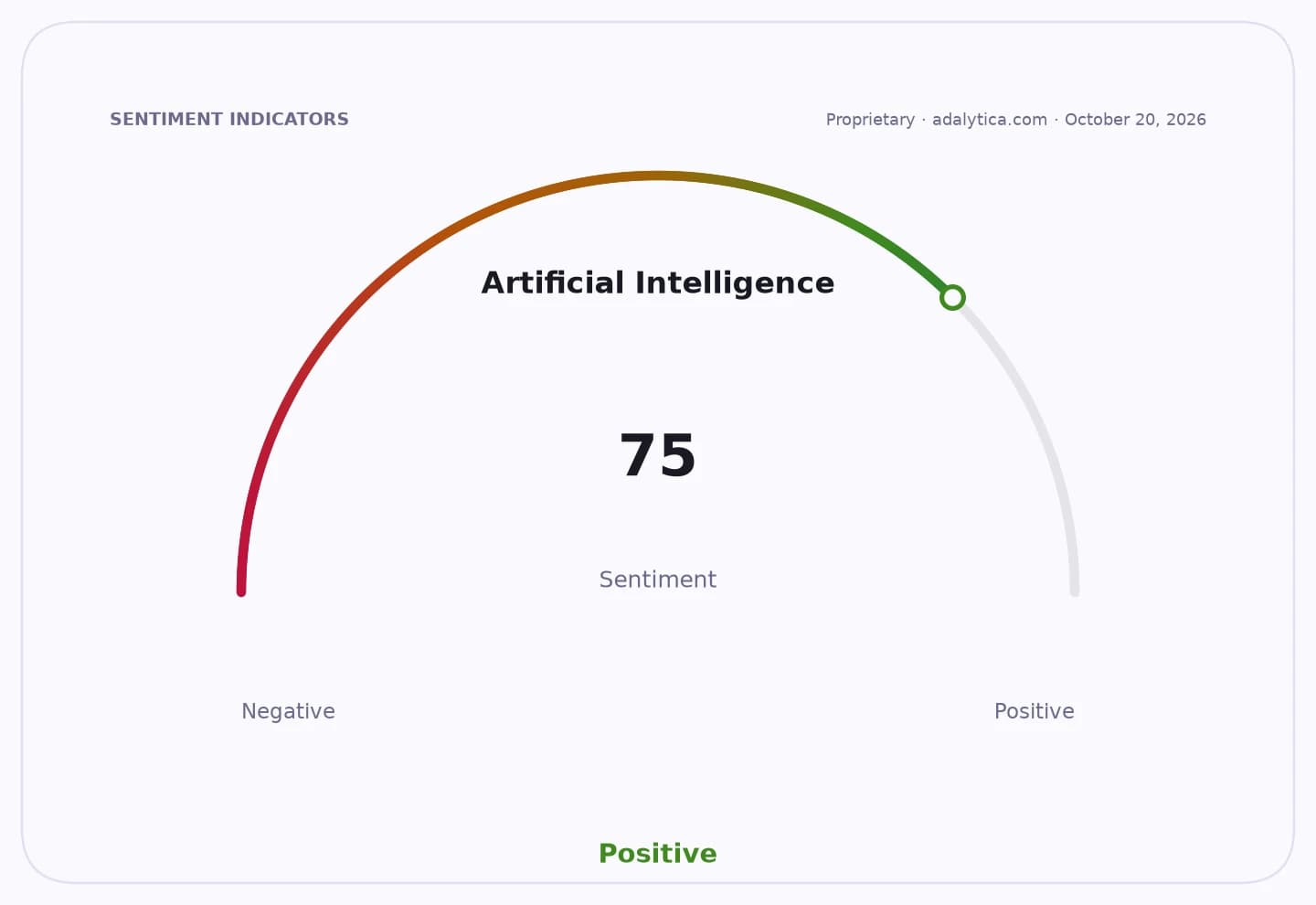
Anthropic is now paying more to borrow than many junk-rated companies, a sharp warning that the AI buildout is moving from a venture-style funding story to a highly leveraged capital market test.
Anthropic debt costs rise above junk bond yields
The startup is set to raise $9 billion from Blackstone at a coupon above 10%, Reuters-equivalent sources said, far higher than the 8.5% it paid just four months ago and well above the roughly 7% yield typical for similarly rated issuers in the ICE BofA BB US high-yield index. That spread matters because it shows investors are no longer funding AI infrastructure on growth hopes alone — they want a much bigger premium for the risk that massive capex may not translate into near-term cash flow.
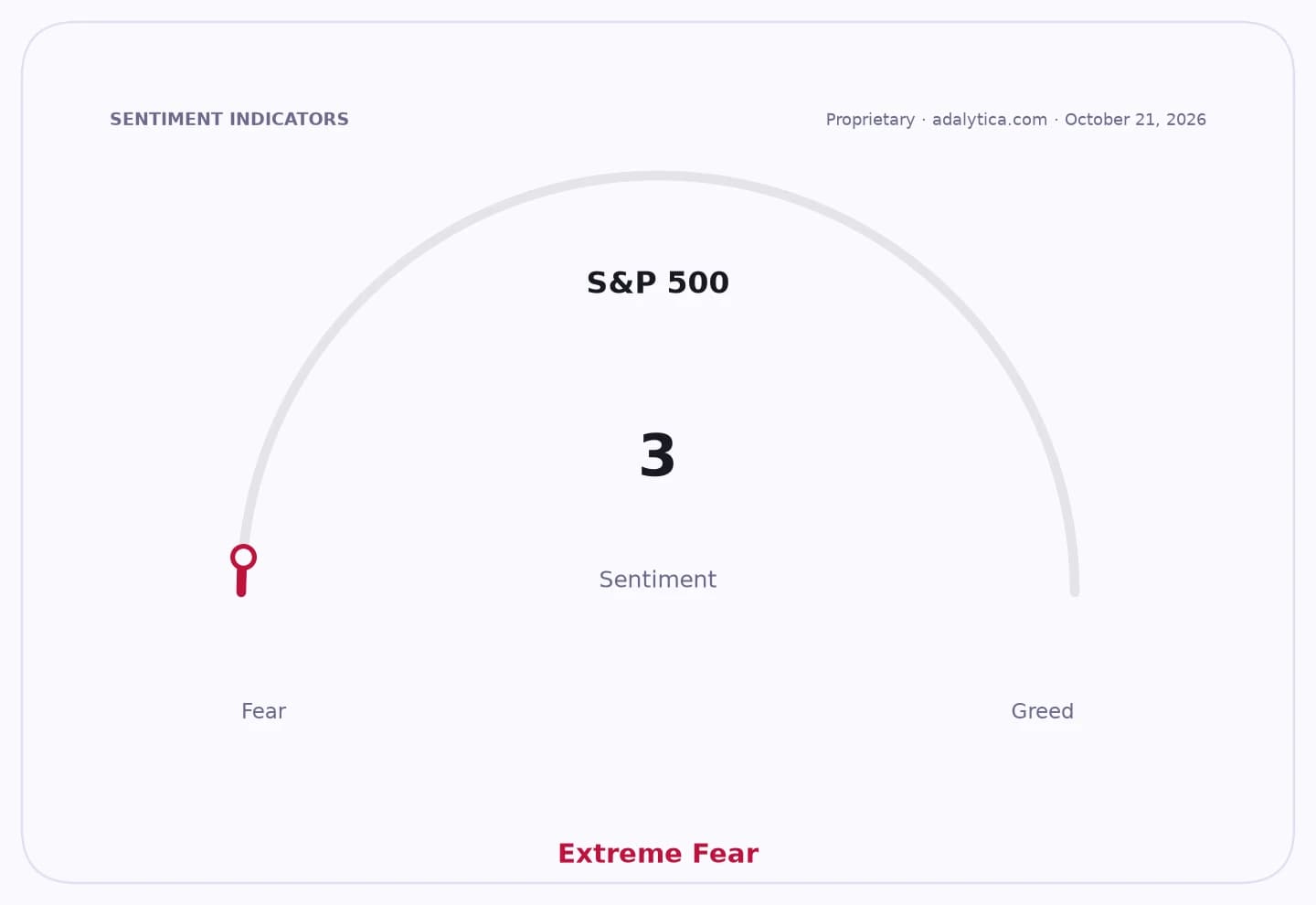
Sentiment IndicatorsⓘProprietary · adalytica.com · October 21, 2026
This is a snapshot — live sentiment, awareness and momentum for 130+ markets update continuously in the dashboard.Open AlphaPulse
This is not a one-off financing. The borrowing is part of Anthropic’s $60 billion “Project North Star,” a plan to secure 1.5 gigawatts of Google TPU computing capacity, one of the largest semiconductor procurement commitments ever attempted by an AI company. In practical terms, the market is pricing the debt on the assumption that AI demand will remain explosive, but also that the route to monetization is uncertain enough to require double-digit compensation.
Blackstone’s economics are likely even richer than the coupon suggests. The firm is buying half of an $18 billion subordinated bond package and is expected to earn a yield above the headline rate once discounts and fees are included. That underscores why private capital is still willing to step in: the AI infrastructure trade remains one of the few places where lenders can still demand equity-like returns on debt-like exposure.
For investors, the message is bigger than Anthropic. The cost of capital is rising across the AI ecosystem just as the industry is trying to finance chips, data centers and power-hungry compute at unprecedented scale. If debt markets begin to push required returns toward 10% and beyond, weaker players will face a brutal choice between dilutive equity, slower expansion or missed capacity targets. That dynamic favors the deepest-pocketed hyperscalers, chip suppliers and infrastructure owners — and it punishes everyone trying to compete purely on speed.
The stock and credit read-through is straightforward. Companies that can self-fund their AI arms race, or that sell the picks-and-shovels — from chipmakers to power, cooling and networking vendors — should keep taking share. More leveraged AI builders, by contrast, are starting to look like the most vulnerable names in the sector as financing costs rise and investors demand proof that hypergrowth can become durable margin.
The broader market is already flashing caution. Debt stress in the AI data-center complex has intensified as investors reassess whether the sector’s spending binge can be supported by future earnings rather than perpetual refinancing. Anthropic’s loan is the clearest evidence yet that the market is no longer treating AI capex as cheap optionality. It is pricing it as credit risk.
For investors, that creates an asymmetric setup: own the companies selling compute, power and infrastructure into the boom, and be far more selective on the AI builders funding growth with debt. The next phase of the AI trade will be won not by the biggest spenders, but by the strongest balance sheets.
| Entity | Gains | Losses |
|---|---|---|
| Blackstone | ▲High-yield loan returns | ▼Refinancing risk |
| Anthropic | ▲GPU/TPU capacity | ▼Higher borrowing costs |
| Google/TPU suppliers | ▲Multi-year demand | ▼Capital intensity pressure |
| Leveraged AI borrowers | ▲Access to capital | ▼Rising funding costs |