CoreWeave’s latest slide looks less like a broken business than a market forced to price its balance sheet before it prices its backlog.
CoreWeave Falls as Credit Markets Tighten
The stock fell 15.5% as credit markets turned hostile, with higher yields and wider spreads hitting the debt-heavy AI infrastructure trade. That matters because CoreWeave is not a software multiple story; it is a capital-intensive capacity story, and when financing costs jump, the market immediately questions whether growth can outrun leverage. But the selloff has also created the kind of gap that often appears when investors confuse funding volatility with demand destruction.
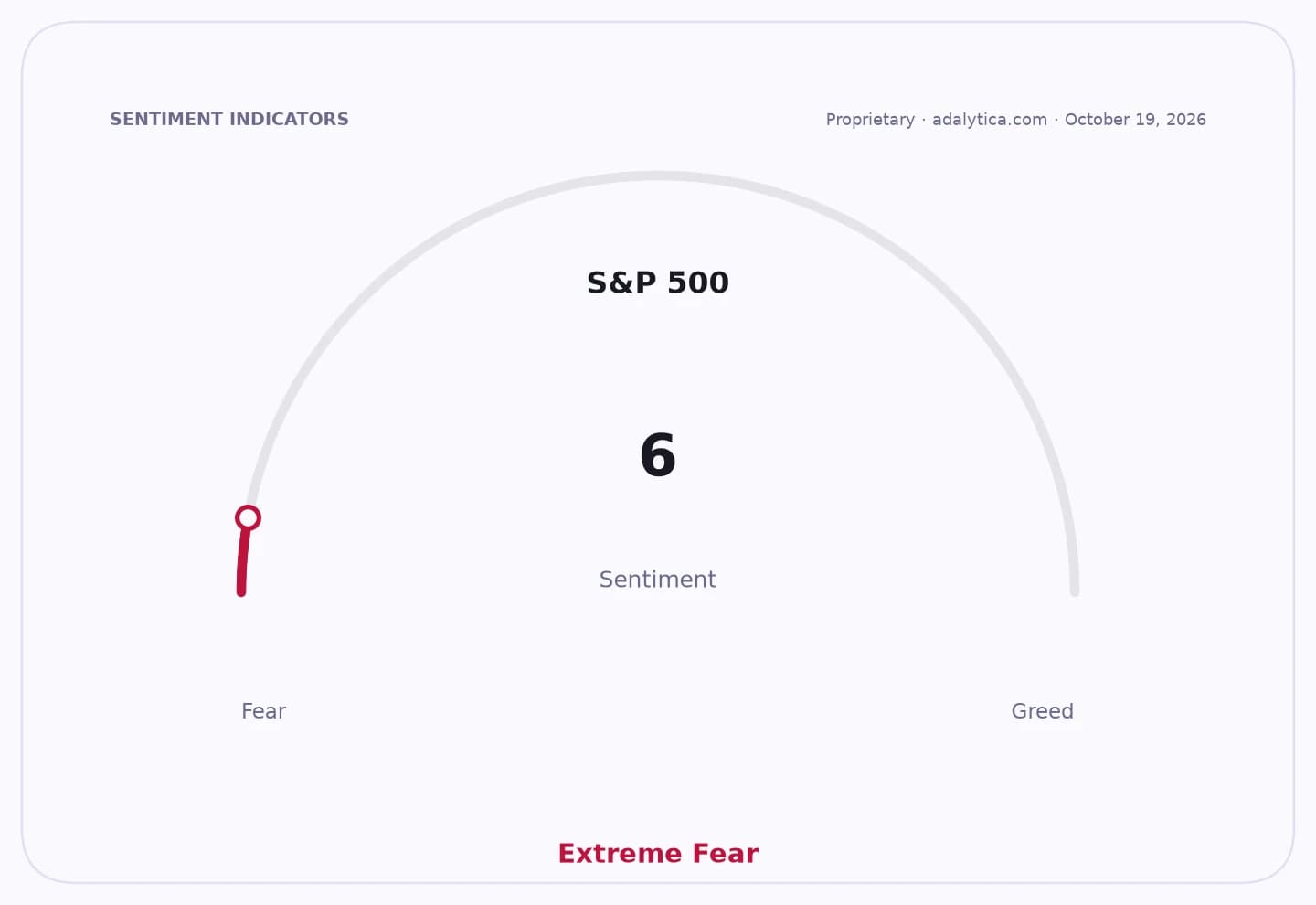
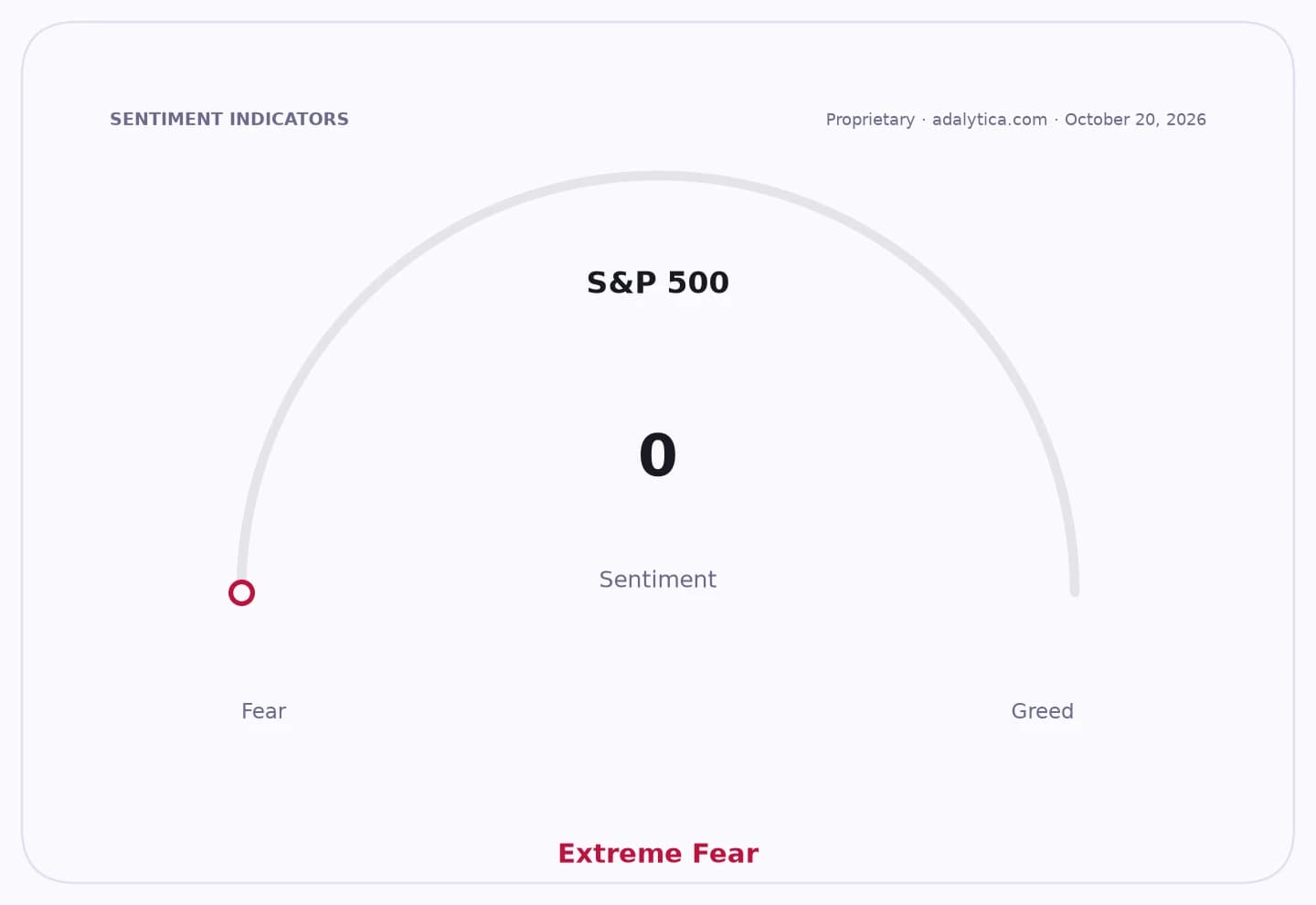
Sentiment IndicatorsⓘProprietary · adalytica.com · October 20, 2026
This is a snapshot — live sentiment, awareness and momentum for 130+ markets update continuously in the dashboard.Open AlphaPulse
That distinction is crucial. CoreWeave still has more than $100 billion in revenue backlog, a large installed base of GPU demand and a strategic relationship with Nvidia, which owns about 10% of the company. In other words, the demand engine has not stalled — the market is simply re-rating the cost of feeding it. At around 1.3 times forward sales, the stock is now being valued as if financing risk is the core business, rather than a temporary constraint on a business that sits on the front line of the AI buildout.
This is why the bond market matters economically. Neoclouds and AI infrastructure providers have been using debt to race to secure chips, power and data-center capacity before the next wave of AI demand arrives. When bonds wobble, that model comes under pressure first through refinancing costs, then through investor psychology, and finally through access to capital. For the broader market, the message is bigger than CoreWeave: AI capex is becoming a financing story as much as a technology story, and that shifts value toward those with the strongest balance sheets, the deepest strategic partners and the most durable customer demand.
DGS10 vs BAMLH0A0HYM2 — macro contextadalytica.com
Explore this data interactively — full history, time series and cross-market comparisons.Open AlphaPulse
For investors, the selloff creates a sharper divide. If you believe AI infrastructure spend remains in the early innings, then the correct response is not to abandon the trade, but to separate the toll-road operators from the weakest balance sheets. Nvidia stands out as the obvious strategic backstop if credit markets tighten further, and CoreWeave’s position inside the AI supply chain gives it an option-like payoff if demand keeps compounding. The market may be right to demand a higher risk premium, but that is not the same as saying the equity case is broken.
The next catalyst is straightforward: if bond volatility stabilizes, the stock can rebound fast because the underlying scarcity value of GPU capacity has not gone away. If spreads widen again, the winners will be the companies with access to capital and strategic sponsorship, not necessarily the ones with the fastest growth headlines. For now, the market is pricing fear, not terminal decline — and that is exactly where long-term AI investors should start looking for asymmetric upside.
| Entity | Gains | Losses |
|---|---|---|
| CoreWeave bulls | ▲Lower entry valuation | ▼Near-term volatility |
| CoreWeave bears | ▲Mark-to-market gains | ▼Risk of demand rebound |
| Nvidia | ▲Strategic influence | ▼Possible financing exposure |
| Debt-heavy neocloud rivals | ▲Less market trust | ▼Higher funding costs |