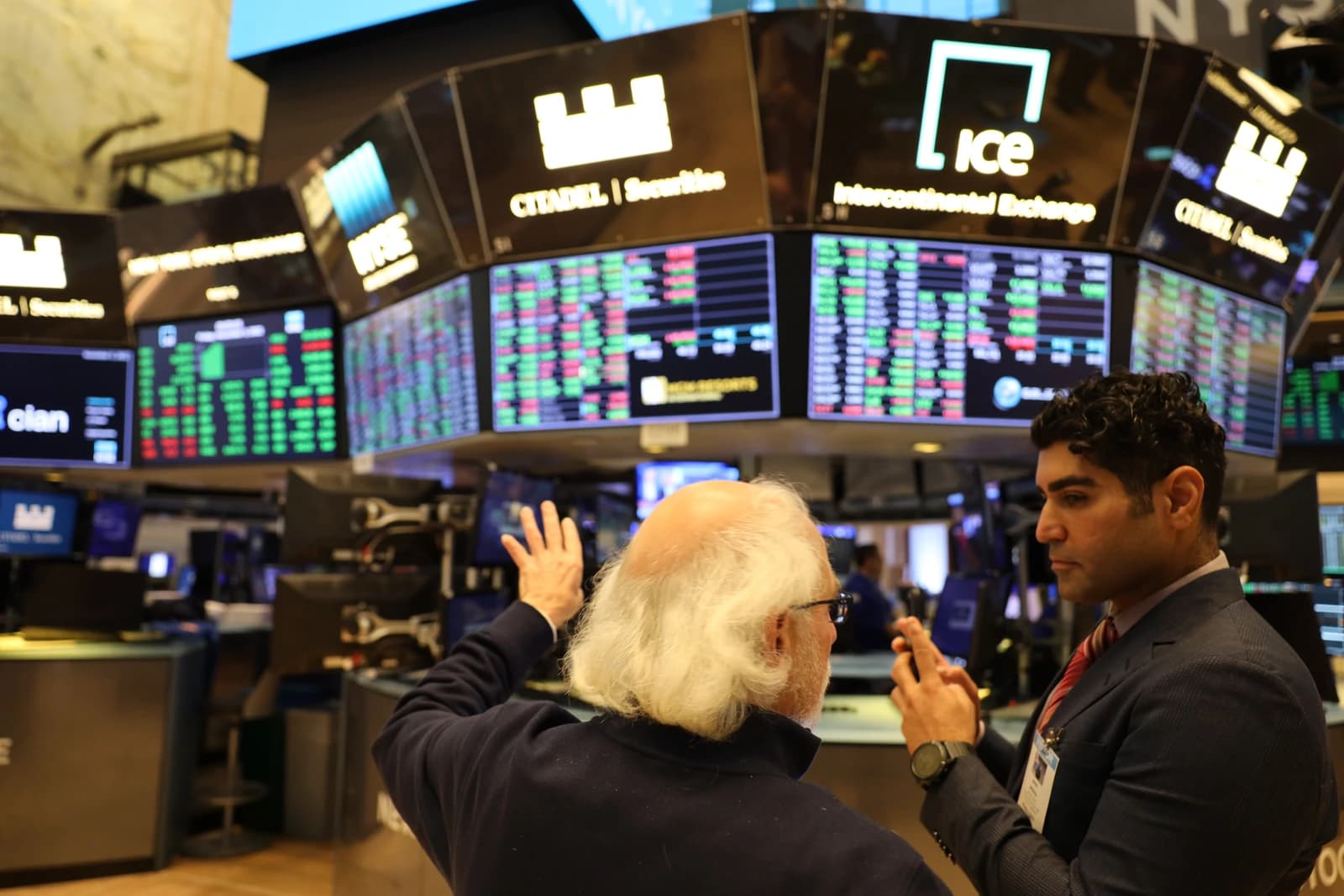
US stocks are climbing to fresh highs even as the market’s risk profile starts to look uncomfortably like the run-up to previous blowups, with leverage, frenetic IPO activity and an AI-fueled concentration in mega-cap tech reviving fears of an “everything bubble.”
US Stocks Near Highs as Leverage and AI Froth Grow
That matters because this is not just a valuation story. It is a capital-structure story. The market is being pushed higher by borrowed money, short-dated options and increasingly speculative flows at the same time as investors are crowding into a narrow set of AI-linked winners. When the same trade is financed more aggressively, the downside tends to be more violent when the narrative cracks.
Sentiment IndicatorsⓘProprietary · adalytica.com · October 4, 2026
This is a snapshot — live sentiment, awareness and momentum for 130+ markets update continuously in the dashboard.Open AlphaPulse

The S&P 500 rose to 769.64 on Oct. 2, holding above its 50-day moving average of 762.23 and well above its 200-day average of 717.04, while the Nasdaq-100 climbed to 749.58, leaving it stretched above both its 50-day and 200-day averages. Those levels show momentum remains intact. They also show how little room is left for disappointment if earnings, rates or AI spending fail to justify the enthusiasm.
The warning signs are piling up in ways that echo 2021 more than 2023. Margin debt tied to stock buying has surged to records, while hedge fund leverage is also at historic highs. At the same time, the explosion in very short-dated options trading has amplified intraday moves and turned market direction into a reflexive game of positioning. For investors, that creates a market that can rise faster than fundamentals, but can also unravel faster than models anticipate.
DGS10 vs BAMLH0A0HYM2 — macro contextadalytica.com
Explore this data interactively — full history, time series and cross-market comparisons.Open AlphaPulse

The retail crowd is still very much in the game. That matters because broad participation usually extends rallies, but it also increases fragility when speculation becomes the main use case. Prediction markets are booming, Robinhood’s event-contract revenue has overtaken its crypto business, and the line between investing and wagering is getting thinner by the month. The economic effect is to keep risk appetite elevated even as financing costs remain far above the zero-rate era.
The IPO window is reopening in a way that should make long-term investors cautious, not celebratory. SpaceX has already pulled off one of the biggest fundraises in the market, Anthropic is preparing for a possible listing at a rich valuation, and SPACs are making a comeback despite the wreckage left by the last cycle. That is how bubbles mature: capital first chases growth, then scarcity, then narrative, and finally the fear of missing out.
The biggest difference this time is artificial intelligence. The market’s leadership has narrowed to a handful of giant tech names, and the AI buildout is increasingly being financed with debt. Reuters cited more than $3 trillion of total debt, on and off balance sheet, across US tech giants and AI developers. That is the kind of number that turns a theme into a systemic trade. If AI revenues keep compounding, the capital spending looks prescient. If growth slows, the same leverage turns into a transmission channel for repricing across semiconductors, cloud providers, data-center suppliers and the broader equity market.
That is why investors should stop thinking about this as a simple “bubble call” and start thinking about second-order exposure. The obvious beneficiaries of AI capex are not the only place to look. The better asymmetric setup may be in the toll roads around the boom: power infrastructure, grid equipment, data-center real estate, semiconductor manufacturing tools, and select software and networking names that collect fees from every incremental watt and workload. Those are the picks-and-shovels winners if the buildout continues, but they are also the first to be hit if customers push out spending.
For now, the market is still rewarding exuberance. But the combination of record leverage, IPO froth and AI concentration means the next drawdown could be driven less by a recession than by a reset in expectations. I believe investors should keep exposure to the AI infrastructure theme, but favor the companies with real cash flow, pricing power and indispensable infrastructure over the most narrative-driven names. In bubbles, that is how you stay invested without being the exit liquidity.
| Entity | Gains | Losses |
|---|---|---|
| AI infrastructure firms | ▲Rising capex demand | ▼Any slowdown in AI spending |
| Mega-cap tech leaders | ▲Index leadership, valuation support | ▼Higher scrutiny on returns |
| IPO investors/underwriters | ▲Rich pricing, deal flow | ▼Repricing if sentiment sours |
| Retail/options traders | ▲Leverage-fueled upside | ▼Sharp losses in a pullback |