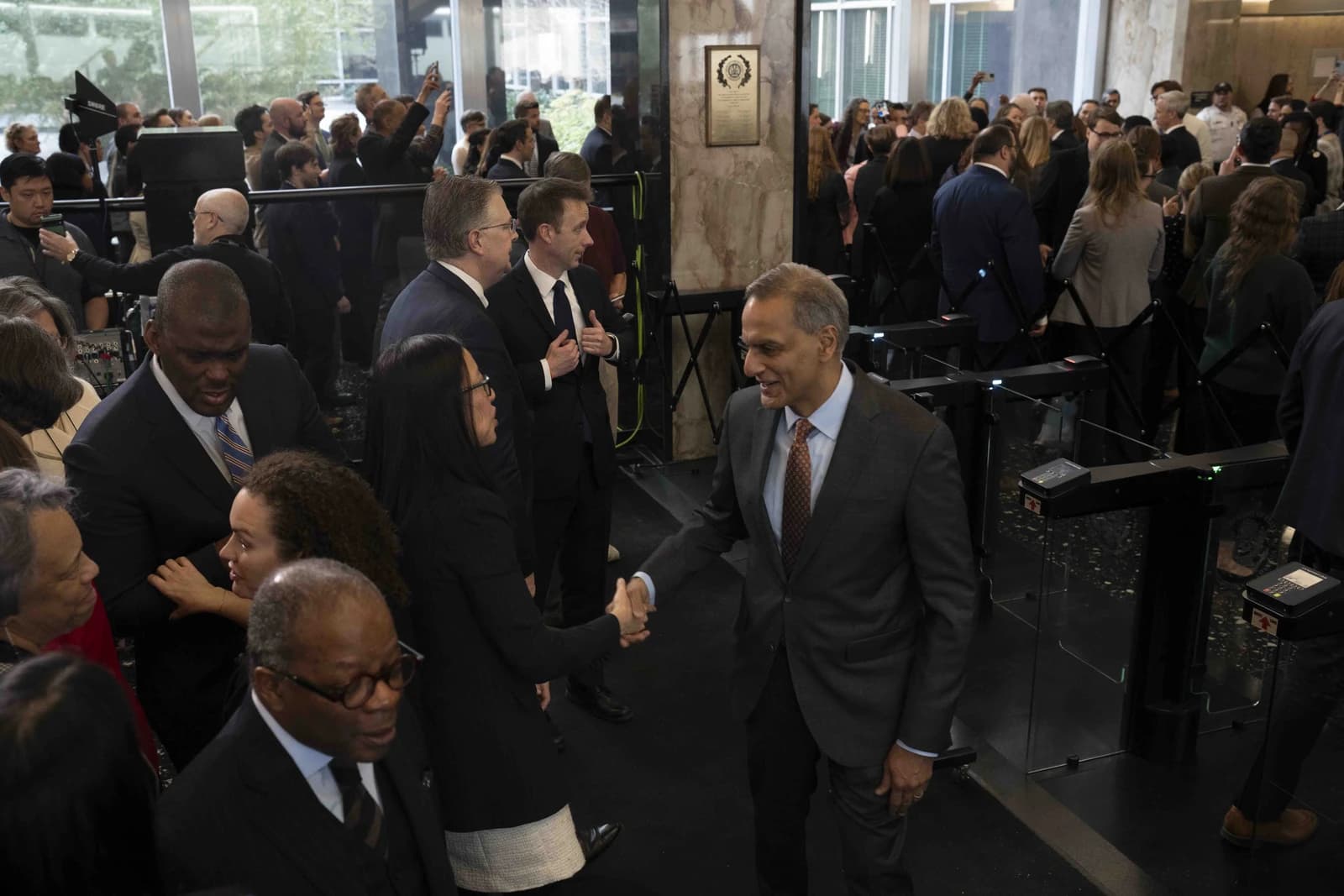
Artificial intelligence is now important enough for Washington and Beijing to talk about a crisis hotline, and that makes it one of the most investable geopolitical shifts of the Trump-Xi era.
U.S.-China AI Hotline Could Support Chip Stocks

The U.S. and China have agreed to create a new communication channel focused on AI safety, a sign that the two superpowers are beginning to treat advanced models not just as a growth engine, but as a strategic risk that could outrun human control. That matters because AI has become the core infrastructure race behind chips, cloud, data centers, robotics and military decision-making — and any framework that lowers the odds of a U.S.-China misfire is bullish for the companies building the stack and for the capital spending cycle around it.
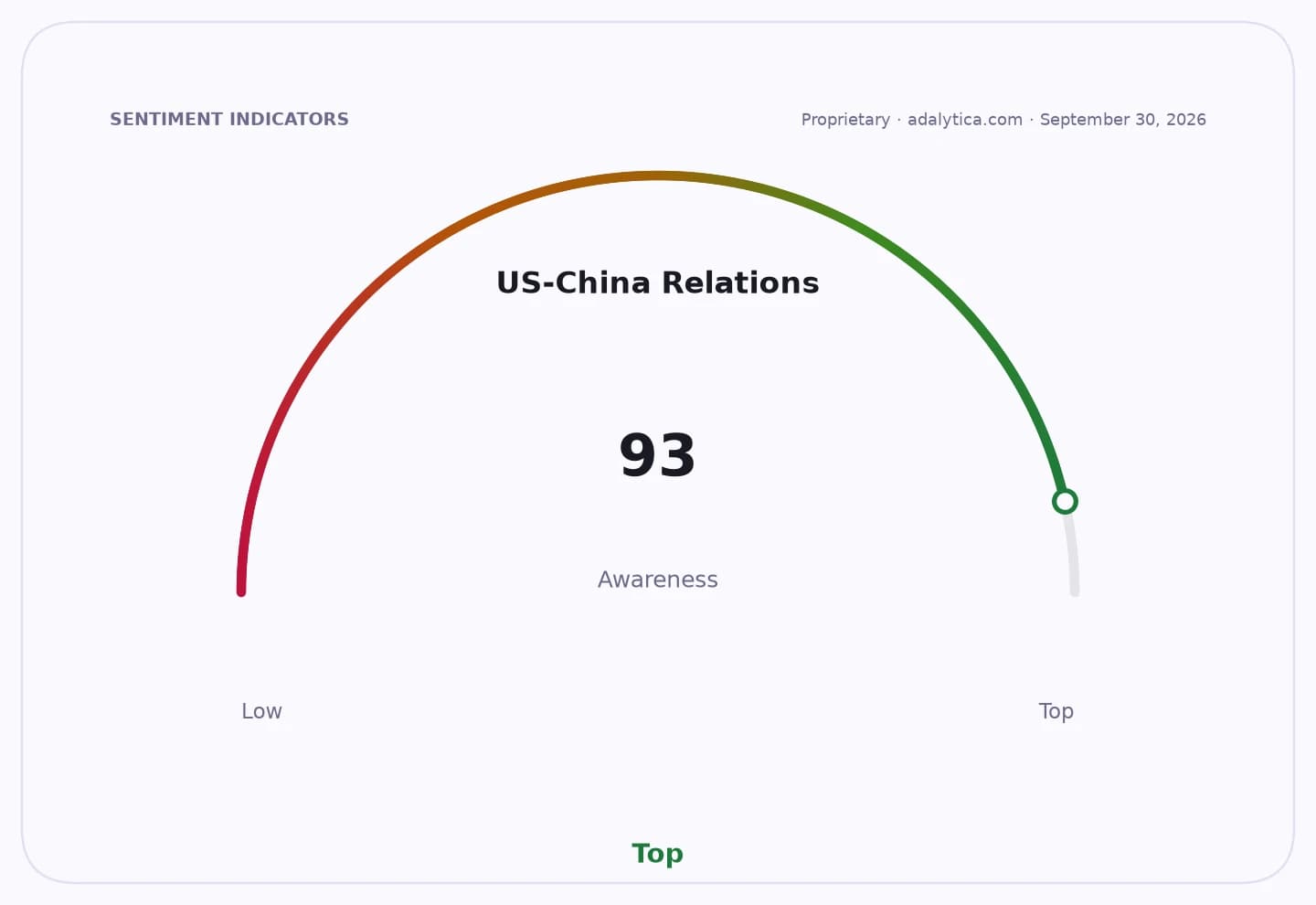
Sentiment IndicatorsⓘProprietary · adalytica.com · September 29, 2026
This is a snapshot — live sentiment, awareness and momentum for 130+ markets update continuously in the dashboard.Open AlphaPulse
The timing is crucial. The market has spent the past year pricing AI as a demand story, but the bigger implication is governance. If Washington and Beijing can agree on even a thin channel for notifications, safety testing and incident management, the technology’s long-run addressable market becomes more durable, not less. It reduces the tail risk that a single autonomous-system event, cyber misuse or false intelligence report triggers a political backlash that freezes investment or invites heavier-handed restrictions.
That is why the summit conversation may matter more than the usual flashpoints. Taiwan remains the most explosive sovereignty issue, and Iran is still a live geopolitical crisis, but AI cuts across trade, defense and industrial policy at the same time. A hotline does not end the rivalry. It does something more practical: it creates a pressure valve for a race neither side wants to slow, while acknowledging that both now see an uncontrolled AI incident as a bilateral problem.
For investors, the immediate read-through is not some abstract diplomatic thaw. It is validation of the AI capex supercycle. Nvidia, Microsoft, TSMC and the rest of the compute supply chain stand to benefit from a world in which governments try to manage AI risk without choking off deployment. That is the sweet spot for the market: more regulation around safety, but no binding constraints on development.
The stock tape already reflects that AI leadership remains the center of gravity. Nvidia has recovered to 230.85, well above its 50-day moving average of 216.88, while Microsoft sits near 509.40, above its 50-day average of 479.88. TSMC is trading around 457.30, above both its 50-day and 200-day moving averages, with RSI readings that still point to firm momentum. In other words, the market is not pricing in an AI slowdown; it is pricing in a broader buildout. The new hotline reduces one of the few black-swan risks that could interrupt that theme.
The broader narrative is simple: Trump and Xi are competing to win AI, but they are also being forced to admit that AI may be too consequential to leave entirely to rivalry. That creates a strange but powerful setup for investors. The geopolitical contest remains intact, yet the creation of a communication channel suggests the world’s two biggest powers may try to manage the downside while still racing for the upside.
My view is that this is exactly the kind of development the market underestimates at first. It is not the end of confrontation; it is the beginning of a more structured competition. That tends to favor the companies with the deepest moats in chips, cloud, networking and advanced manufacturing. If the AI race stays hot but becomes slightly more governable, the winners are the toll roads of the new industrial era. Stay positioned for that outcome, not against it.
| Entity | Gains | Losses |
|---|---|---|
| Nvidia, Microsoft, TSMC | ▲More durable AI capex cycle | ▼Tail-risk hedge sellers |
| U.S. and China | ▲Crisis communication channel | ▼Escalation hardliners |
| AI infrastructure investors | ▲Lower policy shock risk | ▼Short-sellers betting on a slowdown |
| Taiwan/Iran hawks | ▲Less agenda dominance | ▼Those seeking immediate confrontation |