Anthropic has landed a BB+ credit rating from Kroll Bond Rating Agency, just one step below investment grade, underscoring how much debt markets are willing to underwrite for the artificial intelligence lab as it prepares for a potentially record-setting IPO.
Anthropic gets BB+ credit rating from KBRA

The rating matters because it will help shape Anthropic’s borrowing costs and the pool of investors able to buy its debt once it lists. For a company planning more than $500 billion of investment in computing and infrastructure over the next decade, a near-investment-grade profile could make the difference between financing expansion at manageable rates and paying materially more to fund the buildout behind Claude.
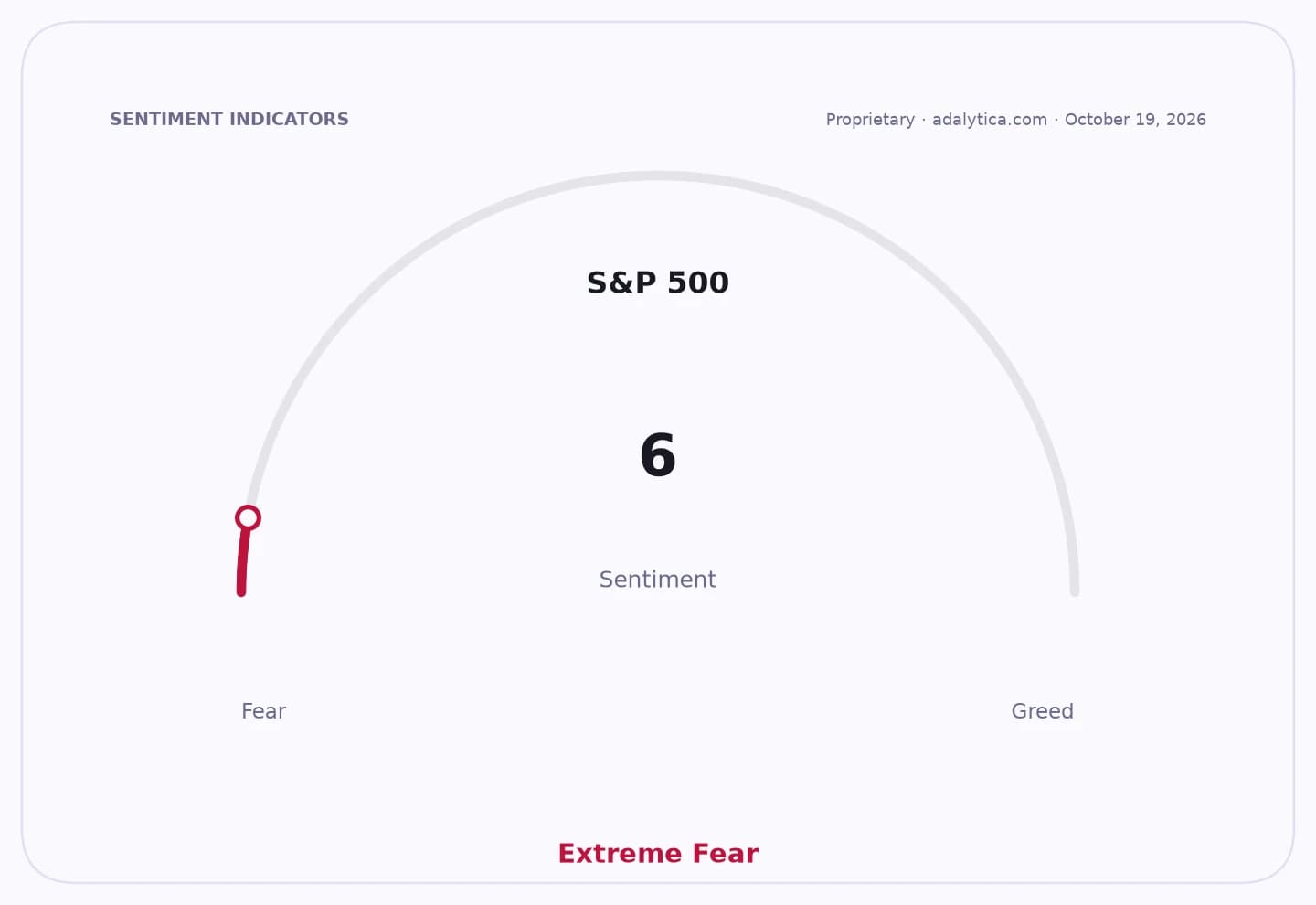
Sentiment IndicatorsⓘProprietary · adalytica.com · October 19, 2026
This is a snapshot — live sentiment, awareness and momentum for 130+ markets update continuously in the dashboard.Open AlphaPulse
KBRA assigned the rating in June, before Anthropic secured a $35 billion chip financing led by Apollo, according to documents seen by the Financial Times. The agency based its view on company-provided figures, including revenue, adjusted operating income and projected annual revenue for the first quarter of 2026, but said it did not have key metrics such as free cash flow or EBITDA. In the absence of full financials, KBRA used a risk score rather than a traditional full-model credit assessment.
That limited disclosure helps explain why the rating should be read less as a conventional corporate balance-sheet verdict than as a signal that lenders are trying to price the financing needs of frontier AI companies around scarce information. Even so, a BB+ rating is unusually strong for a start-up with no long public credit history and could broaden access to insurers and pension funds after listing if the company can win an investment-grade assessment from the major agencies.
The backdrop is a market that is increasingly treating leading AI labs as capital-intensive industrial platforms rather than software businesses with light funding needs. Anthropic says it is on a steep growth path and told private investors that third-quarter revenue reached $16.8 billion, up 46% from the second quarter’s roughly $11.5 billion, while reaching profitability. That follows losses of more than $42 billion in 2025, a reminder that revenue growth is not yet the same as durable free cash generation.
For investors, the credit rating is part of the pre-IPO valuation debate. Anthropic has said it wants to be the biggest listing in history, with a valuation as high as $2 trillion, but the size of its future market capitalisation will depend not only on growth rates but on how much capital it needs to keep buying chips, data-center capacity and other infrastructure. A stronger rating would support that story; a weaker one would force equity investors to bear more of the financing burden.
OpenAI and Anthropic’s bankers have pushed major rating agencies to give AI companies investment-grade treatment once they go public, a strategy already reflected in SpaceX’s public debt ratings after its market debut. SpaceX was rated BBB+ by Fitch and Baa1 by Moody’s, both above junk, and issued $25 billion of debt shortly after. Anthropic’s ratings path will therefore be watched as a template for how the capital markets will judge the next generation of AI infrastructure-heavy firms.
The immediate question is whether Anthropic can convert rapid top-line growth into a public-market balance sheet that justifies lower funding costs. If it can, the company will be better positioned to finance the next phase of AI infrastructure spending; if it cannot, the IPO may still come, but at a higher cost of capital and with more scrutiny over how long the growth story can outrun the cash burn.
| Entity | Gains | Losses |
|---|---|---|
| Anthropic | ▲Broader debt access | ▼Higher scrutiny on cash burn |
| Bond investors | ▲New high-yield paper | ▼Disclosure uncertainty |
| Major rating agencies | ▲New AI mandates | ▼Pressure to rate with limited data |
| Rivals such as OpenAI | ▲Benchmark for IPO financing | ▼Tighter funding comparisons |