Mercor’s jump to a $10 billion valuation has turned a college dropout’s hiring tool into one of the most valuable private AI companies in the market, underscoring how fast investor capital is concentrating around businesses that sit close to the core infrastructure of artificial intelligence. For Surya Midha, the rise has made him a self-made billionaire at 22, a milestone that also reflects the scale of paper wealth being created by late-stage funding rounds rather than cash exits.
Mercor hits $10 billion valuation in AI data work
The bigger economic story is not the age record. It is that investors are assigning startup-level economics to a company that moved from automated recruiting into the much more strategic market for AI data work, where firms are paid to find experts, label data and help train models. That shift matters because the AI build-out is no longer just about chips and cloud capacity. It also depends on a growing services layer that supplies human judgment, specialized knowledge and model evaluation — inputs that are becoming harder to source and more expensive as the industry matures.
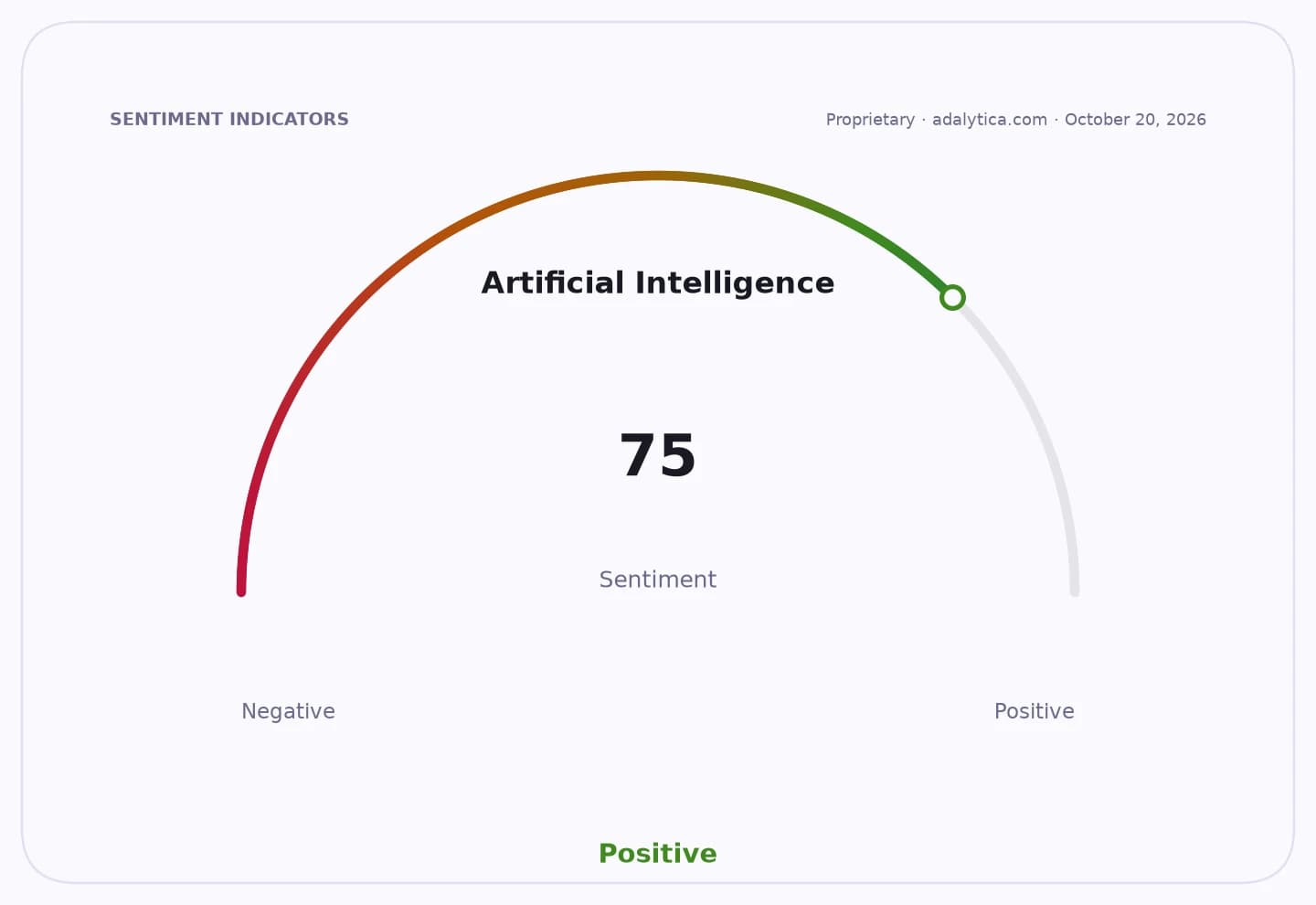
Sentiment IndicatorsⓘProprietary · adalytica.com · October 20, 2026
This is a snapshot — live sentiment, awareness and momentum for 130+ markets update continuously in the dashboard.Open AlphaPulse
Mercor’s valuation rose from $2 billion in March 2025 to $10 billion by the end of that year, a fivefold increase in less than 12 months, according to The Wall Street Journal. The company raised $135 million earlier in 2025 and then $350 million in a Series C round later in the year. Forbes says the business has also generated about $100 million in revenue from its AI recruiting product, suggesting the company is not being valued purely on narrative but on a mix of growth and strategic positioning inside the AI supply chain.
That positioning is what makes Mercor notable for investors. OpenAI, Google and Meta are among the technology groups that have shown interest in the company’s platform, according to Forbes, which helps explain why funding has come so quickly. The appeal is straightforward: as foundation-model developers race to improve systems, the bottleneck increasingly shifts from raw compute to high-quality human input. Companies that can supply that labor and domain expertise stand to benefit whether the dominant model makers are building closed systems, open-source models or enterprise tools.
The comparison with Scale AI sharpens the point. Mercor’s move into data services comes as competition in that market intensifies, and Meta’s purchase of 49% of Scale AI in 2025 created both validation and pressure for rivals. In investor terms, the deal widened the market for specialist AI labor while also raising the bar for independent providers. For Mercor, that means upside if it remains a key neutral supplier to multiple model builders, but also risk if large platforms internalize more of the workflow or compress margins through scale.
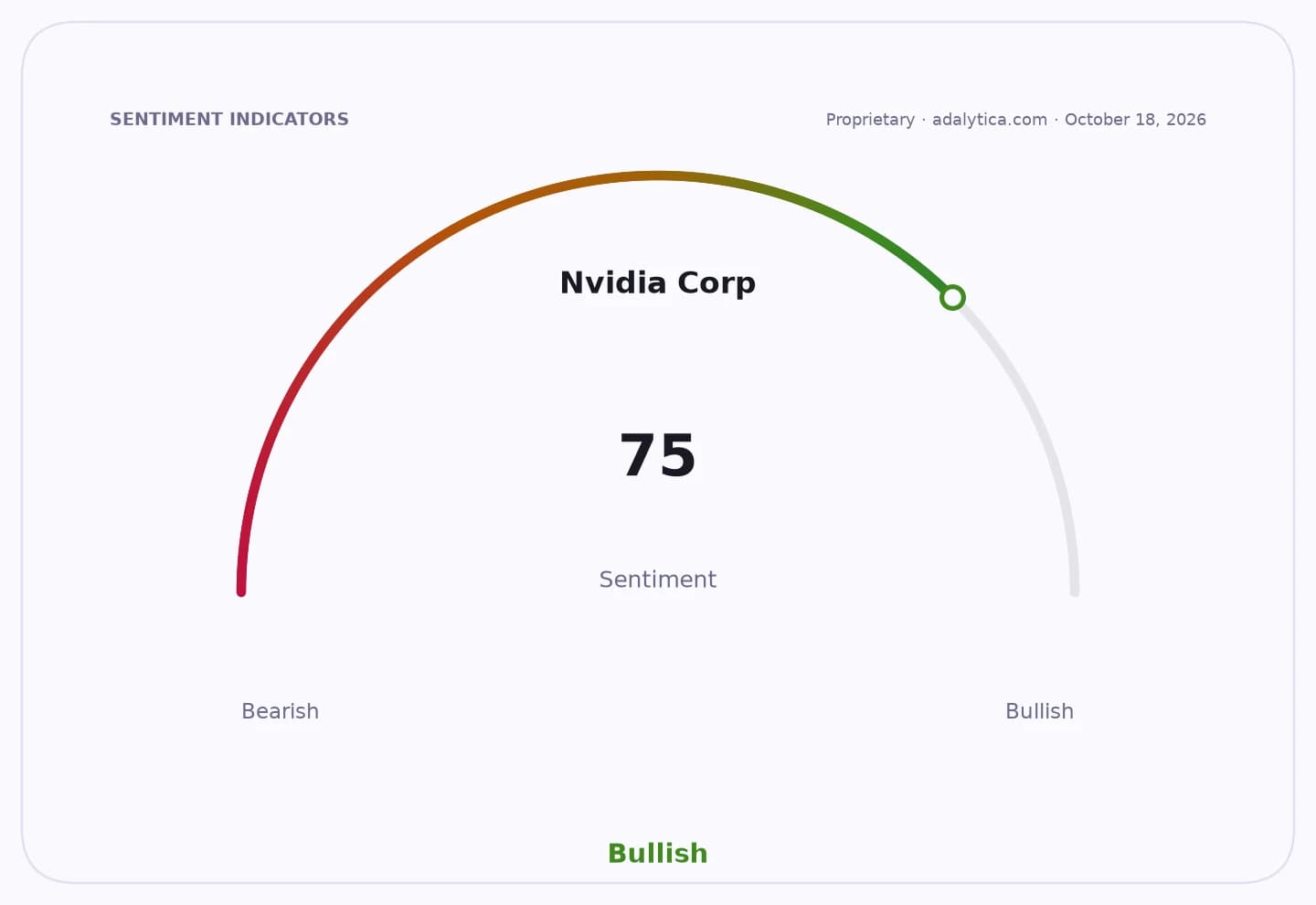
The stock-market backdrop shows why the sector continues to attract capital even after periods of volatility. Nvidia has remained the clearest beneficiary of AI spending, with its shares still well above long-term technical support levels and the company’s recent earnings sentiment on Adalytica.com showing “Extreme Greed.” Microsoft, meanwhile, has continued to post strong cloud and AI-driven growth, even as its margins have come under pressure from infrastructure spending. Together, those trends suggest investors are still rewarding companies tied to AI demand, while being more selective about which parts of the ecosystem deserve premium valuations.
Mercor’s rise also highlights a broader split in the startup market: the winners are those attached to indispensable AI inputs, while weaker entrants can quickly run out of cash. The contrast is visible across the sector, where some firms are securing major fundraises or strategic backing, while others struggle or fail despite high headline valuations. That makes Mercor less of an isolated headline and more of a signal that the market is now pricing a full-stack AI economy, from chips and cloud to the human labor needed to make models better.
For investors, the key question is whether Mercor can keep expanding beyond recruiting without losing the economics that made it attractive in the first place. If demand for AI training and evaluation keeps rising, the company could remain a valuable toll booth in a critical layer of the stack. If competition intensifies or large customers bring the work in-house, the $10 billion valuation will look far more demanding. In the near term, the startup’s next financing, customer wins and revenue mix will matter more than the founder’s age record.
| Entity | Gains | Losses |
|---|---|---|
| Mercor / Surya Midha | ▲Higher private valuation | ▼Greater execution pressure |
| AI model builders | ▲Faster access to expert data labor | ▼Higher vendor dependence |
| Scale AI rivals | ▲Bigger addressable market | ▼Fiercer competition |
| Late-stage startup investors | ▲Exposure to AI infrastructure upside | ▼Risk of valuation compression |