Snorkel AI has nearly tripled its valuation in four months as frontier AI developers race to secure the high-quality, specialized data needed to train and evaluate more capable models.
Snorkel AI Raises $350 Million at $3.5 Billion

The San Francisco startup said it raised $350 million from investors led by Insight Partners and S32 at a $3.5 billion valuation, up from $1.3 billion in May. The sharp re-rating reflects a fast-moving shift in the AI supply chain: after years of emphasis on raw data labeling, the most valuable inputs are now complex, domain-specific datasets and simulated environments that can support reasoning, coding, medical and legal use cases.
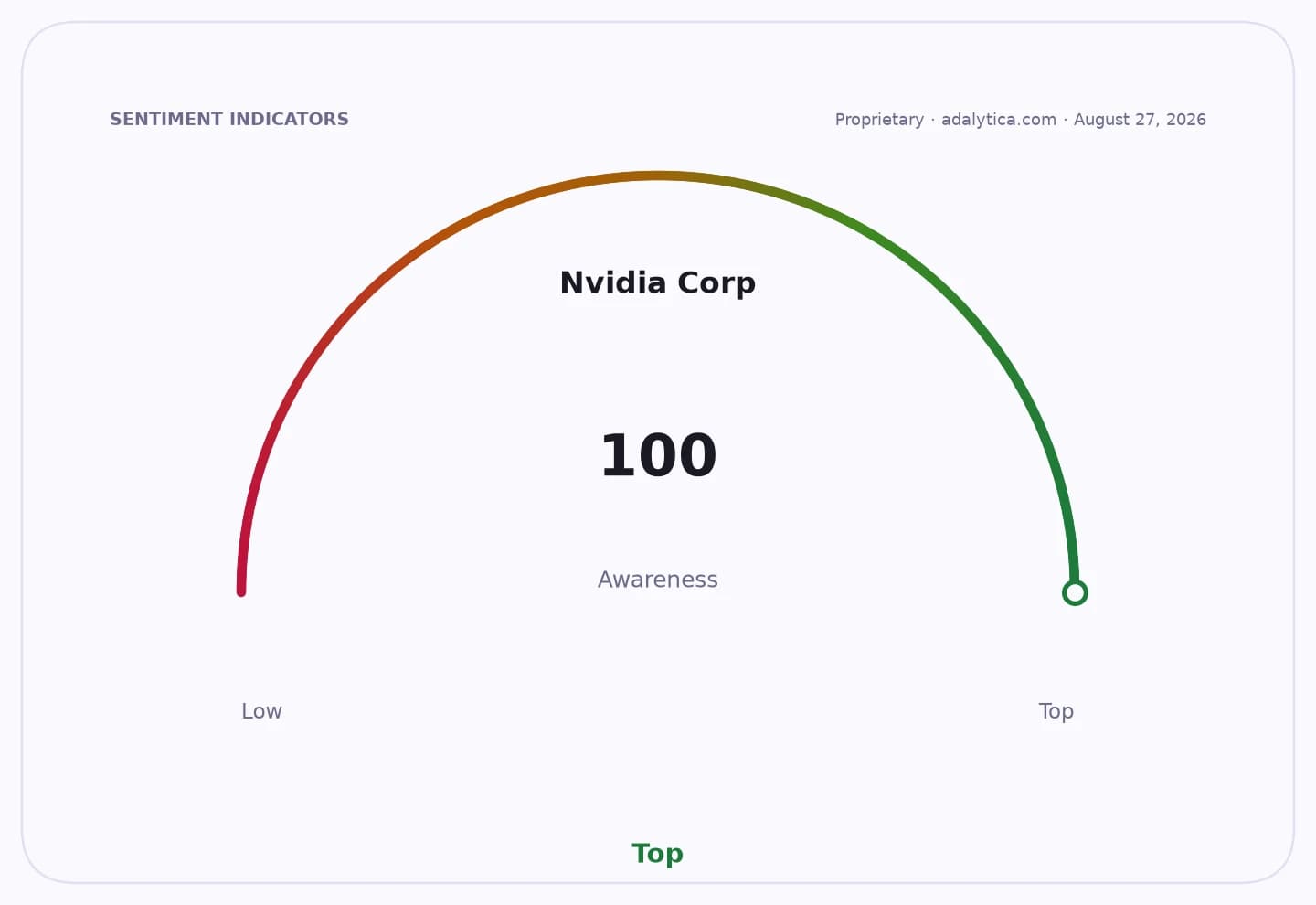
Sentiment IndicatorsⓘProprietary · adalytica.com · September 26, 2026
This is a snapshot — live sentiment, awareness and momentum for 130+ markets update continuously in the dashboard.Open AlphaPulse
That demand has turned data suppliers into one of the clearest beneficiaries of the current AI spending cycle. Snorkel said its annualized revenue run-rate has topped $350 million, from about $20 million a year earlier, as it sells finished data products rather than human labor. The model matters economically because it suggests the market for AI training inputs is scaling quickly enough to support venture-style returns, while also pointing to a more durable, margin-preserving business than traditional annotation shops.
Investors have been hunting for companies positioned between model builders and enterprise adopters, and Snorkel’s growth underscores how scarce the right inputs have become. CEO Alex Ratner said customers are moving beyond simpler labeling tasks and now want harder, higher-stakes data that can improve model performance at the frontier. That includes coding data, one of Snorkel’s biggest demand areas, and other specialized verticals where accuracy is harder to achieve and failures are costlier.
The funding also highlights how much the market has shifted since Meta’s $14.3 billion deal for a 49% stake in Scale AI in June. That transaction reset expectations across the category and helped validate the idea that training data providers can become strategic assets, not just services vendors. Rival startups including Mercor and Surge AI have also drawn investor attention as capital chases the companies supplying the unseen infrastructure behind large language models.
For big AI spenders, the rise of firms like Snorkel points to a tougher and more expensive training regime. As models become more capable, the marginal value of generic data falls and the need for expert human input, synthetic generation and automated quality control rises. That combination could keep demand high for specialist data vendors even if broader AI spending becomes more selective.
Snorkel said it expects to reach profitability this year and will use the new capital to hire researchers and engineers, expand into enterprise and government work and push into new data modalities and model-evaluation services. The bull case is that the company becomes a core supplier to frontier labs and regulated industries. The bear case is that the market remains crowded, customers internalize more of the work and valuations outrun the staying power of the current growth spurt.
For investors, the key takeaway is that AI infrastructure is broadening beyond chips and cloud to include the data and evaluation layer that determines whether models improve in the real world. If that spending proves sticky, the winners may be the specialized vendors with proprietary workflows and expert networks, not just the largest model developers.
| Entity | Gains | Losses |
|---|---|---|
| Snorkel AI | ▲Higher valuation, fresh capital | ▼Greater execution pressure |
| Frontier AI labs | ▲Better training data access | ▼Higher input costs |
| Scale AI, Mercor, Surge AI | ▲Category validation | ▼More competition for deals |
| Human annotation commoditized vendors | ▲— | ▼Pricing pressure |