CoreWeave’s debt is flashing stress, but the bigger investor story is that the neocloud trade is still being driven by how much AI infrastructure demand can outrun the sector’s financing costs.
CoreWeave Debt Stress and AI Demand Trade
A 15% bond yield is the market’s way of saying CoreWeave’s capital structure is expensive and risky, not that the business model is broken. For investors, that distinction matters: the bond market is pricing leverage and execution risk, while equity buyers are still betting that scarce GPU capacity, long-duration AI contracts and data-center buildout can keep revenue growth ahead of debt service.
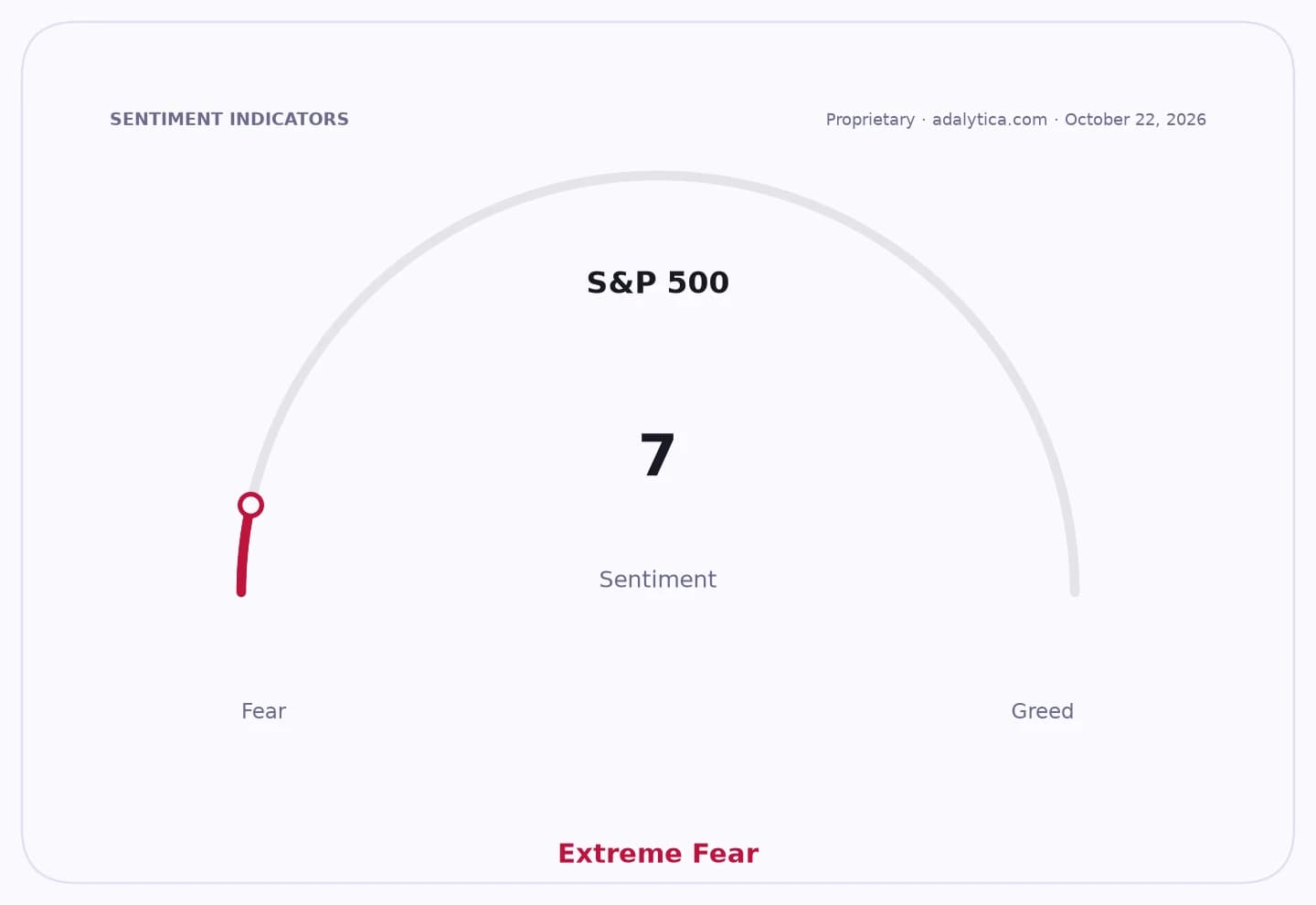
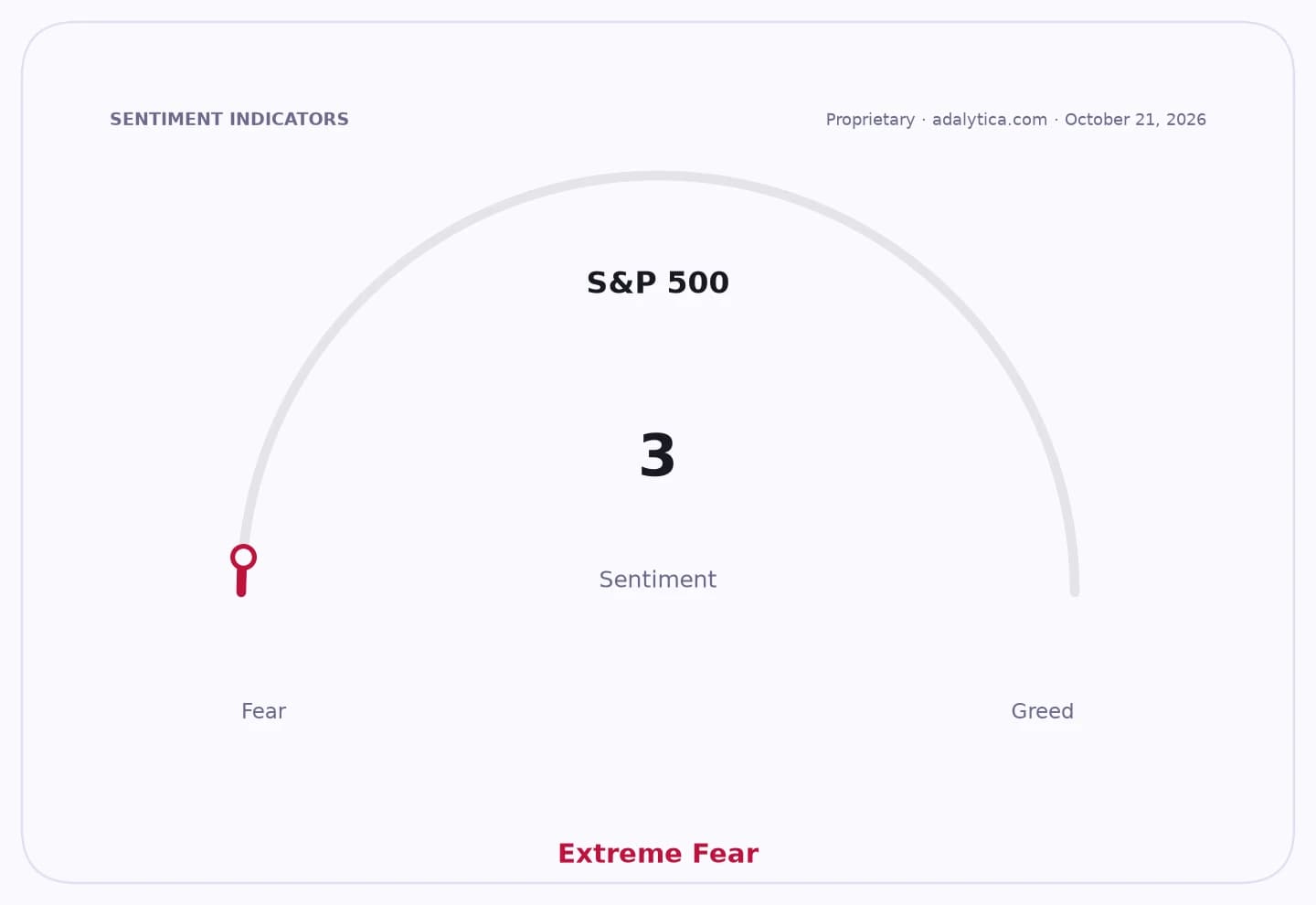
Sentiment IndicatorsⓘProprietary · adalytica.com · October 22, 2026
This is a snapshot — live sentiment, awareness and momentum for 130+ markets update continuously in the dashboard.Open AlphaPulse
CoreWeave shares have been whipsawed, closing at $61.82 on Oct. 21 after touching $122.54 in April and $137.98 in May. The stock’s 50-day moving average sits at $85.35, well above the latest close, while RSI readings around 22 suggest the selloff has pushed the shares into deeply oversold territory. Heavy volume, including more than 100 million shares traded on Oct. 19, underscores how fast sentiment has flipped.
That does not make the entire neocloud group uninvestable. Nvidia, the key hardware supplier to the AI buildout, finished Oct. 21 at $221.97, holding above its 200-day average of $203.12, while Microsoft ended at $532.95 and remains above both its 50-day and 200-day averages. The contrast highlights that the market is still rewarding companies with stronger balance sheets and broader cash generation, while punishing the pure-play infrastructure names most exposed to financing conditions.
The economic issue is cost of capital. Neocloud operators typically need huge upfront spending on chips, power and facilities before revenue fully scales, which leaves them vulnerable when debt markets demand double-digit yields. CoreWeave’s own filings warn that if cash flows and capital resources are insufficient to fund debt service, it could face liquidity problems and be forced to delay investment or seek additional debt or equity capital.
That is why the bond market matters even to stock pickers: if financing tightens, expansion slows, dilution risk rises and the path to profitability gets longer. If AI demand keeps accelerating, though, the equity can still work because the underlying asset — contracted compute capacity — may be more valuable than the market is implying.
The next catalyst is whether CoreWeave can prove that growth, contract wins and cash generation can outrun the debt burden. Until then, the trade is likely to stay volatile, with investors separating the sector’s fastest growers from the names most reliant on expensive leverage.
| Entity | Gains | Losses |
|---|---|---|
| CoreWeave equity bulls | ▲Oversold rebound potential | ▼Leverage and dilution risk |
| CoreWeave bondholders | ▲Higher yield protection | ▼Refinancing stress |
| Nvidia | ▲Ongoing AI chip demand | ▼Customer financing pressure |
| Microsoft | ▲Stronger balance sheet premium | ▼Less upside from pure-play AI infrastructure |