The Nasdaq composite’s drop below its 200-day moving average is the most important signal from Friday’s selloff, because it marks a deterioration in market leadership at a time when investors are already rotating away from expensive technology names.
Nasdaq Falls Below 200-Day Moving Average

The index fell 2.1%, while the Nasdaq-100 lost 2.5% as software stocks led the retreat. Decliners outnumbered advancers by nearly 3-to-1, underscoring that the move was not a narrow shakeout but a broad risk-off session inside the growth complex. Lower volume helped keep the damage from looking worse, but the technical break matters: when a major benchmark loses its long-term trend line, it often changes portfolio behavior, forcing systematic selling and making rallies harder to sustain.
Sentiment IndicatorsⓘProprietary · adalytica.com · October 20, 2026
This is a snapshot — live sentiment, awareness and momentum for 130+ markets update continuously in the dashboard.Open AlphaPulse

The weakness in software also fits a broader reset in artificial-intelligence and tech positioning. Investors have spent much of the year bidding up large-cap software, cloud and AI-linked names on the assumption that capex cycles and enterprise adoption would keep earnings growth elevated. But as valuations stretched, the market has become more sensitive to any sign that returns on AI spending may be slower or less certain. That is showing up not only in the Nasdaq, but in sector funds such as the Technology Select Sector SPDR, or XLK, which slipped 3.0% on Friday to $183.47 and has turned lower on standard momentum measures, including a weakening RSI and a flattening MACD trend. The software-heavy IGV ETF fell 4.8% to $104.34, a sharper move that reflects how concentrated the selling was in the subgroup most exposed to software and cloud multiples.
For investors, the message is twofold. Bulls can argue the move is technically driven and may be temporary, especially since the Nasdaq-100 remains above its 200-day average and mega-cap software franchises still command strong recurring revenue and cash flow. Microsoft’s latest filings showed continued cloud strength, while Adobe and Oracle still point to substantial subscription and support bases. Bears, though, will see Friday as confirmation that the market is no longer willing to pay up indiscriminately for duration in software earnings, particularly with the 10-year Treasury yield still near 5% and the curve only modestly steepening. Higher discount rates compress the value of distant cash flows, which is exactly where software valuations are most vulnerable.

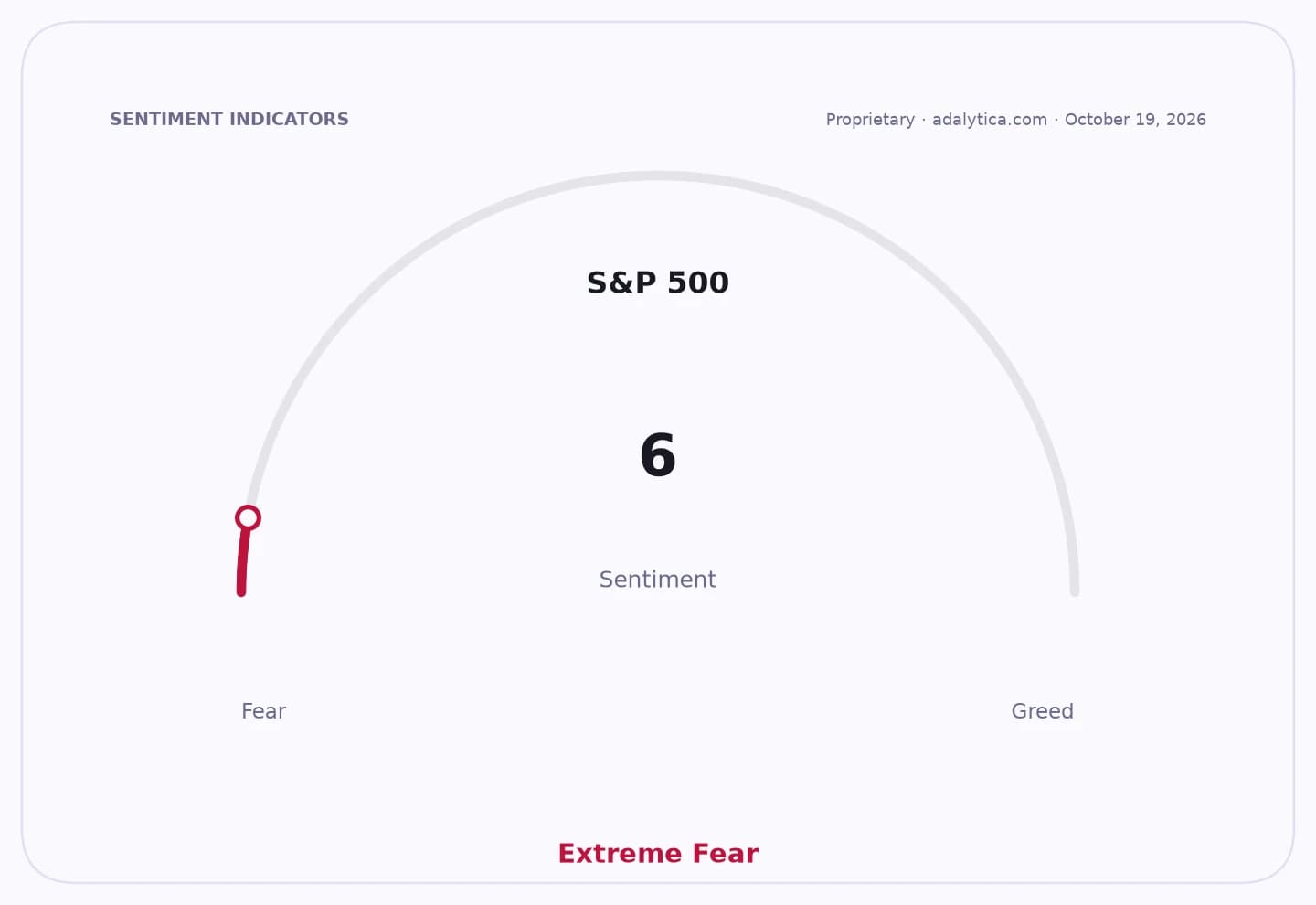
The macro backdrop reinforces that shift. The 10-year Treasury yield ended the week around 5.09%, up sharply from levels a year ago, while the 2-year yield was 4.74%, leaving the 10-year/2-year spread at 0.35 percentage point. That is not an outright recessionary signal, but it is a restrictive rates environment that makes long-duration equity multiples harder to defend. At the same time, Adalytica’s SPY trade signals show sentiment at “Extreme Fear,” suggesting the pullback has moved beyond a routine sector rotation and into a broader loss of risk appetite.
The next test is whether earnings can arrest the slide. If major software and cloud names continue to deliver strong bookings, margins and guidance, the selloff could prove to be a valuation reset rather than the start of a deeper de-rating. If not, the break below the Nasdaq’s 200-day line may invite further de-risking from funds that have been leaning heavily on tech leadership for the market’s advance.
| Entity | Gains | Losses |
|---|---|---|
| Value/cyclical stocks | ▲Relative appeal rises | ▼Miss out if growth rebounds |
| Long-duration software names | ▲None in the short term | ▼Multiples compress |
| Active de-risking funds | ▲Lower exposure to overextended tech | ▼Lose upside if rally returns |
| Treasury holders | ▲Higher yields support returns | ▼Equities face tougher discount rates |