CoreWeave’s explosive growth is real, but so is the risk that investors are valuing a rent stream that can move on faster than the company can replace it.
CoreWeave Backlog Growth Raises Customer Retention Risk
That is the central tension after the AI cloud provider said its backlog swelled to $104.2 billion at the end of June and then added more than $25 billion in new commitments by mid-August — more business in six weeks than it had on the books at the end of 2024. For a company that rents Nvidia-powered computing to AI developers, that looks like extraordinary demand. For long-term investors, it also raises the most important question in the story: who is still paying when a handful of big customers decide to scale back?
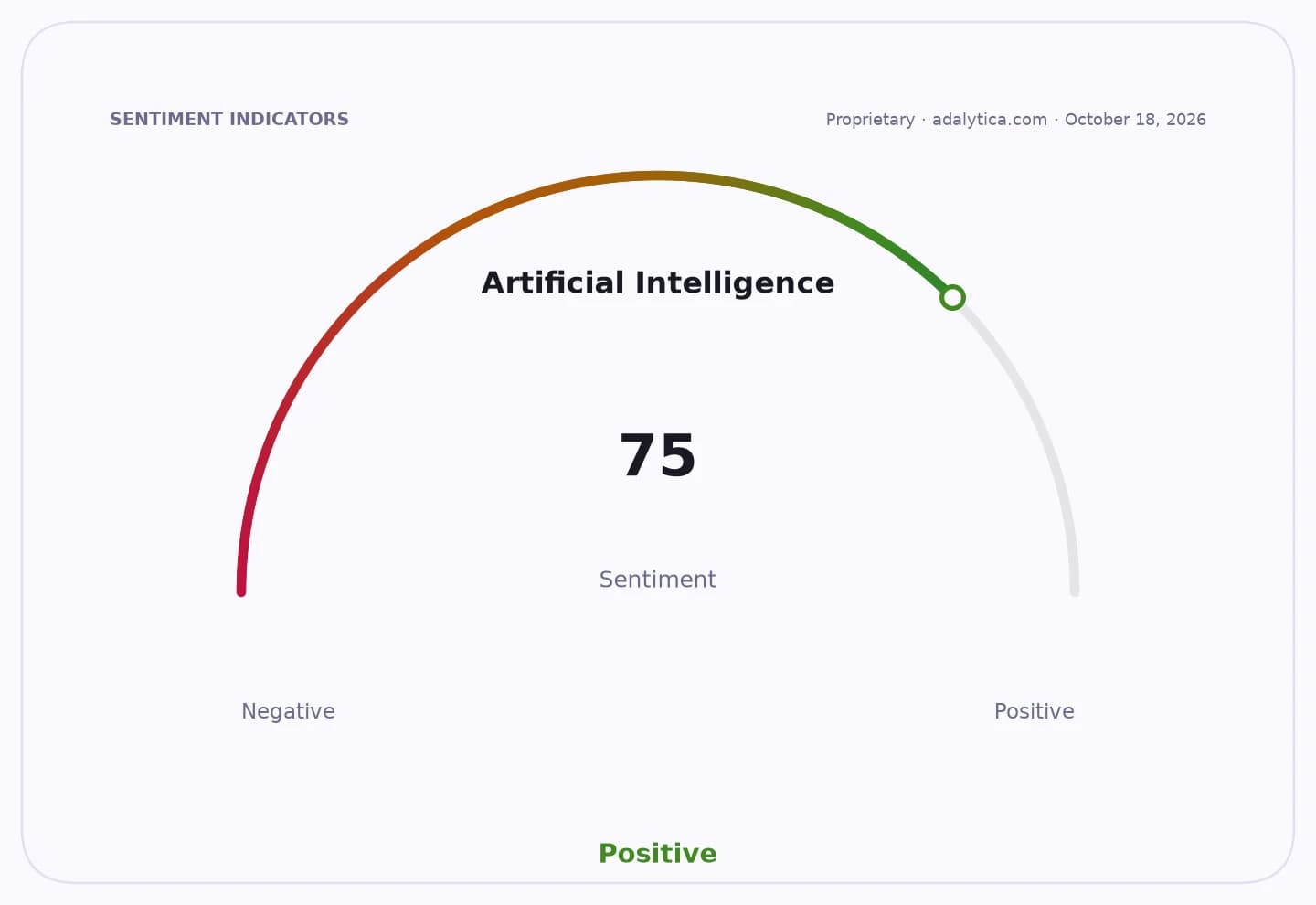
Sentiment IndicatorsⓘProprietary · adalytica.com · October 15, 2026
This is a snapshot — live sentiment, awareness and momentum for 130+ markets update continuously in the dashboard.Open AlphaPulse
CoreWeave’s business model makes that question unavoidable. A meaningful share of its contracts are on-demand or pay-as-you-go, and its filing says customers can terminate or reduce usage with limited notice. It also says customer concentration is likely to remain high because of the long-term nature of some contracts. In other words, the backlog is impressive, but it is not the same thing as durable, recurring revenue from thousands of sticky clients.
That is why the stock’s behavior matters almost as much as the backlog itself. CoreWeave’s shares have fallen sharply from their October peak, even after a volatile rebound and another drop to $65.78 on Oct. 14, down from $101.23 in mid-January. The latest slide came with trading volume of more than 108 million shares, a sign that the market still has little patience for the gap between headline growth and balance-sheet reality. The company is building out capacity in a capital-intensive industry where data centers, GPUs and power are expensive, and investors want proof that utilization and customer retention can keep up.
The broader AI trade is still alive, but it is getting more selective. Microsoft and Amazon continue to spend aggressively on cloud and AI infrastructure, and the industry’s capital spending boom suggests demand for compute remains strong. Yet that same spending spree also means customers have more options, more bargaining power and more ways to shift workloads if a better deal appears. CoreWeave benefits when AI demand is hot; it loses leverage if those customers decide the fastest way to preserve margins is to move elsewhere.
For investors, the key question is not whether CoreWeave has demand today. It clearly does. The issue is whether that demand turns into a durable franchise with enough repeat business to justify the massive infrastructure it is funding now. If the company keeps winning large contracts and can keep those customers on the platform, the backlog could translate into years of revenue growth. If not, the rent rolls off faster than the cash comes in.
That makes CoreWeave one of the most interesting names in AI infrastructure — and one of the most demanding to own. Long-term investors should keep it on the watchlist, but they should also remember that in cloud computing, the real asset is not the backlog. It is customer stickiness.
| Entity | Gains | Losses |
|---|---|---|
| CoreWeave | ▲More backlog, faster growth | ▼Customer churn risk |
| AI developers | ▲More compute capacity | ▼Higher dependency on suppliers |
| Nvidia | ▲More GPU demand | ▼Demand concentration risk |
| Long-term investors | ▲Potential AI upside | ▼Valuation and utilization uncertainty |