Nvidia’s backing of CoreWeave is looking less like a financing gamble and more like a way to keep the AI infrastructure trade alive through the market’s latest round of skepticism.
Nvidia and CoreWeave AI infrastructure thesis

That matters because CoreWeave has become a symbol for the boom-and-bust economics of AI cloud spending: huge upfront capital needs, heavy dependence on Nvidia chips, and investor doubts about whether demand can outrun the debt and leasing costs required to serve it. When Nvidia’s chief executive says the company’s finances are improving, it suggests the AI buildout is still converting into operating leverage rather than collapsing under its own capex weight.
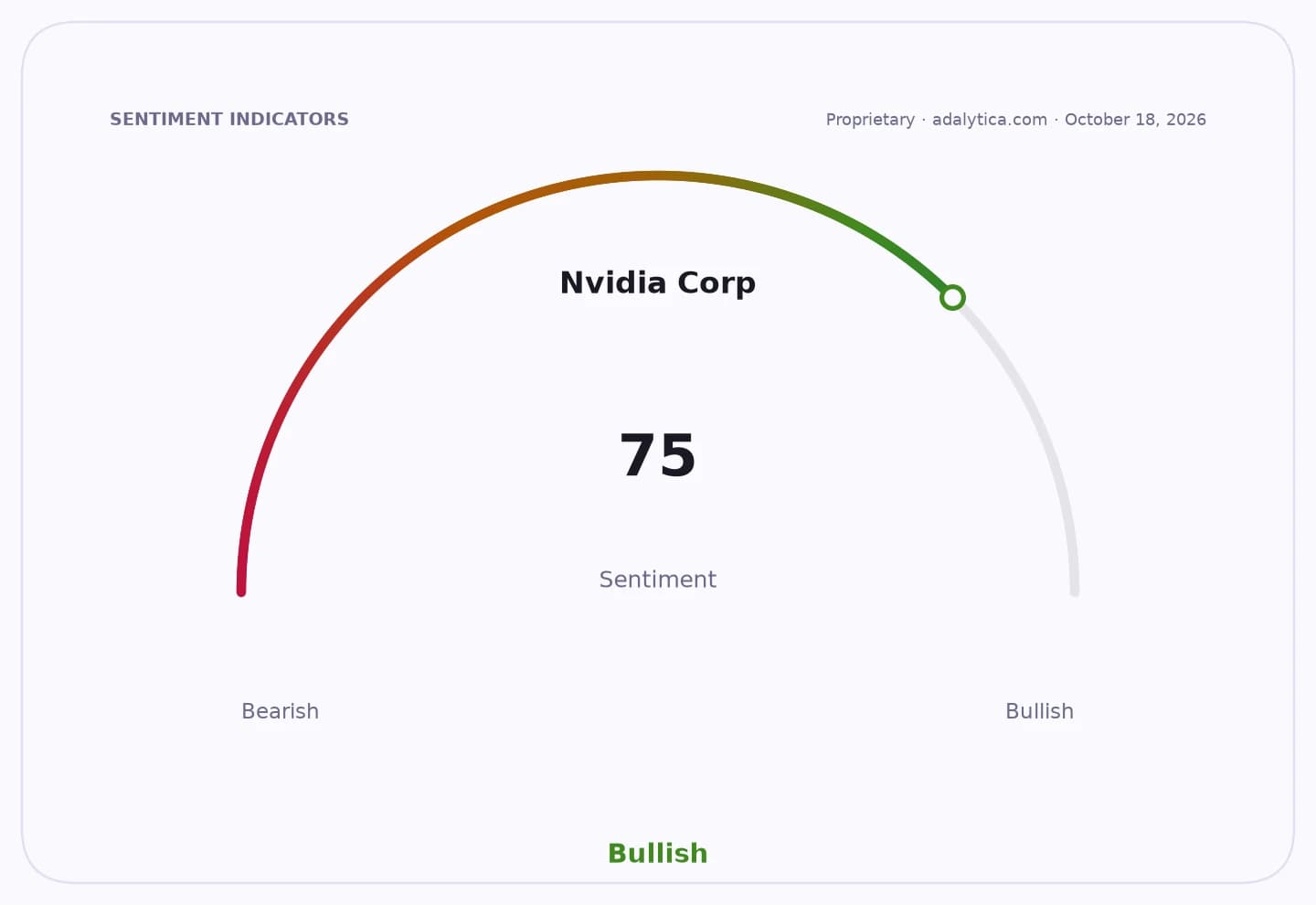
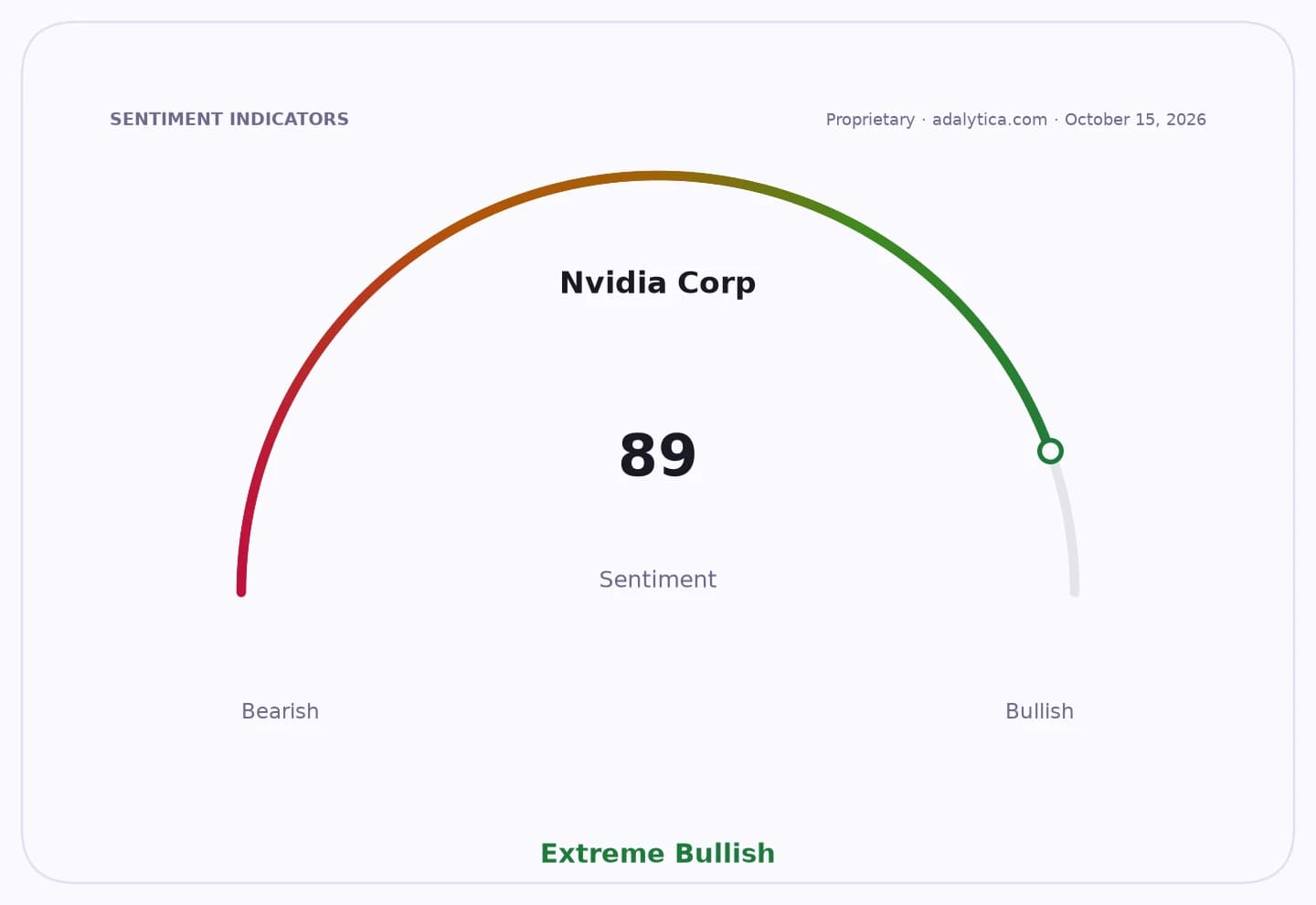
Sentiment IndicatorsⓘProprietary · adalytica.com · October 17, 2026
This is a snapshot — live sentiment, awareness and momentum for 130+ markets update continuously in the dashboard.Open AlphaPulse
The implication is bigger than one customer. CoreWeave sits at the center of the market’s debate over whether AI compute demand is durable enough to justify the extraordinary supply chain Nvidia has built around it. Nvidia itself has committed $36 billion in supply and capacity agreements as of late July, underscoring how closely its growth is tied to the health of the cloud and GPU ecosystem. If CoreWeave’s balance sheet is stabilizing, that helps validate the broader thesis that AI infrastructure is moving from speculative rollout to monetizable scale.
Investors should care because Nvidia is not just a chip vendor anymore; it is a capital allocator inside the AI economy. Its fortunes are increasingly linked to which buyers can fund expansion, not just which ones want the hardware. That makes CoreWeave a critical stress test for the entire trade. A healthier CoreWeave reduces the risk that AI demand is being artificially pulled forward by financing structures that eventually break.
Nvidia Corp — 30-day sentimentadalytica.com
Explore this data interactively — full history, time series and cross-market comparisons.Open AlphaPulse
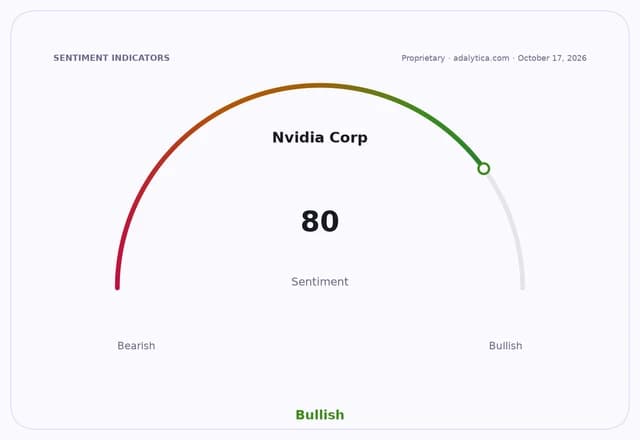
The market is already signaling a split in confidence. Nvidia’s shares have bounced back above their 50-day and 200-day moving averages in recent weeks, while CoreWeave’s stock has remained far more volatile, reflecting lingering concern about leverage and the sustainability of hyperscale-style spending outside the biggest cloud names. Adalytica’s NVIDIA earnings sentiment reads at 80, or “Greed,” but awareness remains only 29, suggesting enthusiasm is running ahead of broad conviction — exactly the kind of setup that can create either a powerful re-rating or a harsh reset.
For investors, the opportunity is in the second-order beneficiaries of the AI capex cycle, not the loudest headline names. If Nvidia’s assessment of CoreWeave proves right, it supports the case for owning the picks-and-shovels layer of AI infrastructure: chips, networking, power, and cooling suppliers that profit whether workloads sit in centralized clouds or move closer to the edge. It also argues against fading the AI buildout too early, even as the market questions who can fund the next phase.
The key catalyst now is whether CoreWeave can turn improving financing conditions into cleaner cash flow and less dependence on expensive capital. If it does, Nvidia’s AI ecosystem remains intact and the market may have to price in a longer, larger infrastructure cycle than the skeptics expect. For investors, that means staying overweight the AI supply chain while the consensus is still fixated on balance-sheet risk.
| Entity | Gains | Losses |
|---|---|---|
| Nvidia | ▲Validation of AI demand | ▼Financing risk perception |
| CoreWeave | ▲Easier access to capital | ▼Skeptical shorts |
| AI infrastructure suppliers | ▲More capex demand | ▼Broad cloud skeptics |
| Competing cloud providers | ▲Pressure to match AI spending | ▼Slower relative growth |