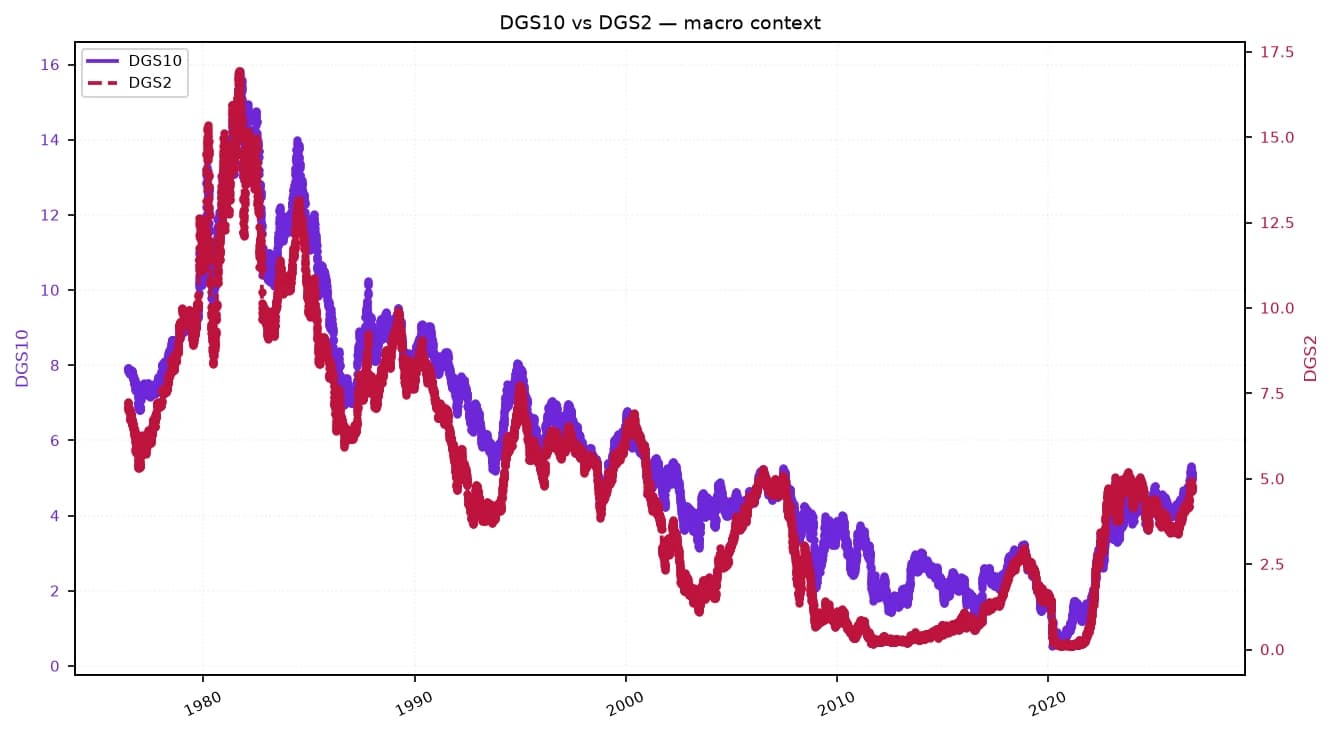
U.S. Treasury yields are falling at their fastest pace in more than two years as investors rapidly price in a softer growth outlook and a less restrictive Federal Reserve path, sending bond prices higher and rippling through banks, borrowers and equity markets.
Treasury Yields Fall as Bond Prices Rally

The benchmark 10-year Treasury yield is set to slip to 4.944% from 4.99%, while the 2-year yield is forecast at 4.649% from 4.70%, marking the steepest drop in long-dated yields since the March 2023 banking turmoil. The move reflects a market that is increasingly comfortable betting the Fed will not need to keep policy as tight for as long as feared.
Sentiment Indicators
US Treasury
That matters because Treasury yields are the foundation for borrowing costs across the economy. A sharp leg lower eases pressure on mortgages, corporate debt and government financing, while also improving the present value math for rate-sensitive stocks, especially in technology and other long-duration sectors.
The rally is showing up in bond funds. The iShares 20+ Year Treasury Bond ETF, TLT, has climbed to 81.53 from 79.46 on Oct. 19, with Adalytica’s U.S. Treasury Bonds trade signals flashing “Extreme Greed” on sentiment and “Extreme Fear” on awareness, a combination that points to crowded bullish positioning and heightened attention around the trade.
Shorter-duration Treasurys are also gaining, with the iShares 7-10 Year Treasury ETF, IEF, rising to 91.28 from 90.85 over the past two sessions, while the iShares 1-3 Year Treasury ETF, SHY, edged higher to 81.60. Conventional technical indicators on TLT and IEF show momentum has turned up quickly, with both funds trading above their 50-day moving averages and RSI readings elevated, suggesting the move has become extended even as yields fall.
For banks, the decline in yields offers some relief after months of pressure from unrealized losses on bond portfolios and higher funding costs. Wells Fargo’s latest filing underscored that interest-rate swings still affect asset yields, funding expenses and balance-sheet risk, even as higher rates have recently supported net interest income.
The next test is whether the bond rally has room to run. Investors will be watching the Fed’s upcoming decision, fresh inflation data and any signs that the labor market or growth is cooling fast enough to justify a more aggressive drop in yields.
| Entity | Gains | Losses |
|---|---|---|
| Treasury bond holders | ▲Capital gains | ▼New yield on cash-like assets |
| Borrowers | ▲Lower financing costs | ▼Existing lenders |
| Banks | ▲Less pressure on bond portfolios | ▼Higher-rate margin tailwinds |
| Rate-sensitive equities | ▲Better valuation support | ▼Value stocks tied to higher yields |