US government borrowing costs are staying uncomfortably high even after the Federal Reserve left rates unchanged, with the 10-year Treasury yield hovering around 5% and the 2-year near 4.7%, a combination that keeps pressure on mortgages, corporate finance and equity valuations.
10-Year Treasury Yield Stays Near 5%
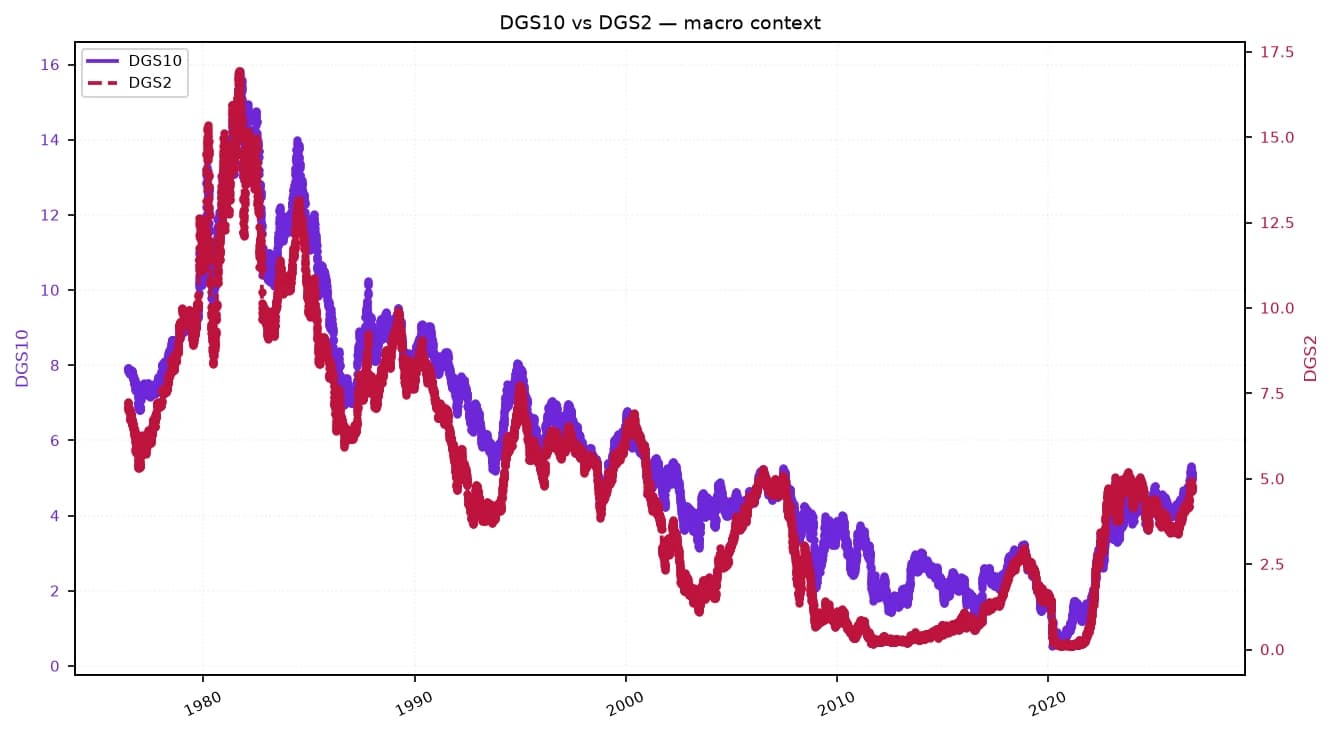
That is the key market signal investors should focus on: the Treasury curve is not easing into the Fed pause. Instead, it is pricing a sturdier-for-longer growth and inflation backdrop, with the 10-year at 5.0% and the 2-year at 4.70% on the latest readings, leaving only about 38 basis points between them. The curve remains positively sloped, but not by enough to suggest easy policy ahead. Treasury’s par yield framework, which feeds everything from loan pricing to valuation models, is pointing to a funding environment that is still restrictive.
Sentiment Indicators
For markets, that matters because the long end is where discount rates are set. A 5% 10-year yield is a direct headwind for duration-sensitive assets, from high-multiple technology stocks to long-duration bonds and rate-sensitive real estate. It also keeps refinancing costs elevated for companies and households, reinforcing the squeeze from still-sticky inflation. The 30-year benchmark, at about 4.99%, shows the pressure is not confined to the belly of the curve.
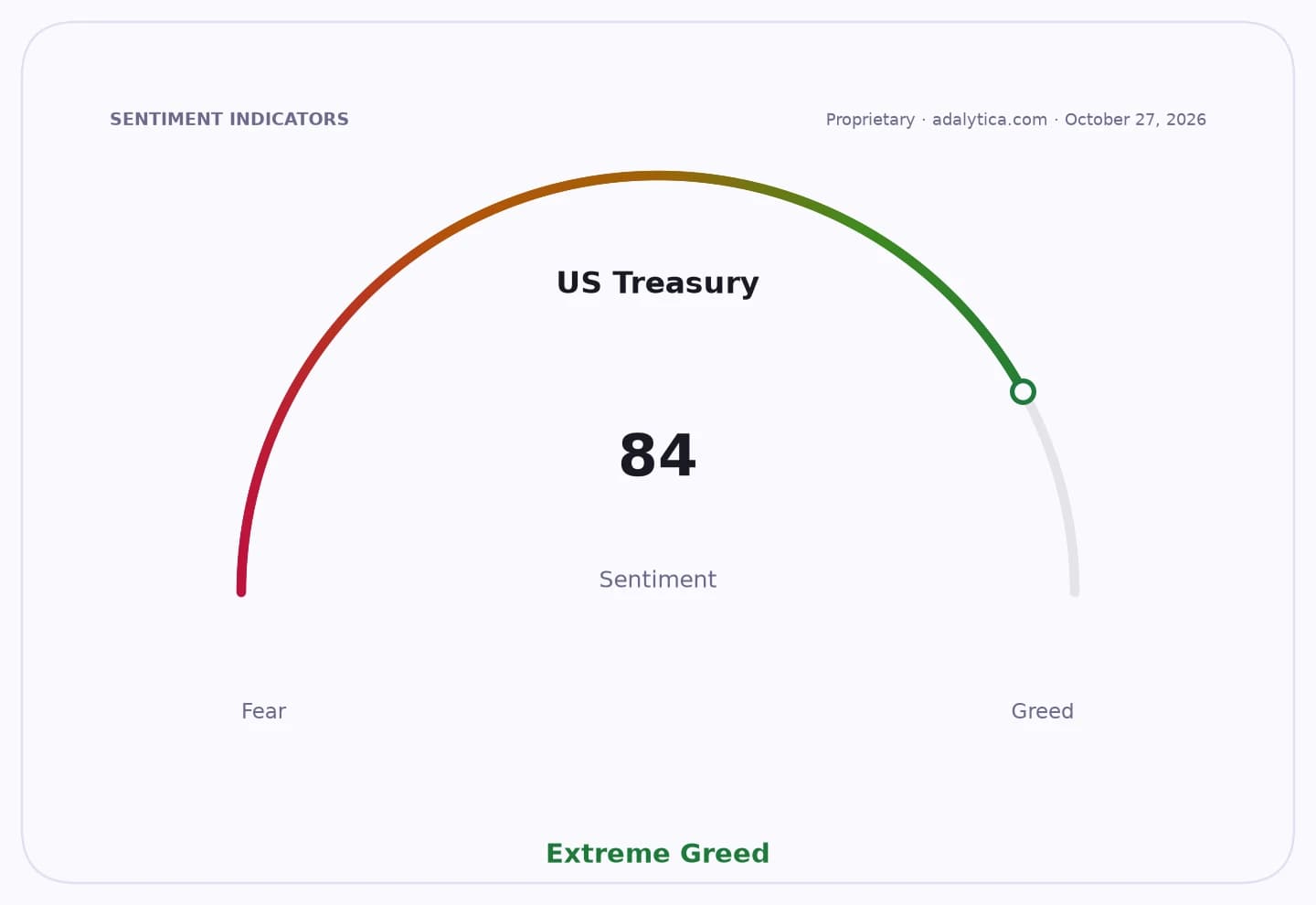
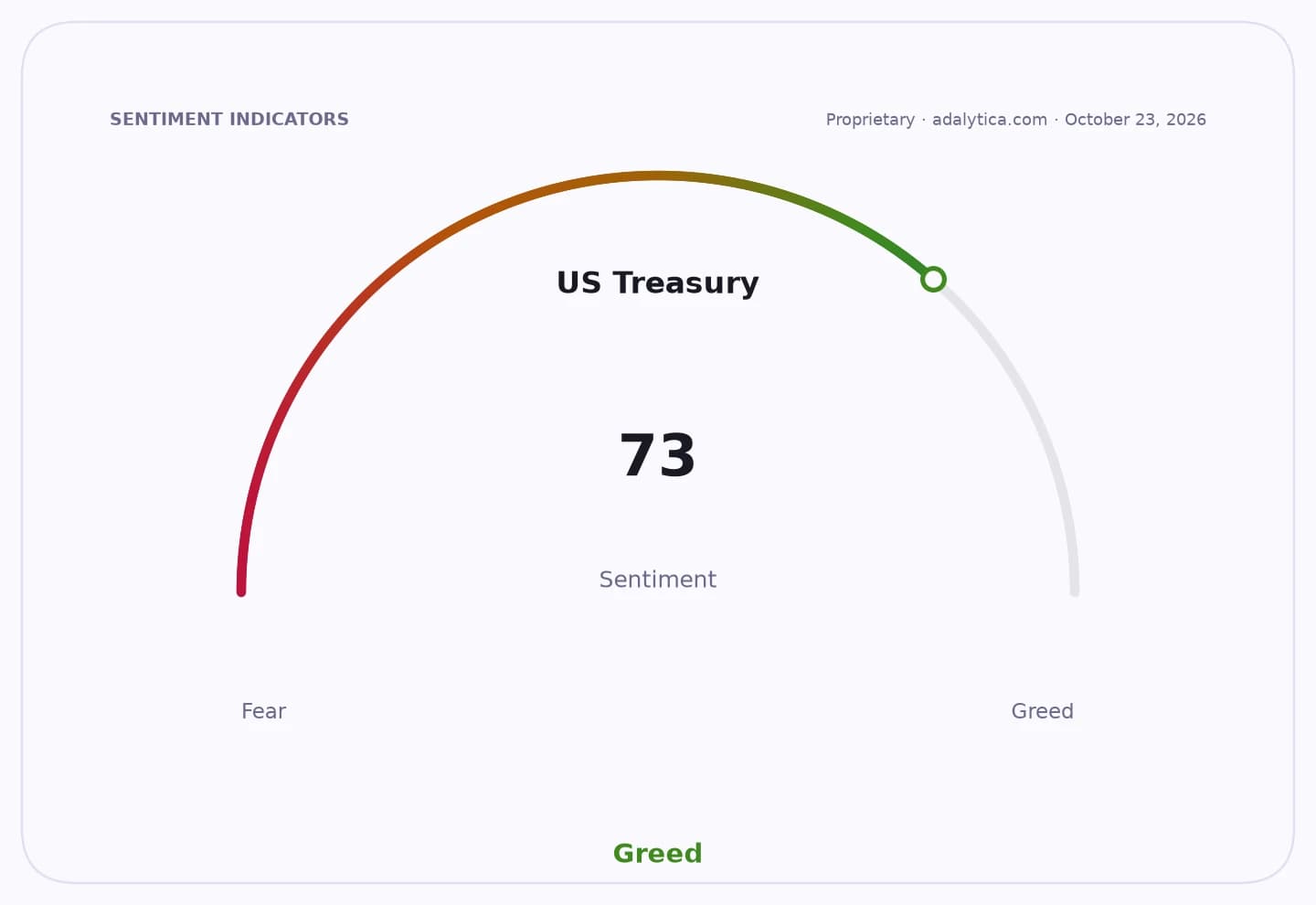
The bond market’s message is reinforced by Treasury-linked trading in TLT, the iShares 20+ Year Treasury Bond ETF. The fund has recovered from earlier weakness, but it still trades well below its 200-day moving average, even as near-term momentum has improved. That tells you the rally in long Treasuries remains fragile. Adalytica’s Treasury bond trade signals show “Extreme Greed,” but awareness remains “Extreme Fear,” a split that often marks crowded positioning rather than durable conviction.
Equities are absorbing the same signal. The S&P 500, while still above its 200-day moving average, is not being rewarded for complacency. The index has regained ground after a volatile year, but a 5% risk-free rate keeps the bar high for earnings growth to justify current valuations. In practical terms, that favors firms with pricing power, strong free cash flow and short duration cash flows over the long-horizon, cash-burning names that dominated in easier-money years.
The broader narrative is simple: the market is no longer betting on an imminent pivot. Treasury yields are reflecting a world in which inflation is proving sticky enough to keep the Fed cautious, growth is strong enough to resist recession pricing, and borrowing costs remain high enough to sort winners from losers. If that holds, investors should stay positioned for a late-cycle market where quality, cash generation and infrastructure-linked income streams outperform the most rate-sensitive corners of the market.
The opportunity, in my view, is not to chase every dip in duration or every rally in long bonds. It is to own the businesses and assets that can thrive while the Treasury curve stays elevated: banks with strong deposit franchises, insurers, energy infrastructure, and select value stocks with real cash flow. If the 10-year keeps anchoring near 5%, the market’s next big move will be about who can live with expensive capital — and who cannot.
| Entity | Gains | Losses |
|---|---|---|
| Banks | ▲Higher net interest income | ▼Duration-sensitive borrowers |
| Insurers | ▲Better reinvestment yields | ▼Long-duration bond holders |
| Energy infrastructure | ▲Stable cash-flow appeal | ▼High-multiple growth stocks |
| TLT / long Treasuries | ▲Short-term trading rebounds | ▼Buy-and-hold bond investors |