US Treasury yields at multi-decade highs are changing the bond game for investors, making the choice between individual bonds, traditional bond funds and defined-maturity ETFs more important than the direction of the market itself.
Treasury Yields Raise Stakes for Bond ETFs and Bonds

For buyers who want to lock in income, the current environment offers something not seen in years: the chance to secure 10-year Treasury yields around 5.2% and 2-year yields near 4.7%, levels that have revived interest in plain-vanilla government debt after years of near-zero rates. But the same move that lifts prospective income also raises the stakes on structure. In a market where the 10-year yield has climbed to its highest level in decades and the 30-year rate has hit a 24-year peak, the wrong vehicle can leave investors with very different outcomes even if they own the same bonds.
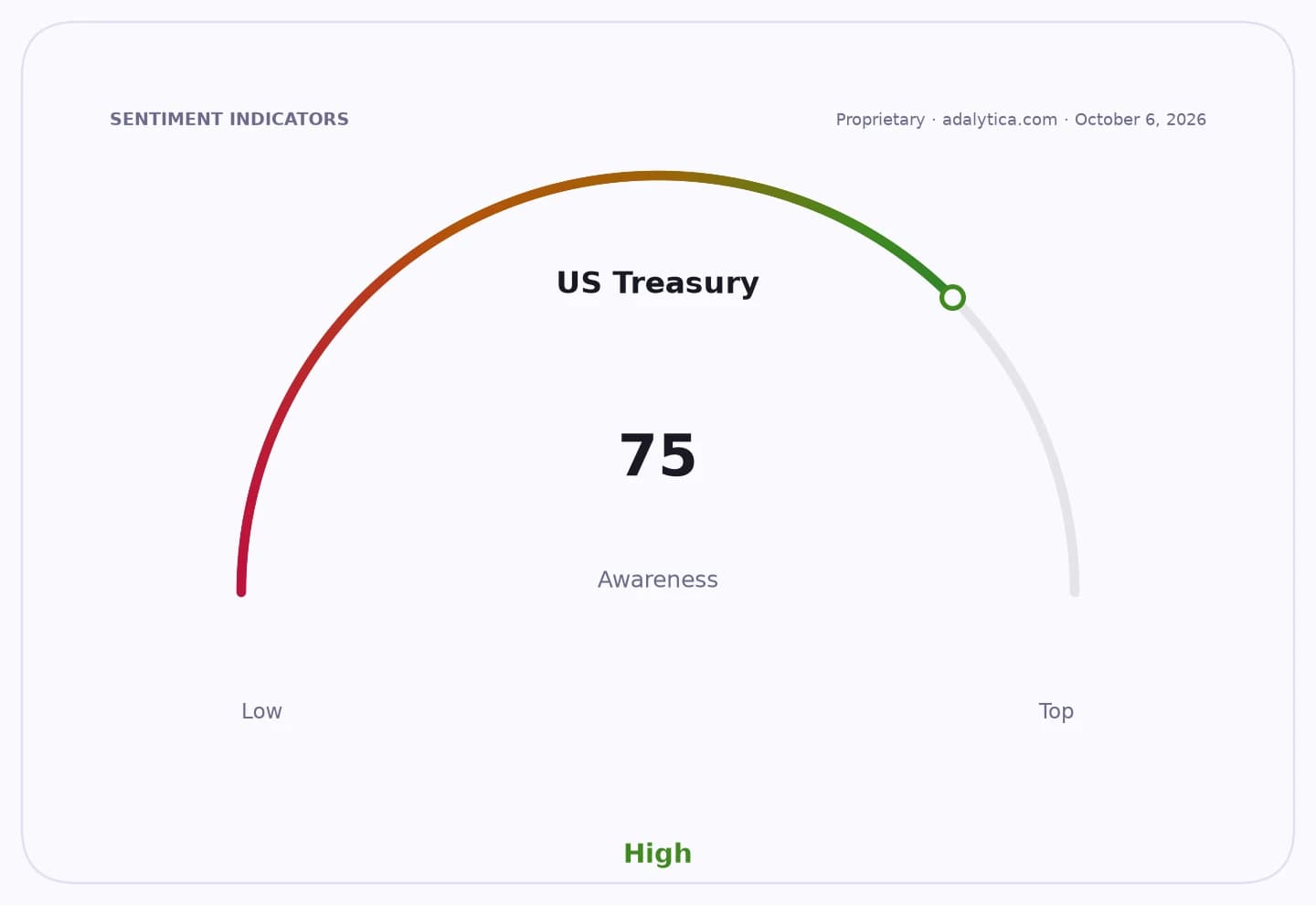
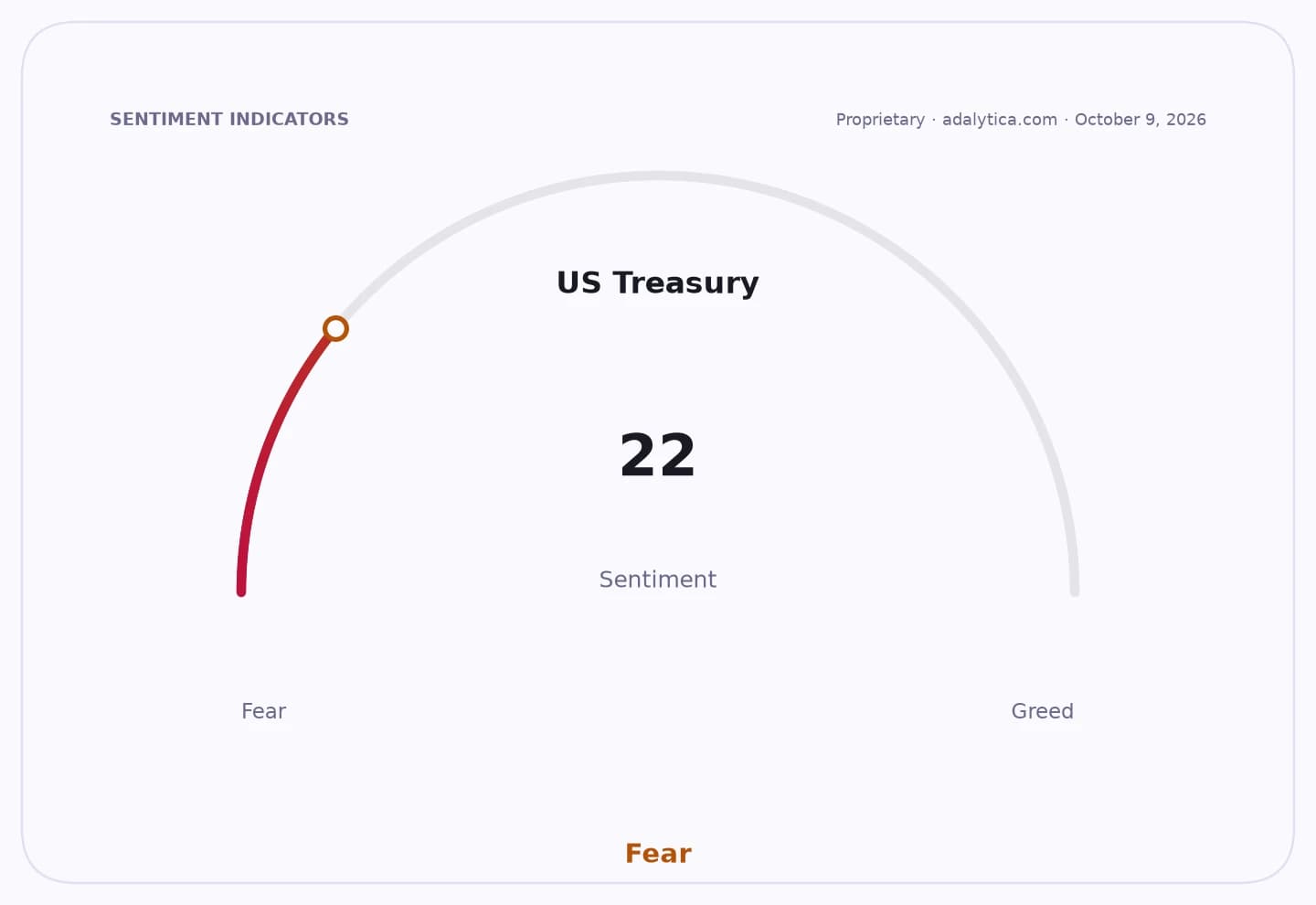
Sentiment IndicatorsⓘProprietary · adalytica.com · October 10, 2026
This is a snapshot — live sentiment, awareness and momentum for 130+ markets update continuously in the dashboard.Open AlphaPulse
That is why the central question is no longer simply whether to buy Treasuries, but how. Individual bonds offer certainty of cash flow and principal at maturity if held to the end, making them better suited to investors with known liabilities or those who want to match future spending. Bond ETFs and mutual funds, by contrast, trade at market prices and never really mature; when older holdings roll off, the cash is reinvested into new bonds at prevailing yields. In a rising-rate environment, that reinvestment feature can become an advantage over time even as fund prices fall. The distinction matters because investors chasing yield are not all making the same bet: some are trading duration, while others are simply trying to harvest income.
The recent numbers show why that nuance matters. The iShares 3-7 Year Treasury ETF has lost about 15% in price since October 2020, when yields were far lower, yet its total return has held roughly steady because coupons were reinvested into higher-rate securities. Long-duration Treasury exposure has been harsher: TLT, the iShares 20+ Year Treasury ETF, fell to about 77.98 on Oct. 9, down sharply from above 85 earlier in the year, while its 50-day moving average has crossed below the 200-day average and its RSI readings point to an oversold market. That is not just a chart story; it reflects the pain of owning long bonds when yields rise quickly. By contrast, the broad core bond ETF AGG has also weakened, but less dramatically, underscoring how duration risk is punishing longer-maturity portfolios more severely than shorter ones.
DGS10 vs DGS2 — macro contextadalytica.com
Explore this data interactively — full history, time series and cross-market comparisons.Open AlphaPulse
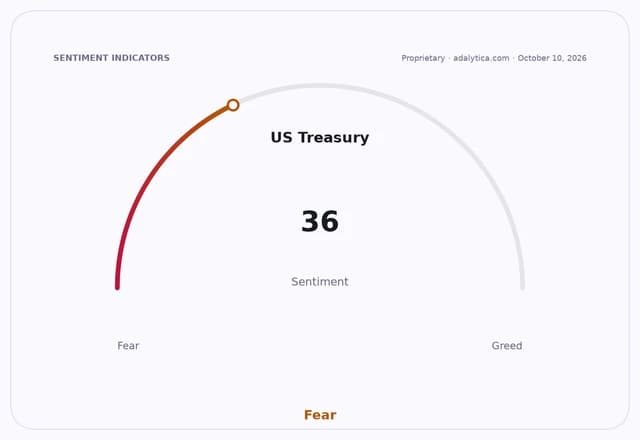
High yields are also reshaping relative value across asset classes. Equity markets, measured by the S&P 500, remain in a state Adalytica labels as “Extreme Greed,” while Treasury sentiment sits at Neutral with pronounced fear. That divergence helps explain why some investors are rotating toward bonds not just for income, but as a valuation alternative to stocks that still screen expensive. Yet the bear case is equally clear: if inflation remains sticky, or if fiscal deficits and heavy Treasury issuance keep pressure on the long end, today’s yields may not be a peak but a waypoint. In that scenario, buying long-duration bonds too early could mean giving up additional price downside before the income benefits fully accrue.
There is also a practical sequencing issue. Investors who can hold to maturity can ignore interim price swings; those who may need liquidity cannot. That is where defined-maturity ETFs such as BlackRock’s iBonds and Invesco’s BulletShares fit, offering a middle ground between the certainty of a single bond and the convenience of a perpetual fund. Laddered portfolios can also reduce reinvestment risk by spreading maturities across time, while Treasury inflation-protected securities offer a hedge if inflation proves harder to tame than markets expect.
For investors, the message is that “high yield” is not a single strategy. It is a menu. The right choice depends on whether the goal is trading rates, matching cash flow or building a reinvestment engine that can benefit if yields stay elevated. With Treasury yields near levels last seen more than two decades ago and volatility still high, structure now matters as much as the coupon.
| Entity | Gains | Losses |
|---|---|---|
| Individual bond holders | ▲Cash-flow certainty | ▼Liquidity |
| Bond ETF investors | ▲Reinvestment at higher yields | ▼Mark-to-market volatility |
| Long-duration funds like TLT | ▲Eventually higher income if yields stabilize | ▼More price pressure now |
| Inflation-linked Treasuries | ▲Protection if inflation stays hot | ▼Less upside if inflation cools |