Bond public issues are drawing renewed attention because they give retail investors a straightforward way to buy fixed-income securities at a time when rising yields, tighter credit conditions and volatile markets are making bond allocation more attractive.
US Bond Public Issues Draw Retail Interest
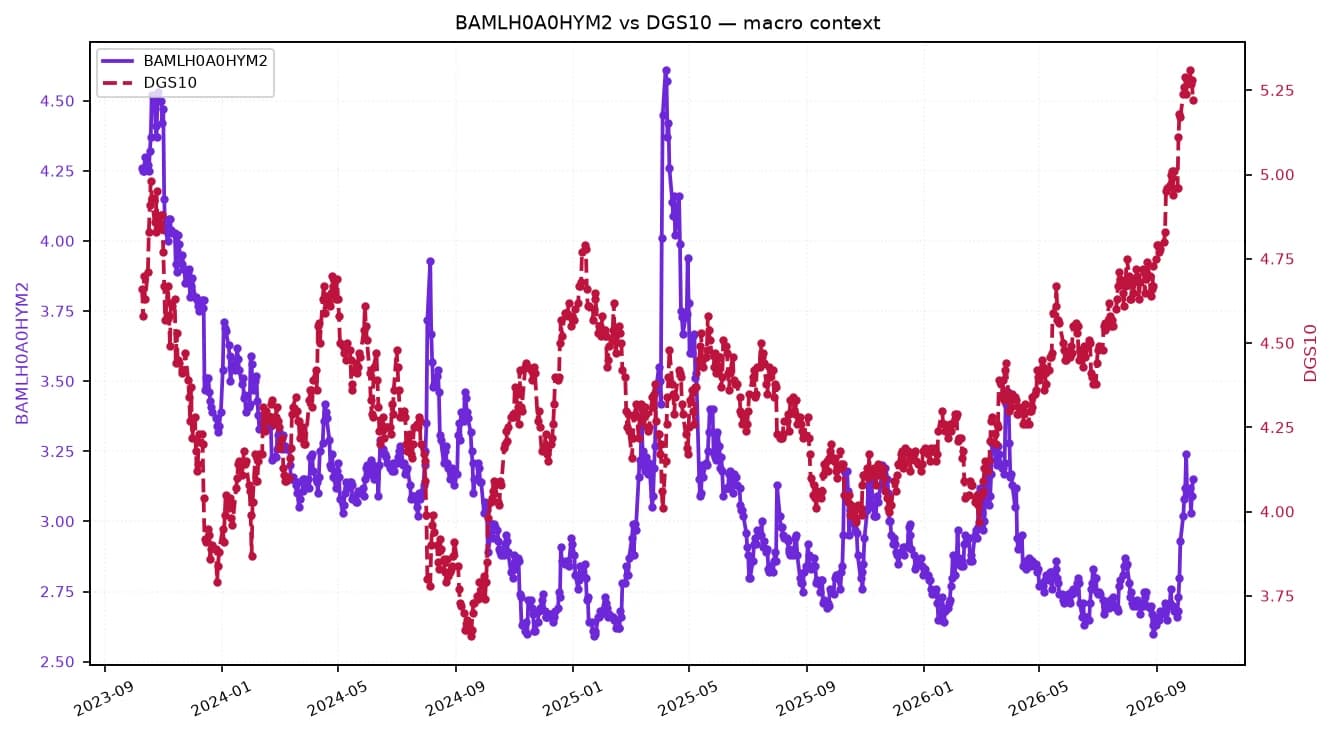
For investors looking beyond equities, the appeal is simple: public issues are generally easier to access than over-the-counter deals, offer upfront clarity on coupon, tenure and ratings, and can be suited to buy-and-hold portfolios that want predictable income rather than daily price swings. In a market where the 10-year US Treasury yield is around 5.23% and credit spreads remain sensitive to risk sentiment, fixed income is once again competing for capital that had been concentrated in stocks and cash.
Sentiment IndicatorsⓘProprietary · adalytica.com · October 12, 2026
This is a snapshot — live sentiment, awareness and momentum for 130+ markets update continuously in the dashboard.Open AlphaPulse
That matters economically because higher borrowing costs are reshaping funding decisions for governments, companies and households. When bond issuance becomes more visible and more accessible, it broadens the investor base for debt markets and can lower the reliance on bank lending, while also giving issuers another channel to raise money in a more transparent format.
The case for public bond issues is strongest for investors who understand the trade-off: the chance to earn steady interest in exchange for taking on issuer, duration and credit risk. Longer-tenure bonds can lock in yields, but they also carry more price risk if rates rise further, as seen in the recent weakness in long-dated Treasury funds such as TLT, which has fallen below its 50-day and 200-day moving averages and shows an RSI reading near 21, a level that points to oversold conditions.
Intermediate-duration exposure has held up better. IEF, which tracks intermediate Treasuries, has been more stable than long bonds, while high-yield debt through HYG is also showing strain, underscoring why ratings and maturity matter when choosing a public issue. Adalytica trade signals for US Treasury bonds currently show neutral sentiment but extremely low awareness, suggesting investors are cautious even as fixed-income demand remains alive.
For buyers, the practical advantage of a bond public issue is that it reduces guesswork: terms are disclosed upfront, the distribution is standardized and the product can be compared across tenure, yield and credit quality before committing capital. That makes it especially relevant now, when investors are reassessing how much duration they want and whether to prioritize income, safety or liquidity.
The next catalyst is the direction of rates and credit stress. If borrowing costs keep climbing, bond public issues with attractive coupons may continue to pull in demand; if volatility deepens, investors will likely favor shorter maturities and higher-rated issuers over longer, riskier debt.
| Entity | Gains | Losses |
|---|---|---|
| Retail bond buyers | ▲Transparent access, fixed income | ▼Duration and credit risk |
| High-rated issuers | ▲Broader investor demand | ▼Must offer higher coupons |
| Long-duration bond funds | ▲Can benefit if yields fall | ▼Hurt if rates rise |
| Lower-rated issuers | ▲Easier market access | ▼Higher refinancing costs |