Junk bonds are still getting bids, but the market is sending a clear caution light: credit spreads have tightened again even as the economy faces higher-for-longer Treasury yields and a U.S. labor market that is cooling but not cracked. For investors, that combination usually means the easy money in high yield has already been made.
High-Yield Spreads Tighten as Treasury Yields Stay High
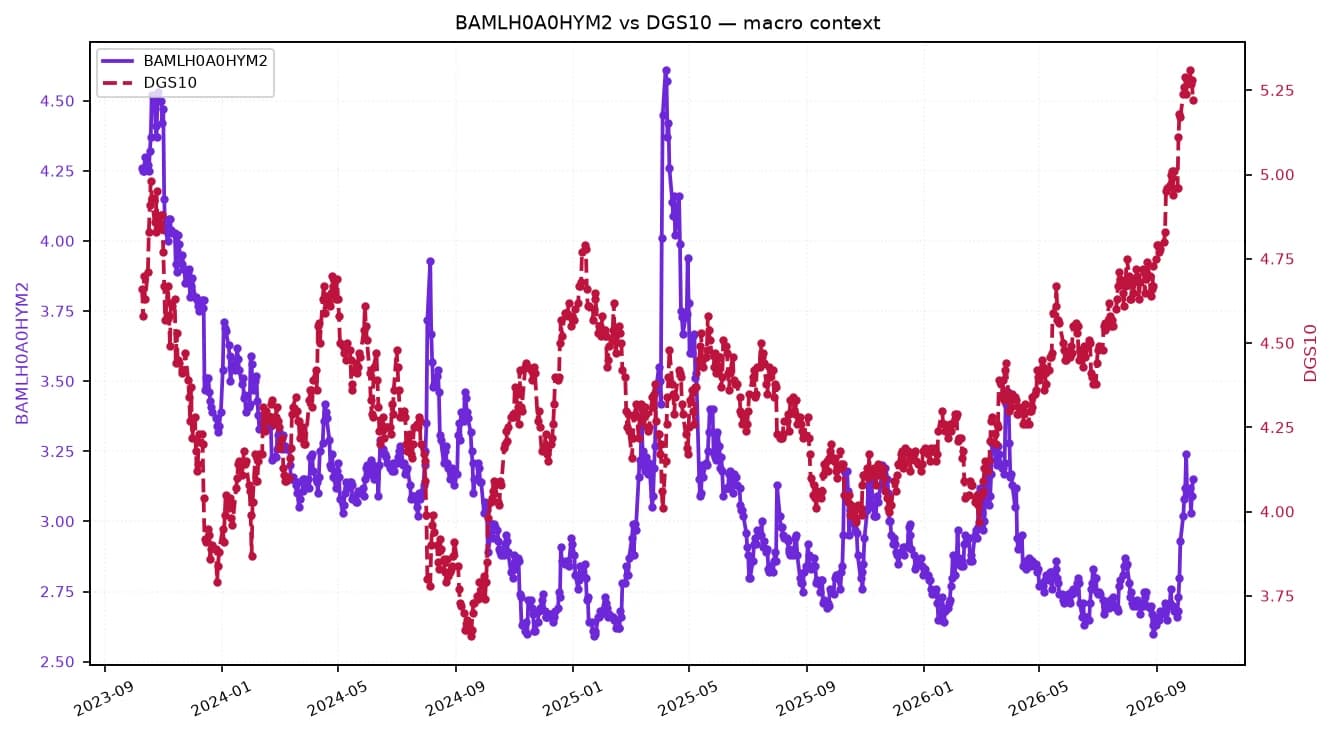
The key warning sign is the Bloomberg high-yield spread, a common measure of how much extra yield investors demand to own lower-rated corporate debt over Treasuries. That spread has fallen to about 3.12 percentage points from 4.26 points in October 2023, and it remains near the lower end of the range seen over the past year. In plain English, bond buyers are accepting less compensation for credit risk just as the 10-year Treasury yield sits above 5%, a level that keeps financing costs elevated across the economy.
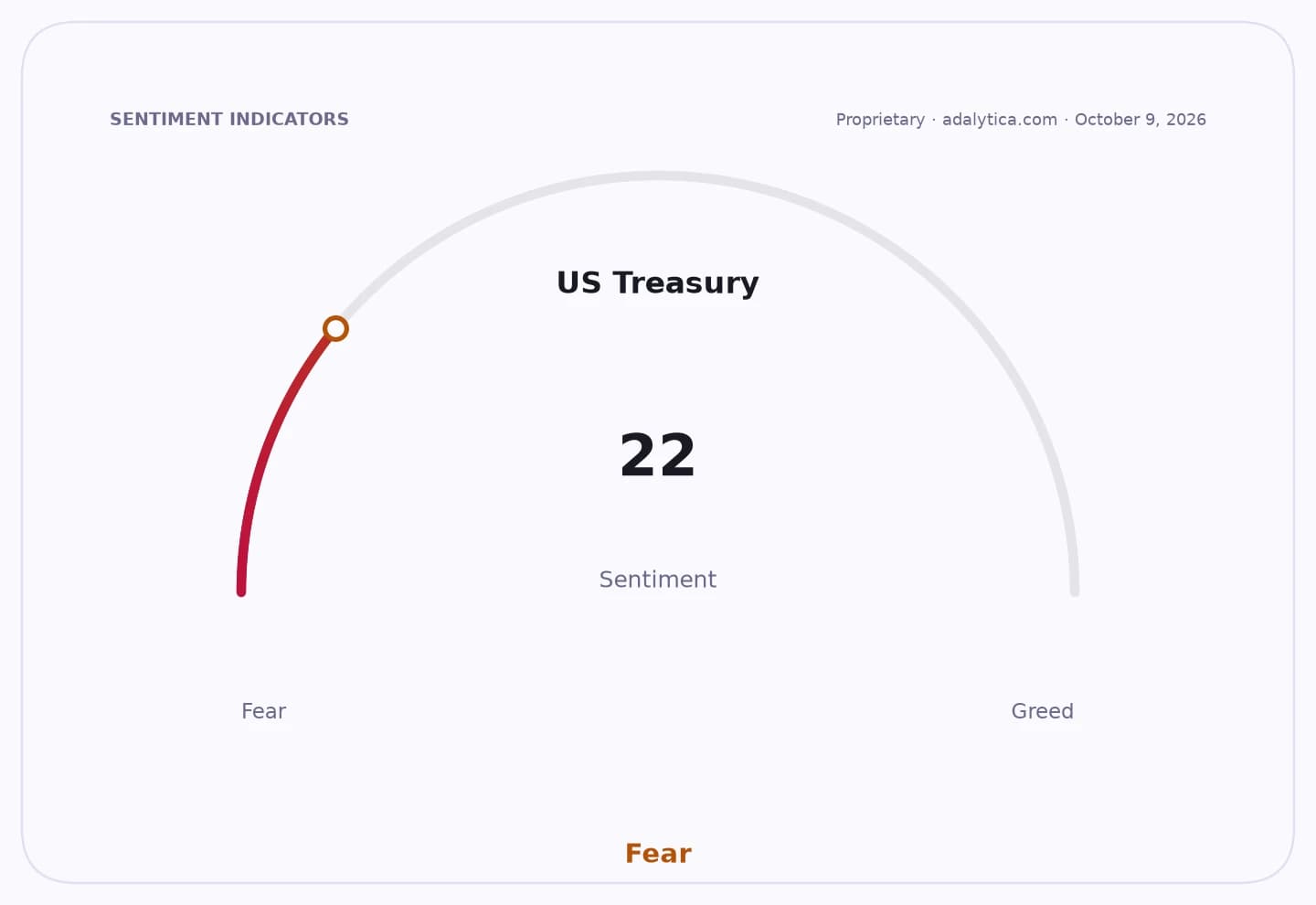
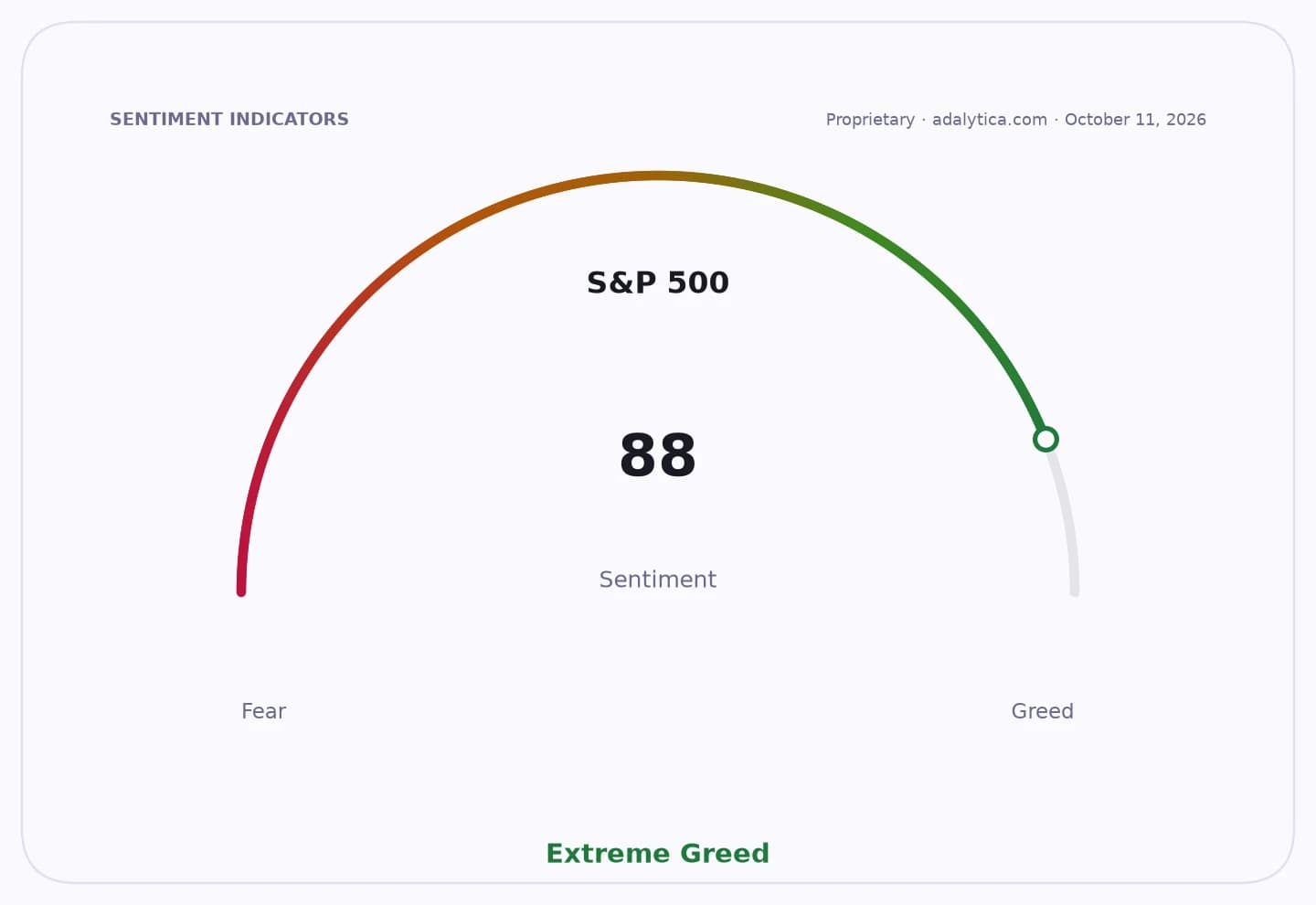
Sentiment IndicatorsⓘProprietary · adalytica.com · October 12, 2026
This is a snapshot — live sentiment, awareness and momentum for 130+ markets update continuously in the dashboard.Open AlphaPulse
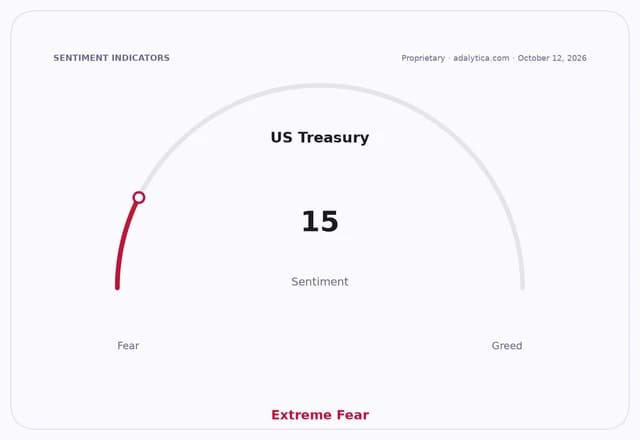
That matters because junk bonds are not just a trading vehicle; they are a real-time referendum on corporate health, refinancing risk and default expectations. When spreads are tight, companies with weak balance sheets can borrow more easily and cheaply. When they widen, the strain shows up first in the lowest-quality borrowers, then in bank lending standards, capital spending and eventually earnings. The market is not screaming distress yet, but it is becoming less forgiving of any deterioration.
The message is reinforced by price action in the big high-yield exchange-traded funds. HYG recently slipped below its 50-day moving average, while its relative strength index fell into deeply oversold territory near the mid-20s. JNK has also lost its grip on both the 50-day and 200-day moving averages. Those are conventional technical signals, and they suggest investors are becoming more defensive even before a major credit event appears. At the same time, municipal bonds have shown more resilience, with MUB holding better than junk credit, hinting that the market is discriminating rather than abandoning fixed income altogether.
Macro conditions help explain why the yellow light is flashing. The unemployment rate has edged up to 4.2%, from 4.1% in August, and is forecast to ease only gradually. That is not recessionary on its own, but it is enough to make the Federal Reserve’s next moves harder to read. Meanwhile, the 10-year yield around 5.2% keeps pressure on leveraged companies, especially those that need to refinance in 2026 and 2027. Even a modest rise in defaults can matter when spreads are already compressed.
For investors, the takeaway is not to panic out of high yield, but to respect the risk-reward balance. In a world where Treasury yields are high and spreads are historically lean, junk bonds are offering less cushion if the economy weakens or if earnings stumble. That argues for quality within credit, shorter duration, diversified funds over concentrated bets, and a little less enthusiasm than the market’s recent appetite for risk might suggest.
The broader narrative is simple: credit markets are still functioning, but they are no longer giving borrowers or buyers much room for error. That makes junk bonds worth watching closely over the next several quarters, because a small turn in the economy could quickly become a much bigger test for the weakest issuers.
| Entity | Gains | Losses |
|---|---|---|
| High-yield borrowers | ▲Easy refinancing | ▼Cheap margin for error |
| Income investors | ▲Current yield | ▼Downside protection |
| Treasury bonds | ▲Safe-haven appeal | ▼Less yield premium demand |
| Lower-quality issuers | ▲Access to capital | ▼Default-risk scrutiny |