Treasury yields are doing the real damage to stocks, and the market is finally being forced to price that in. As the 30-year yield climbed to a 24-year high and the 10-year pushed above 5.2%, investors dumped the most rate-sensitive corners of the market — especially technology and small caps — even as the broader tape looked more like a pause than a panic.
Treasury Yields Hit Tech and Small Caps
That is the story investors should focus on. Higher long-end yields lift the discount rate on future earnings, which hits high-duration growth stocks first and hardest. They also squeeze smaller companies that rely more heavily on refinancing and bank credit, making capital more expensive exactly when balance-sheet flexibility matters most. In other words, the yield surge is not just a bond-market headline; it is a valuation reset across equities.
Sentiment IndicatorsⓘProprietary · adalytica.com · October 9, 2026
This is a snapshot — live sentiment, awareness and momentum for 130+ markets update continuously in the dashboard.Open AlphaPulse

The move showed up clearly in the day’s price action. The S&P 500 slipped 0.23% to 7,801, the Nasdaq Composite fell 0.22% to 27,539 and the Dow Jones Industrial Average lost 0.66% to 51,180. The declines were modest in index terms, but the pressure underneath was concentrated in the parts of the market investors have been using as growth proxies. The Russell 2000 ETF, IWM, fell to 277.57 from 281.34 a day earlier, while the tech-heavy QQQ dropped to 747.58 from 759.66.
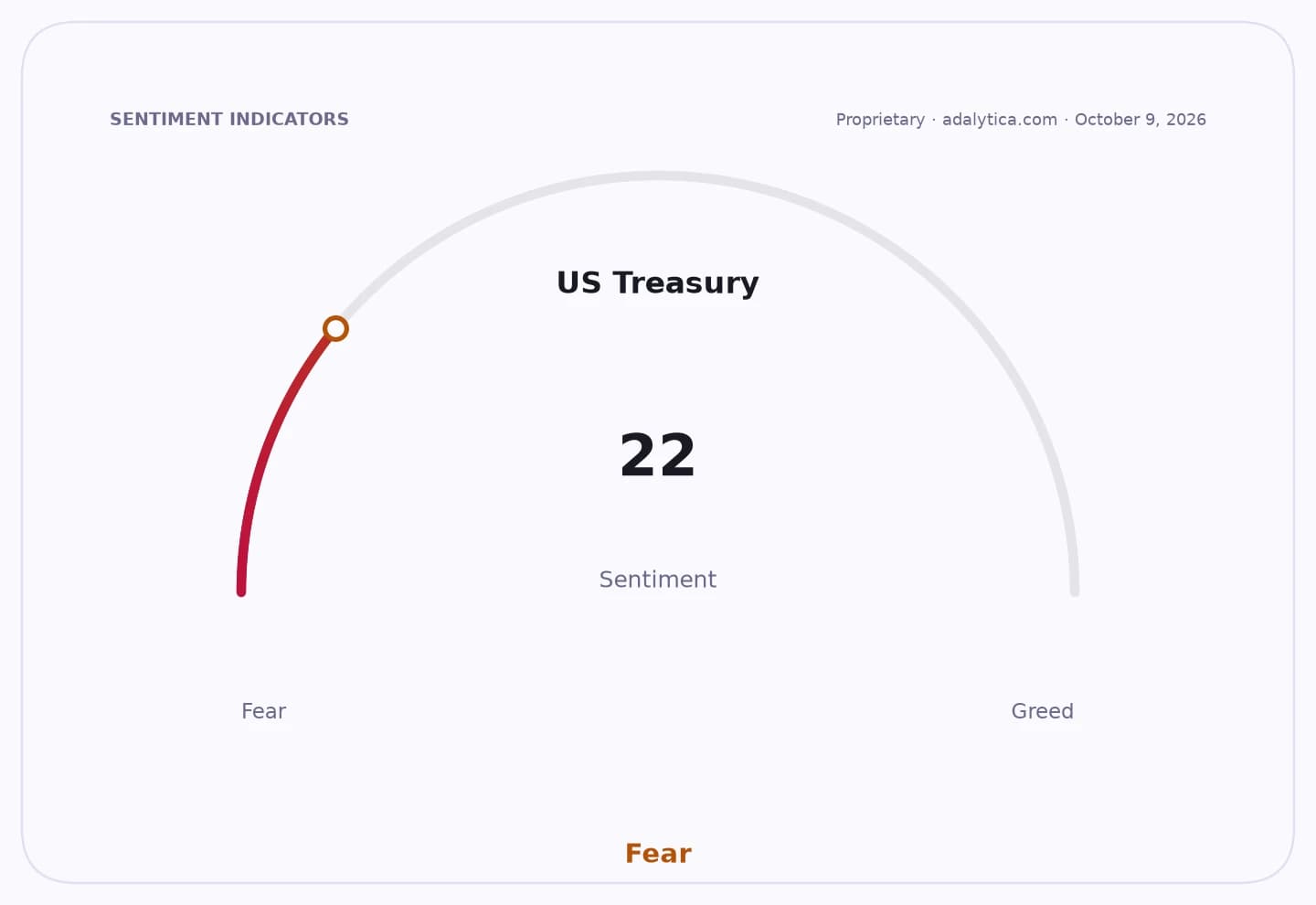
The technical picture reinforces the warning. QQQ remains well above its 200-day moving average, but its recent pullback from an overbought RSI reading of 83 to 66.9 suggests momentum is cooling. IWM is even more vulnerable: its RSI sank to 36.6 after touching 34.9 the prior day, and it remains below its 50-day moving average. Meanwhile, TLT, the long Treasury ETF, is breaking lower with its RSI at 26.2, confirming that bond investors are still demanding more yield rather than less. Adalytica’s TLT trade signal snapshot shows “Fear” in U.S. Treasury bonds, with sentiment at 22 and a sharp 30-day drop, underscoring how quickly the market has turned against duration.
DGS10 vs DGS2 — macro contextadalytica.com
Explore this data interactively — full history, time series and cross-market comparisons.Open AlphaPulse

The macro message is straightforward: the easy money era is not coming back on schedule. The federal-funds rate is still running around 3.7%, but the bond market is effectively forcing financial conditions tighter through the back door. That matters because the market has spent much of 2026 rewarding megacap growth and speculative small caps alike on the assumption that rate pressure was fading. A 30-year yield at a 24-year high says otherwise.
For investors, that creates a very different opportunity set. I believe the market is underestimating how persistent this yield shock can be, and that means the next leg of alpha is likely to come from balance-sheet strength, cash generation and pricing power — not from the most levered “story” names. Large-cap technology can still win if AI capex continues to compound, but the market is no longer paying any price for duration. Small caps, especially unprofitable ones, face the sharpest repricing.
That makes the current setup a stock-picker’s market, but only for the right kind of stocks. If yields stay elevated, capital will keep rotating toward firms that can fund growth internally and away from businesses that need cheap refinancing to survive. That is why the yield spike matters far more than the modest index declines: it changes who gets financed, who gets rewarded and who gets left behind.
The next catalyst is obvious. If upcoming inflation data or Fed commentary validates higher-for-longer rates, the bond selloff can deepen and keep pressure on the most rate-sensitive equity groups. If yields finally stabilize, the relief rally will likely be strongest in the punished areas first. Until then, the trade remains defensive toward duration and selective toward quality.
| Entity | Gains | Losses |
|---|---|---|
| Long-duration Treasury holders | ▲Higher yields, potential future income | ▼Price losses |
| Tech megacaps | ▲Relative resilience, strong cash flow | ▼Valuation compression |
| Small caps / IWM | ▲Select profitable names | ▼Refinancing pressure |
| Long-duration growth ETFs / QQQ | ▲AI-led leadership | ▼Multiple risk from higher discount rates |