Stocks are still behaving far better than the bond market would suggest, even as the 10-year Treasury yield pushes above 5% and investors confront the possibility of even higher borrowing costs ahead. For long-term investors, that disconnect matters: it means the S&P 500 can keep grinding higher for now, but the market’s calm is being tested by a rising-rate environment that could squeeze valuations, especially in growth stocks.
SPY Holds Up as 10-Year Yield Tops 5%

The 10-year yield is now around 5.28%, while the 2-year sits near 4.83%, leaving the yield curve modestly inverted at roughly 0.47 percentage point. That is not just a fixed-income story. Higher Treasury yields raise the discount rate investors use to value future earnings, which is why the pressure tends to hit technology and other high-multiple sectors first. Yet the S&P 500, tracked by SPY, has remained resilient, closing at 774.83 on Oct. 5, above both its 50-day moving average of 762.98 and its 200-day moving average of 717.56.
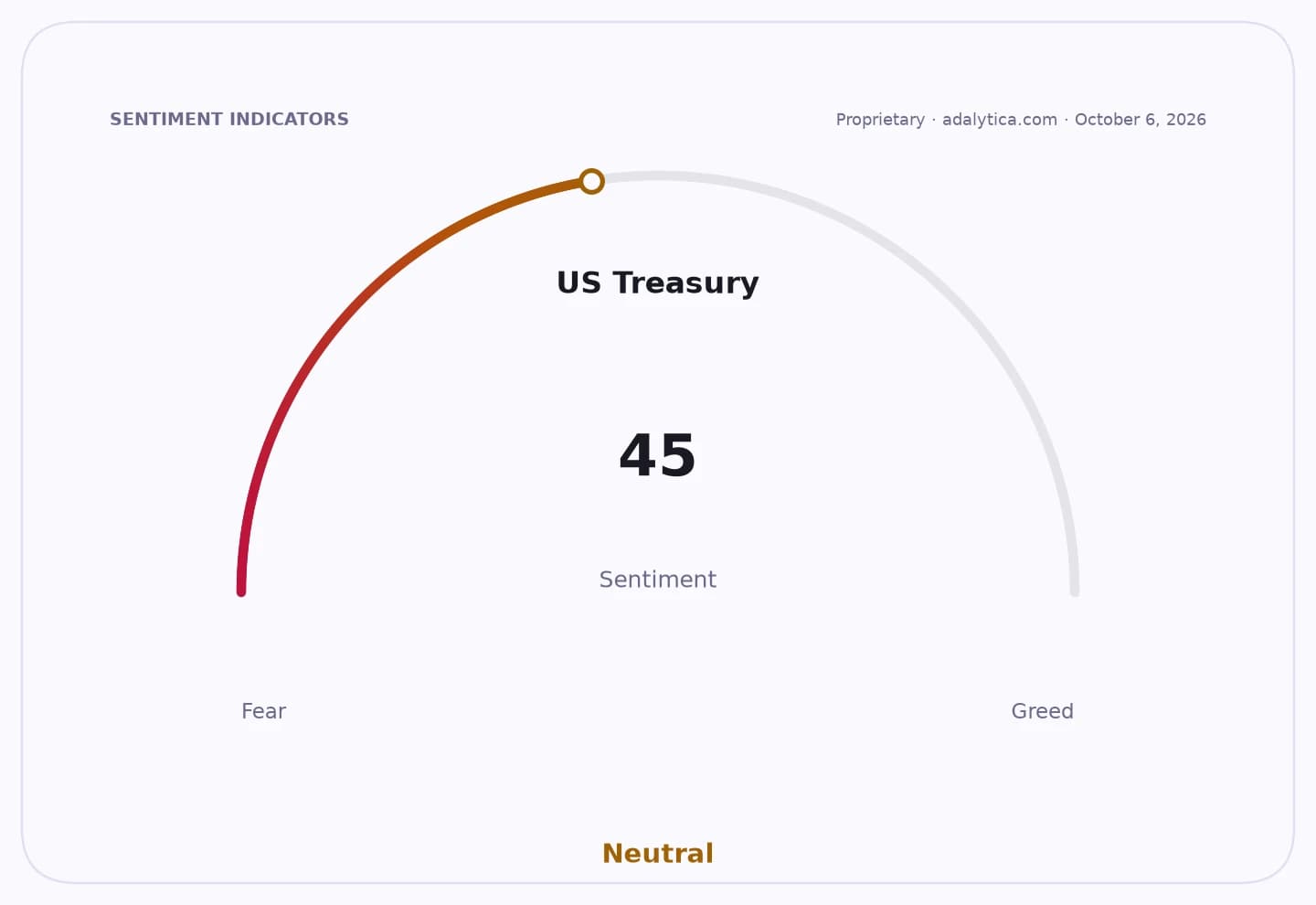
Sentiment IndicatorsⓘProprietary · adalytica.com · October 6, 2026
This is a snapshot — live sentiment, awareness and momentum for 130+ markets update continuously in the dashboard.Open AlphaPulse

That’s the part investors should pay attention to. Low volatility in the index can create a false sense of comfort when the real risk is a slow repricing of the cost of capital. In other words, the market may not be panicking, but it is becoming more selective. The latest technical readings show SPY’s RSI at 67.2, which points to stronger momentum but also suggests the rally is getting stretched. By contrast, the long bond ETF TLT has fallen to 77.11, below its 50-day and 200-day averages, a sign that traders are still demanding higher yields for longer-dated debt.
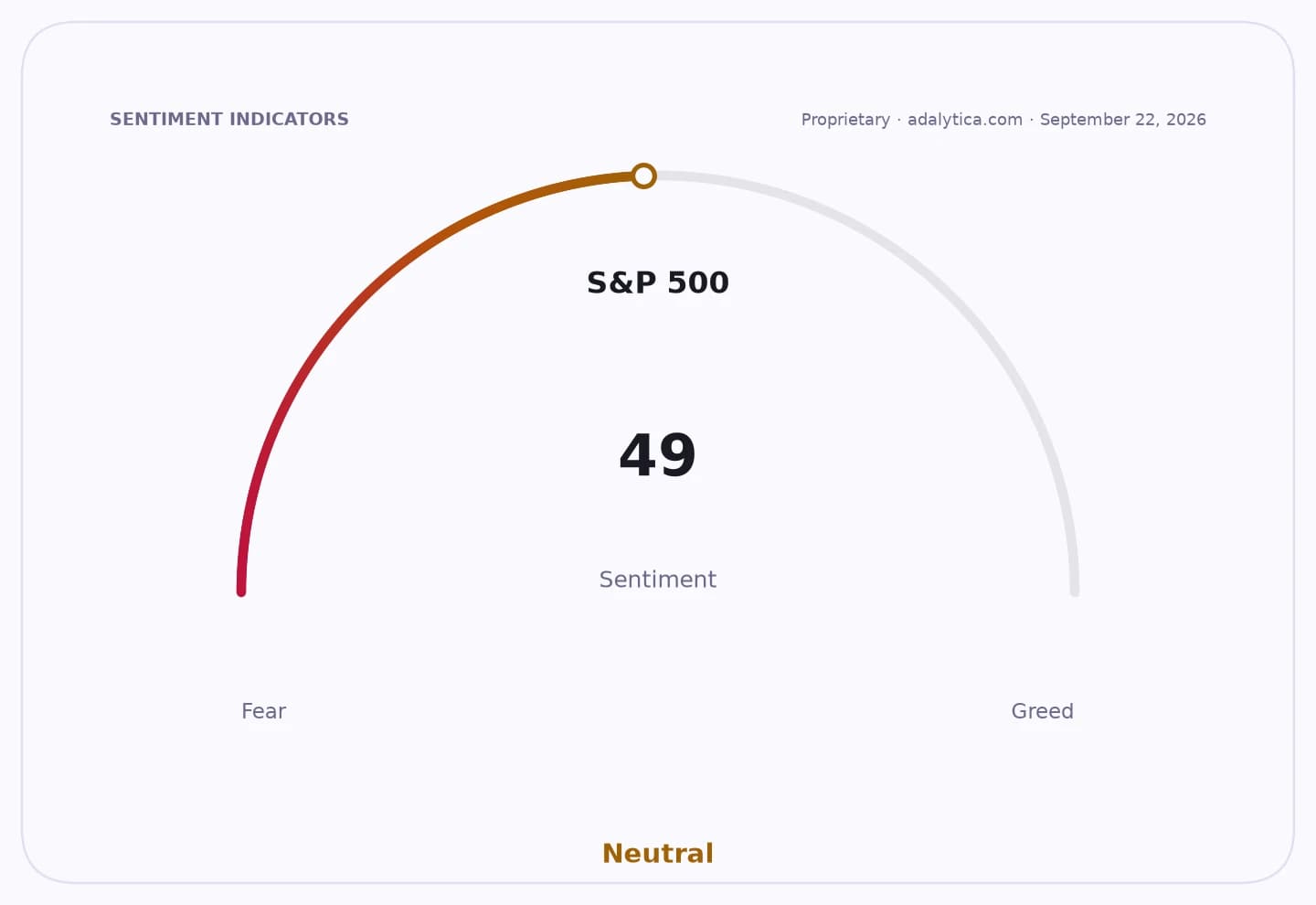
Adalytica’s S&P 500 trade signals also show extreme greed in stocks, with sentiment at 87, while awareness remains at 0, a combination that suggests enthusiasm is high but caution is still missing. Treasury-bond sentiment is neutral at 47, even as awareness reads 82, underscoring that investors are watching the bond market closely without yet embracing it. That split tells a useful story: equities are not reacting as violently as the yield move, but the bond market is quietly dictating the next phase of the cycle.
DGS10 vs DGS2 — macro contextadalytica.com
Explore this data interactively — full history, time series and cross-market comparisons.Open AlphaPulse
Why does this matter economically? Because higher yields filter through the entire financial system. Mortgages, corporate borrowing, and refinancing all get more expensive, which can slow hiring, capex, and eventually earnings growth. Companies with strong cash flow and durable pricing power can usually handle that. Firms dependent on cheap financing cannot. That is why a rising-rate backdrop tends to reward quality, balance-sheet strength, and cash generation over long-duration stories that rely on distant profits.
For investors, the lesson is not to chase every uptick in volatility, but to respect what the bond market is saying. Stocks can stay elevated while yields climb, but that balance becomes harder to maintain if the 10-year presses toward 6% or if growth starts to soften. In that kind of setup, diversified portfolios and patience matter more than trying to time every move in rates.
The most durable approach remains the simplest one: own businesses with lasting competitive advantages, keep expectations grounded, and use market pullbacks to build positions over years, not weeks. The S&P 500’s calm may continue, but Wall Street’s caution is justified. This is a market to watch closely, not fear — and for long-term investors, one worth keeping on the watchlist.
| Entity | Gains | Losses |
|---|---|---|
| Cash-rich quality stocks | ▲Higher relative appeal | ▼Rate-sensitive valuations |
| Treasury sellers | ▲Better yields | ▼Existing bondholders |
| Financially strong companies | ▲Cheaper refinancing pressure avoided | ▼Highly leveraged issuers |
| Long-term investors | ▲Buying opportunities | ▼Short-term momentum traders |