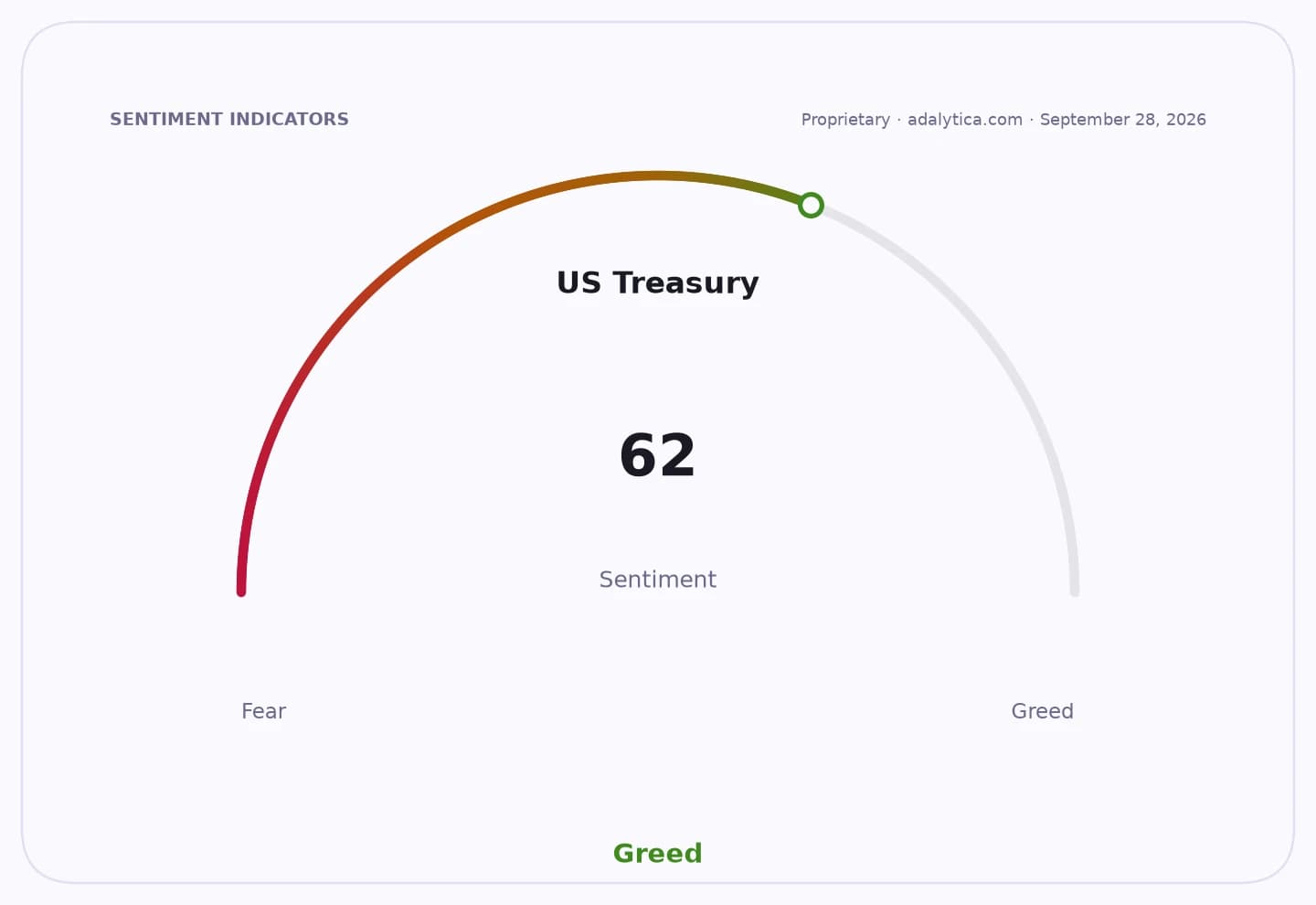
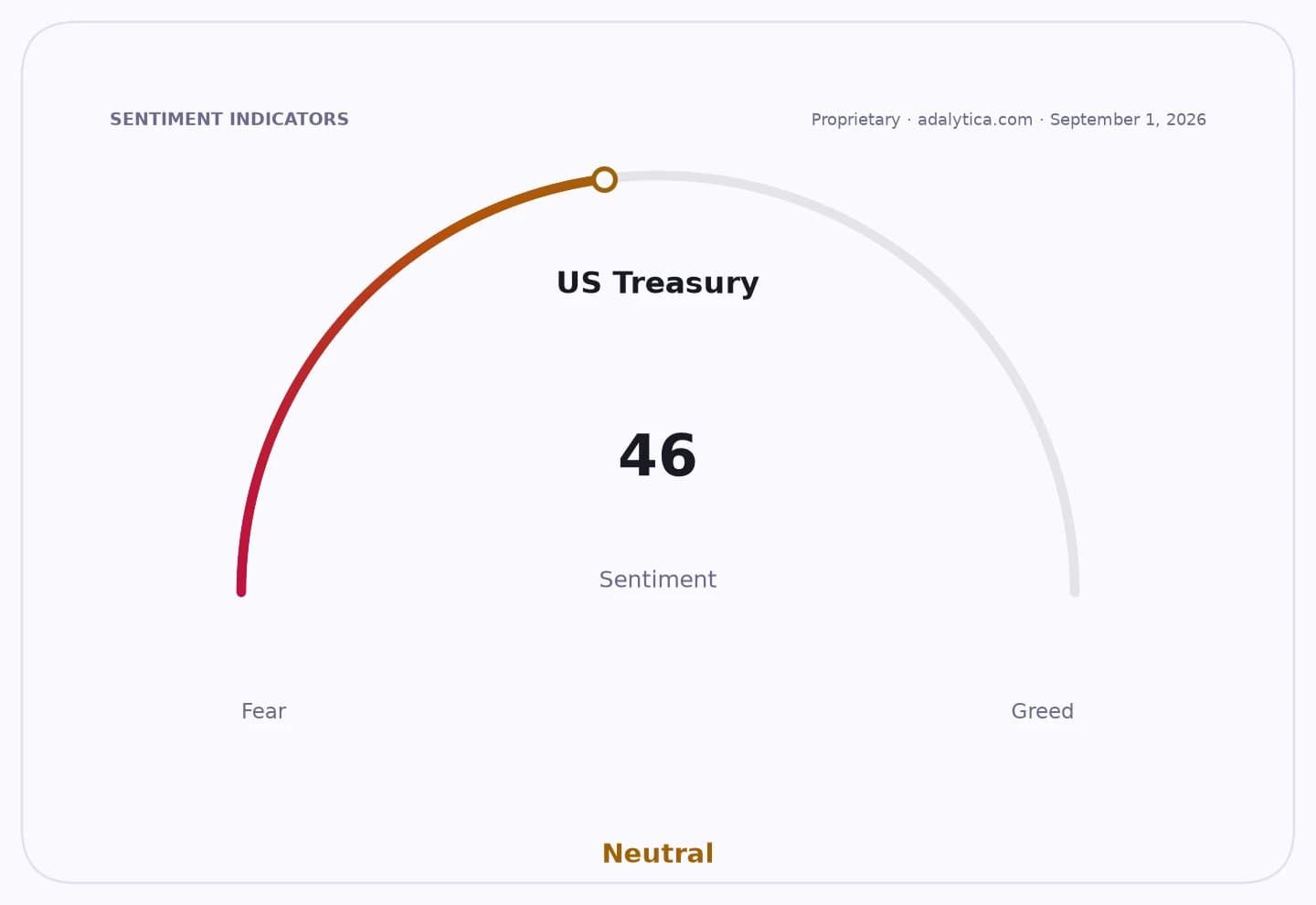
North American equities are under pressure as a surge in long-dated borrowing costs rattles risk appetite, sending the S&P/TSX composite down more than 400 points and pulling U.S. stock markets lower in tandem.
S&P/TSX Falls as 30-Year Yield Hits 2004 High
The move comes as the U.S. 30-year Treasury yield jumps to 5.48%, its highest level since 2004, a level that raises financing costs across the economy and forces investors to reprice everything from growth stocks to corporate credit. Higher yields also tighten financial conditions without the Fed having to raise rates further, making equity valuations harder to justify.
Sentiment IndicatorsⓘProprietary · adalytica.com · September 28, 2026
This is a snapshot — live sentiment, awareness and momentum for 130+ markets update continuously in the dashboard.Open AlphaPulse
The selling is broad-based because bond markets are doing part of the Federal Reserve’s work for it. The 10-year Treasury yield is near 5.19%, while U.S. high-yield credit spreads remain relatively contained at about 2.80 percentage points, suggesting investors are not yet pricing a credit crisis — but they are demanding more compensation for duration and equity risk.
That shift has hit the market’s most rate-sensitive corners, especially technology and other long-duration assets that helped power the recent rally. The SPY ETF was still trading above both its 50-day and 200-day moving averages, but the tape has turned more fragile, and conventional technical indicators show momentum cooling after the latest run higher.
Treasury prices have not been immune either. TLT, the long-dated bond ETF, fell to 79.32, with its relative strength index sliding to 27.5, a reading that points to heavy selling pressure as investors dump duration and rotate toward cash or shorter maturities.
For stocks, the risk is that higher yields start to bite not just on valuations but on the real economy through mortgages, capex and refinancing costs. That is why the selloff matters for Canadian markets as much as Wall Street: the TSX is exposed to the same global rate shock, even if financials and energy can offer some cushion on days when bond yields surge.
The backdrop is still one of a labor market that is slowing but not cracking, with U.S. unemployment forecast around 4.02%, so investors are being forced to weigh sticky inflation against growth that is cooling only gradually. Until yields stabilize, equity markets are likely to remain volatile, and the next catalyst will be whether new economic data or central-bank commentary cools the bond selloff — or extends it.
| Entity | Gains | Losses |
|---|---|---|
| Banks and insurers | ▲Higher lending margins | ▼Equity market volatility |
| Long-duration tech stocks | ▲— | ▼Higher discount rates |
| Bond sellers / short-duration holders | ▲Better relative returns | ▼Price losses on long bonds |
| Equity investors | ▲— | ▼Lower valuations and broader risk-off sentiment |