Global bond selling is still the dominant force in markets, with U.S. Treasury yields edging higher again and investors trimming risk across equities even as some technology shares rebound.
Palo Alto Networks Falls as Treasury Yields Rise
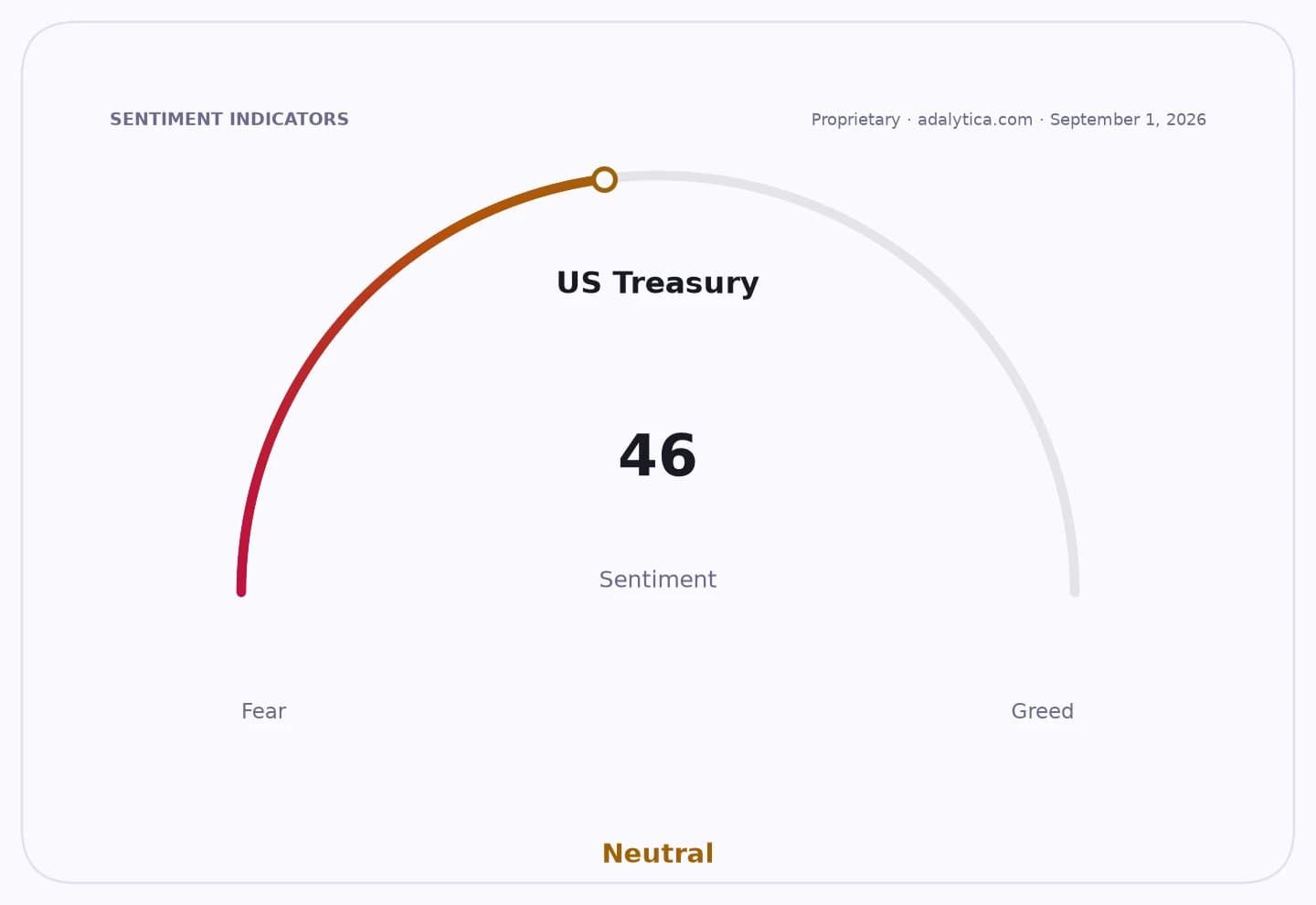
The 10-year Treasury yield rose to 4.73% on Aug. 28 from 4.66% two sessions earlier, while the latest forecast points to 4.707%, keeping long-term borrowing costs elevated. The 2-year/10-year spread was little changed at 41 basis points, suggesting the pressure is coming less from recession panic than from a persistent repricing of term premium, debt supply and policy uncertainty. Credit markets have also reflected the shift: high-yield spread data shows financing conditions remaining tight enough to keep pressure on lower-quality risk assets.
Sentiment IndicatorsⓘProprietary · adalytica.com · September 1, 2026
This is a snapshot — live sentiment, awareness and momentum for 130+ markets update continuously in the dashboard.Open AlphaPulse
That matters because higher yields tend to compress equity valuations, particularly for growth stocks whose cash flows sit further in the future. The S&P 500 has held up better than smaller-cap stocks, but the latest move still left SPY down to 762.82 from 769.35 on Aug. 28, while IWM fell to 291.78 from 299.81 over the same stretch. The 50-day moving average for both funds remains above their most recent closes, a sign that the broader trend is weaker even after the recent rebound. In bonds, TLT slipped to 82.22 on Sept. 1 from 83.13 on Aug. 27, underscoring that duration investors are still under pressure despite a brief stabilization.
Palo Alto Networks is caught in that macro rotation. The cybersecurity group fell 4.59% in the seed headline, reflecting how investors are increasingly willing to take profits in expensive defensive growth names when the rate backdrop turns hostile. For companies like Palo Alto, whose valuation is closely tied to long-duration earnings expectations, a firmer Treasury market can matter as much as company-specific execution. The broader cybersecurity complex also remains vulnerable to multiple compression, even if underlying demand for security spending stays intact.
The bull case is that cyber budgets are less discretionary than much of the market’s growth universe, and Palo Alto sits in a sector with recurring revenue and structural demand. The bear case is that even resilient businesses can see their multiples reset when the market’s discount rate rises and investors become more selective. That dynamic helps explain why U.S. stock futures slipped alongside the bond selloff despite easing Brent crude and a partial rebound in technology.
What to watch next is whether the bond rout continues into the next run of inflation and labor data, and whether Treasury supply concerns keep overpowering equity earnings strength. If yields stay near current levels, growth and high-multiple software names are likely to stay under pressure even if the broader index steadies.
| Entity | Gains | Losses |
|---|---|---|
| Bond buyers / duration holders | ▲Higher yields on new purchases | ▼Mark-to-market losses |
| Financial stocks / lenders | ▲Wider asset yields | ▼Funding-cost pressure |
| Growth equities / software names | ▲— | ▼Valuation compression |
| Palo Alto Networks / PANW longs | ▲Cyber demand backdrop | ▼Rate-sensitive multiple pressure |