More S&P 500 stocks are breaking down than breaking out, and that shift matters because it shows the rally is becoming harder to sustain just as Treasury yields climb back above 5%.
S&P 500 Breadth Weakens as Treasury Yields Rise

On Monday, 30 members of the index fell to new 52-week lows while only seven reached fresh highs, a clear sign that leadership is narrowing and that market strength is being carried by fewer names. That kind of breadth deterioration is often the earliest warning that an index level can mask growing internal fragility. Investors may still see the S&P 500 holding up, but under the surface the tape is starting to behave like a late-cycle market.
Sentiment IndicatorsⓘProprietary · adalytica.com · September 25, 2026
This is a snapshot — live sentiment, awareness and momentum for 130+ markets update continuously in the dashboard.Open AlphaPulse
The macro backdrop is adding fuel to that pressure. The 10-year Treasury yield rose to 5.11% on Sept. 23 before a modest pullback to a forecast 5.083%, keeping the cost of capital elevated for equity valuations. High-yield credit spreads have also widened to 2.8%, up from 2.68% two days earlier, while consumer sentiment remains soft at 51.7 in August, with a September forecast of 54.46. That combination — higher discount rates, tighter financing conditions and a still-fragile consumer — is exactly the environment in which weak stocks tend to get weaker first.
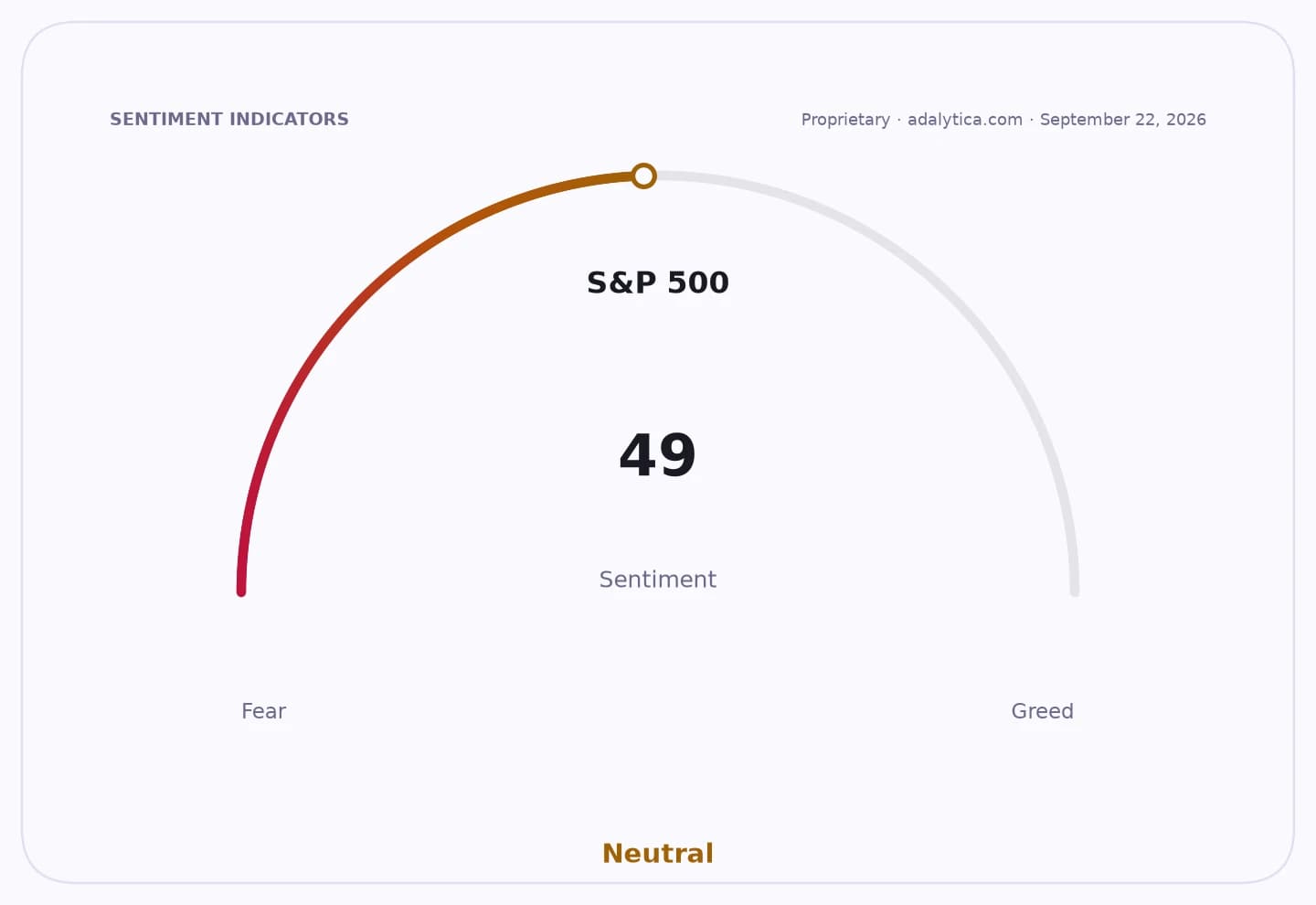
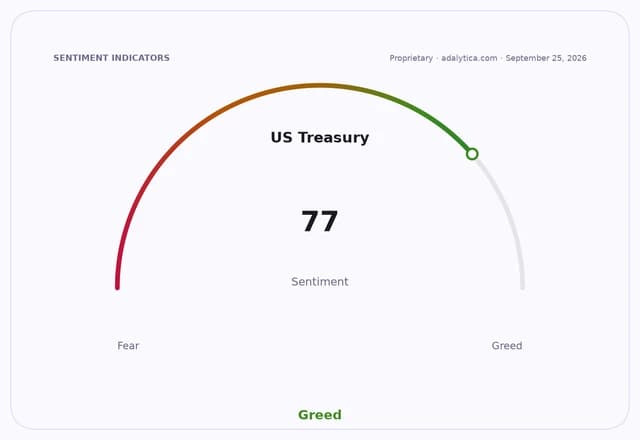
The market is also flashing mixed signals rather than broad conviction. Adalytica’s S&P 500 trade signals show neutral sentiment at 53, even as awareness remains elevated at 76, suggesting investors are paying close attention but not yet positioning aggressively for a sustained rebound. Treasury bond sentiment is strong at 77, and the dollar remains elevated as well. In practice, that means capital is still gravitating toward safety, not toward the kind of risk appetite that usually powers a durable advance in cyclical and smaller-cap shares.
DGS10 vs BAMLH0A0HYM2 — macro contextadalytica.com
Explore this data interactively — full history, time series and cross-market comparisons.Open AlphaPulse
For investors, the message is less about one bad session and more about asset selection. When breadth deteriorates this sharply, passive exposure does not protect you from stock-level carnage. The winners are likely to be balance-sheet strength, durable free cash flow and businesses with pricing power or structural demand — think quality software, defense, select industrial automation and infrastructure tied to AI buildout. The losers are the richly valued, long-duration names that need falling yields and easy financing to justify their multiples.
That makes this a market to trade with a barbell, not a blind beta chase. If yields stay near current levels and credit stays tight, breadth should remain under pressure and the laggards can keep dragging on the index even if the headline averages look calm. The next catalyst will be whether the 10-year can stay above the psychological 5% line and whether more sectors start joining the downside list. Until then, the asymmetric opportunity is in names that can compound even if the broader market keeps narrowing.
| Entity | Gains | Losses |
|---|---|---|
| Treasury bulls | ▲Higher yields, stronger carry | ▼Equity multiples |
| Quality large caps | ▲Relative flight to safety | ▼Broad market breadth |
| Weak balance-sheet stocks | ▲— | ▼Higher financing costs |
| Passive index investors | ▲Limited downside if leaders hold | ▼Hidden deterioration in laggards |