August ended with the market’s most important message clear: borrowing costs are still climbing, and the AI chip boom is powerful enough to shrug off that pressure for now. That combination matters because it changes who gets rewarded in markets — capital-light growth and scarce compute capacity are still drawing the money, while duration-heavy assets, rate-sensitive sectors and overlevered sovereigns are being forced to reprice.
Semiconductor stocks rise as global yields climb

The catalyst came from Jackson Hole, where Fed Chair Kevin Warsh said better summer inflation data “do not tell me that underlying trends have meaningfully improved” and that the central bank still has work to do. Traders quickly lifted the odds of a September hike to about 60% from 36% in a single session. For investors, that is not just a policy headline. It is a signal that the Fed is willing to keep real rates restrictive even as growth slows, raising the cost of capital across the system.
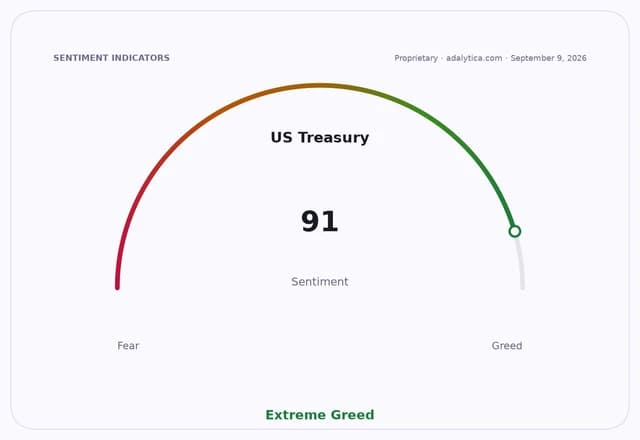
Sentiment IndicatorsⓘProprietary · adalytica.com · September 9, 2026
This is a snapshot — live sentiment, awareness and momentum for 130+ markets update continuously in the dashboard.Open AlphaPulse

The bond market heard the same warning. The 30-year Treasury yield briefly touched 5.34%, its highest since 2007, before Treasury buybacks helped steady the long end. But the selloff was no longer just an American story. Thirty-year Bunds climbed to their highest since 2011, Canada’s 30-year bond hit a 2010 high and the UK’s 50-year gilt reached a record 5.39%. Japan moved furthest of all, with the 10-year government bond yield climbing to 2.945%, the highest since 1996. France remains one of the weakest links, with the 10-year OAT above 4.1% for the first time since 2008.
That is why the economic significance goes beyond rates desks. Higher sovereign yields tighten financial conditions, pressure fiscal arithmetic and force governments to issue shorter or less expensive debt. Washington doubled long-end buybacks, Japan cut super-long issuance to a 17-year low and the UK Debt Management Office shifted its remit shorter. This is a global repricing of government debt after years of cheap money, and it is feeding “bond vigilante” behavior across currencies, commodities and equities.
Yet the equity market is not behaving like a broad risk-off tape. The S&P 500 rose 2.6% in August and the Nasdaq added 3.9%, snapping two-month losing streaks, while the Dow gained for a fifth straight month. The real engine was semiconductors. Nvidia delivered a stronger-than-expected quarter and guided above estimates, with management saying hyperscaler capital spending could reach $1.3 trillion next year. In Korea, DRAM export prices surged 401% from a year earlier, and memory chips have risen 12.5 times since January 2023, versus gold’s 2.5 times.
That divergence is the story investors should focus on. Rising yields normally punish long-duration growth, but AI infrastructure is now behaving like a utility buildout, not a cyclical gadget trade. When DRAM prices are exploding and fabs cannot come online fast enough, the market is pricing scarcity, not just demand. That helps explain why the semiconductor complex, including SOXX and SMH, held up even as Treasury yields reset higher; both ETFs remain above their 50-day and 200-day moving averages, while recent technical readings show a rebound from oversold conditions.
The opportunity is not simply “own semis.” It is to own the bottlenecks. Memory, advanced packaging, foundry equipment and AI networking remain the toll roads of the cycle. Samsung, SK hynix, Broadcom and the supplier chain around them are benefiting from a capital-spending supercycle that is still early by industrial standards. The market may debate whether Broadcom’s softer fourth-quarter outlook tempers the trade, but the more important fact is that AI semiconductor sales tripled year on year to $16.7 billion, and the installed base of compute still needs far more capacity.
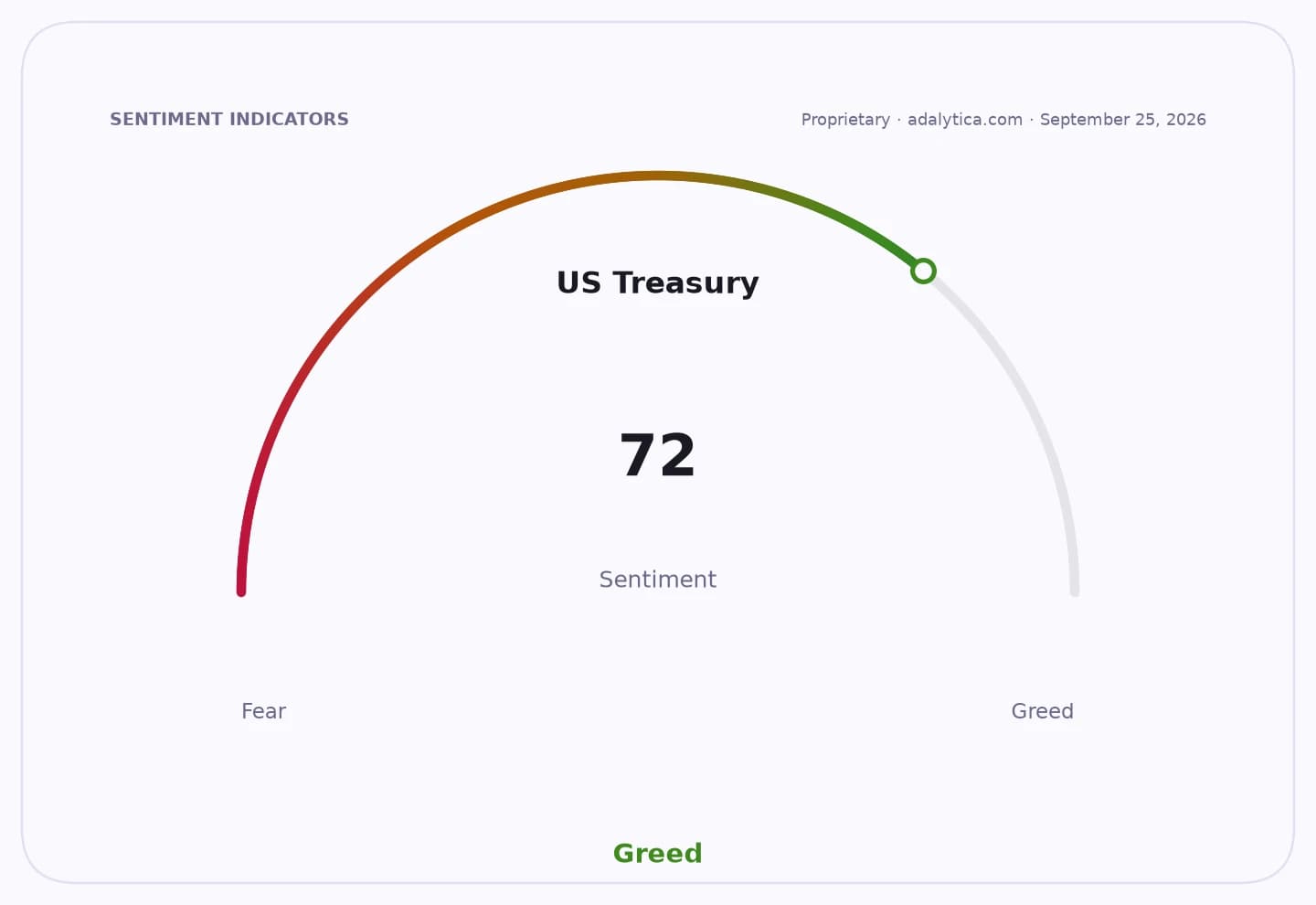
There is also a second-order trade here. If higher yields persist, balance-sheet strength becomes more valuable, not less. That favors companies with pricing power, long order books and exposure to AI capex rather than consumer electronics or heavily indebted commodity borrowers. It also argues for caution on long-duration Treasuries, where Adalytica’s trade signals show extreme greed even as prices remain below the 50-day average and below prior highs.
The broader message from August is that markets are splitting into winners and losers more cleanly. Bond bears are winning against sovereign issuers, while semiconductor leaders are still winning against macro gravity. If you want asymmetry, stay positioned where capital spending, scarcity and structural demand intersect. In this market, the next leg higher is likely to come from the companies selling the picks and shovels to the AI economy, not from the parts of the market still waiting for easy money to return.
| Entity | Gains | Losses |
|---|---|---|
| Semiconductor makers | ▲AI demand and pricing power | ▼Higher funding costs |
| AI infrastructure suppliers | ▲Hyperscaler capex boom | ▼Slow consumer chip demand |
| Sovereign bond issuers | ▲Buyback and issuance tweaks | ▼Higher refinancing costs |
| Long-duration assets | ▲Temporary rate relief | ▼Rising global yields |