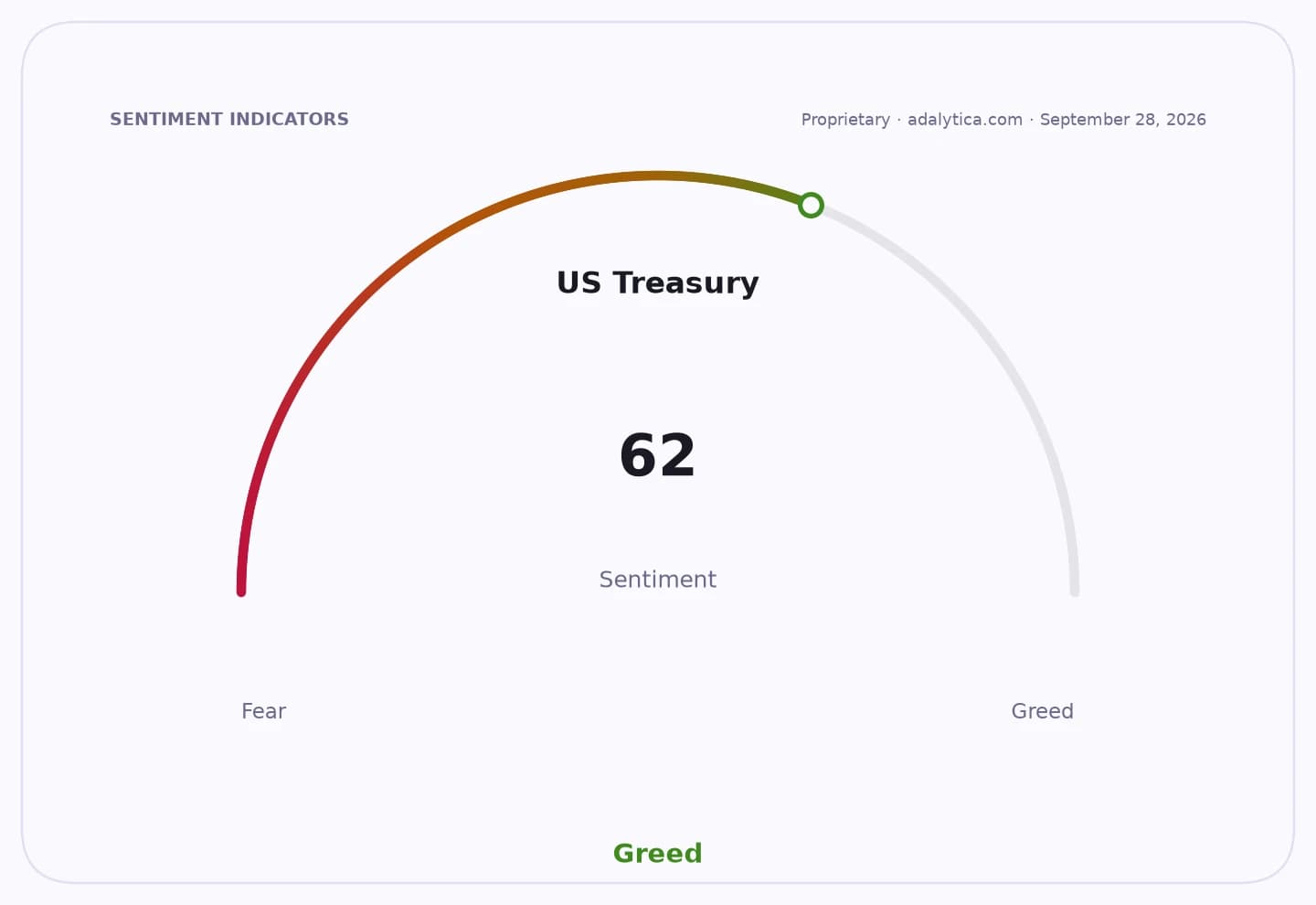
Bond traders are sitting on an increasingly crowded bearish bet as the U.S. 10-year Treasury yield pushes to 5.19% and systematic positioning turns heavily short, leaving the market vulnerable to a sharp squeeze if the next policy surprise proves even slightly less hawkish than expected.
Treasury Shorts Crowd as 10-Year Yield Hits 5.19%

That matters because the bond market does not need the Federal Reserve to start cutting rates to rally. It only needs incoming data, central-bank messaging or Treasury supply dynamics to come in below an already aggressive hawkish consensus. With the Federal funds rate still at 3.63% and the 10-year yield near its highest level in this data set, investors are already pricing a lot of bad news for duration.
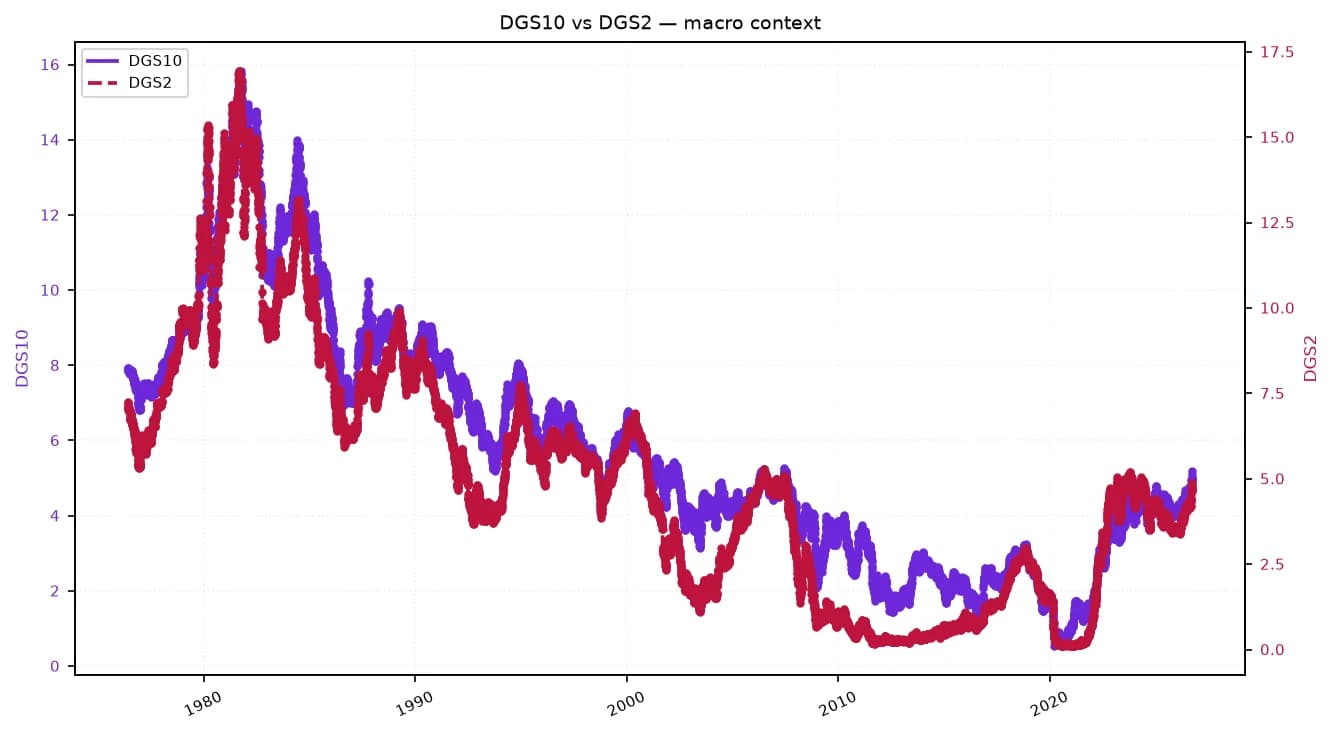
The setup is reinforced by the curve. The 10-year minus 2-year spread has widened to 0.36 percentage point from 0.26 the prior session, even as the long end remains under pressure. That suggests the market is still debating how restrictive policy will stay, but it also shows that investors are not yet fully positioned for a decisive reversal lower in yields. In crowded trades, that distinction matters: a modest shift in rate expectations can force short-covering before any major macro inflection arrives.
The price action in the iShares 20+ Year Treasury ETF underscores the tension. TLT closed at $79.32 on Friday, extending a slide that has taken it below both its 50-day moving average of $81.97 and 200-day moving average of $84.24. Its relative strength index was 27.5, a level that points to technically oversold conditions, while the MACD remains negative. In plain terms, momentum is weak, but the market is also stretched enough that even a small catalyst could trigger a rebound.
DGS10 vs T10Y2Y — macro contextadalytica.com
Explore this data interactively — full history, time series and cross-market comparisons.Open AlphaPulse
For investors, that creates a two-sided trade. The bear case is straightforward: persistent inflation, resilient growth or another hawkish Fed message keeps longer-dated yields elevated and pressures long-duration assets. The bull case is more tactical but potentially more powerful: when positioning is this one-sided, the first less-hawkish surprise can drive a violent unwind, especially in an asset class where leverage and duration sensitivity amplify moves.
The macro backdrop is why the squeeze risk is so closely watched. Treasury yields remain anchored at elevated levels, and the market has spent months digesting the possibility that policy will stay restrictive for longer. But when the consensus becomes heavily skewed, the marginal driver is no longer the absolute level of rates — it is whether the next data point is less bad than expected. That can be enough to lift bond prices even without a full-blown dovish pivot.
For equity and credit investors, the implication is simpler: bond volatility is likely to remain a key transmission channel for broader risk sentiment. If shorts are forced to cover, duration-sensitive assets could catch a relief bid. If they are not, Treasury yields near 5% would continue to act as a headwind for valuations, borrowing costs and refinancing conditions.
What to watch next is less a single number than the sequence of surprises. A softer inflation print, weaker labor data or a less forceful Fed communication could be enough to squeeze positioning. If not, the crowded short may persist — but the longer it stays in place, the more asymmetric the payoff becomes if the market’s hawkish conviction is even slightly overdone.
| Entity | Gains | Losses |
|---|---|---|
| Treasury bond bulls | ▲Short-covering rally | ▼Persistent hawkish pricing |
| Treasury bond shorts | ▲Carry on bearish trade | ▼Sudden squeeze losses |
| Equities with long duration | ▲Relief from lower yields | ▼Higher discount-rate pressure |
| Borrowers and issuers | ▲Cheaper funding if yields fall | ▼Higher refinancing costs if yields stay high |