Fixed-income investors are being forced to make a classic trade-off: give up duration and take more credit risk.
Treasury Yields Push Investors Into High-Yield Credit
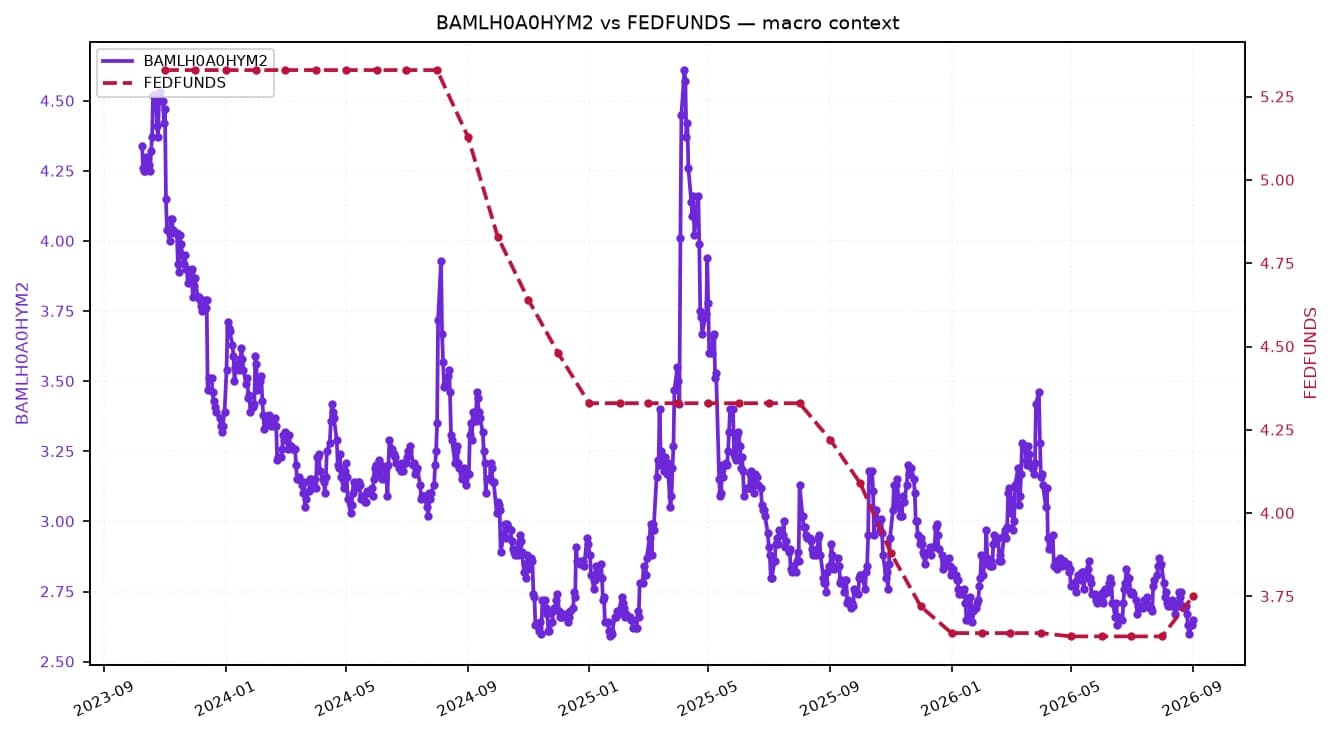
That shift matters because the benchmark pain point is no longer theoretical. The 10-year Treasury yield is sitting around 5.3%, the federal funds rate is still near 3.7%, and long-duration bond funds have been under pressure as rate expectations stay elevated. In that environment, investors hunting for income are increasingly looking past Treasuries and moving into higher-yielding corporate debt, where credit spread carry can offset some of the damage from rising yields.
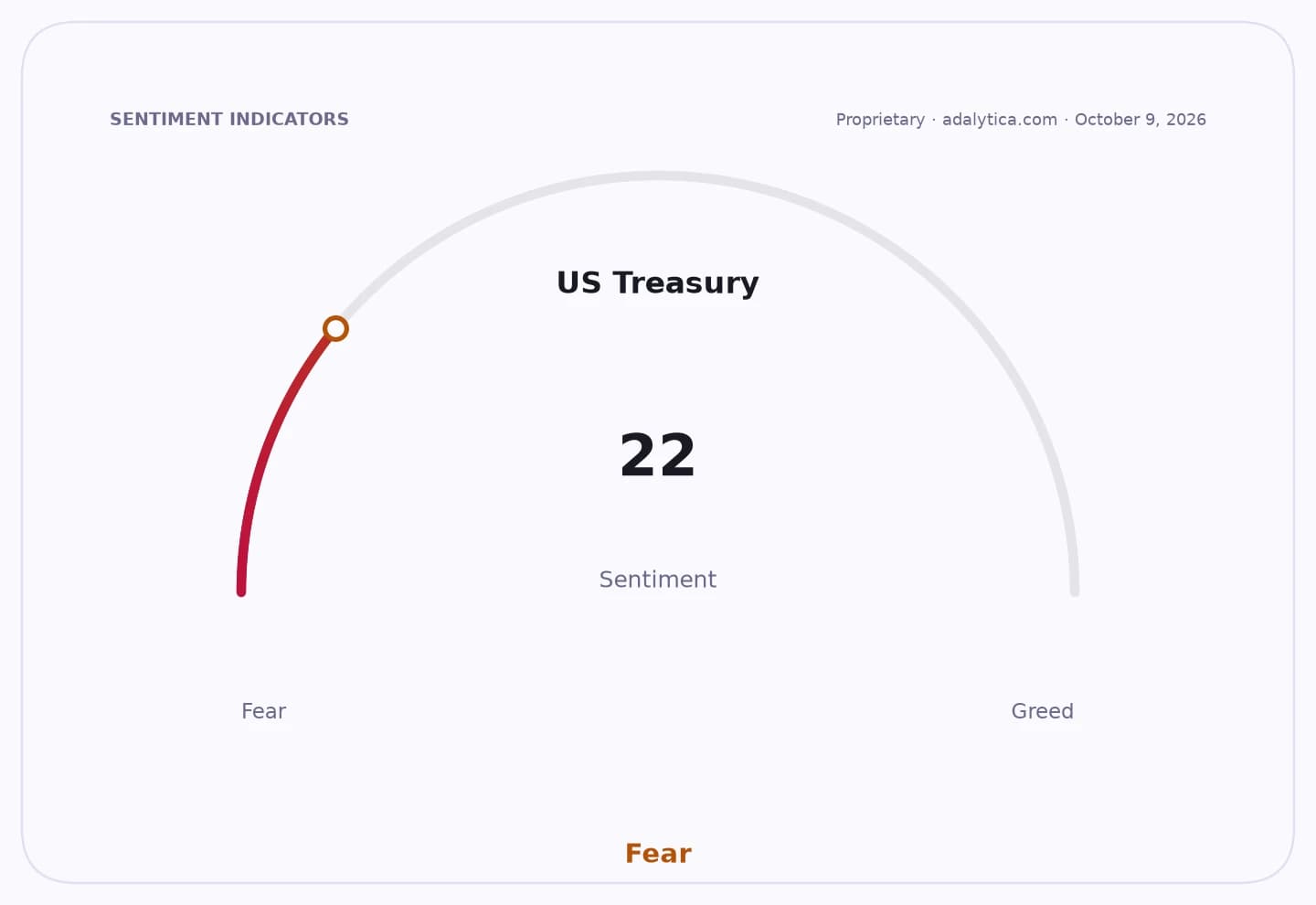
Sentiment IndicatorsⓘProprietary · adalytica.com · October 9, 2026
This is a snapshot — live sentiment, awareness and momentum for 130+ markets update continuously in the dashboard.Open AlphaPulse
The market is already telling that story. The iShares iBoxx $ High Yield Corporate Bond ETF, HYG, is trading around 77.1, below its 50-day moving average of 78.3, while its RSI is down near 25, a deeply oversold reading by conventional technical indicators. The SPDR Bloomberg High Yield Bond ETF, JNK, is also weak, with its RSI around 28 and the fund trading below both its 50-day and 200-day moving averages. By contrast, long Treasuries are under far more severe strain: TLT has fallen to about 77.9, well below its 50-day average of 80.7 and its 200-day average of 83.6, with RSI near 26. That’s the market’s way of saying duration is no longer the easy answer.
Economically, this is a sign that the cost of capital is staying higher for longer. When Treasury yields remain elevated, the discount rate on everything from equities to real estate to leveraged loans rises with it. But fixed-income investors still need yield, and the more attractive path is often to move down the credit spectrum rather than out the maturity curve. That helps support demand for high-yield bonds, leveraged loans and other spread products even as they carry more default risk.
DGS10 vs FEDFUNDS — macro contextadalytica.com
Explore this data interactively — full history, time series and cross-market comparisons.Open AlphaPulse
There is a catch, and it matters for investors: credit risk is not free. The ICE BofA high-yield spread is around 3.1 percentage points, still wide enough to offer carry, but not wide enough to fully compensate for a sharp economic slowdown. If growth weakens and earnings pressure spreads, the same investors seeking refuge from duration could find themselves exposed to a second form of downside — credit deterioration. Still, the immediate market choice is clear: if rates stay high, duration is the loser, and spread product becomes the preferred outlet for income.
Adalytica’s TLT trade signal snapshot points the same way, with sentiment on U.S. Treasury bonds down to 22, labeled “Fear,” even as awareness remains elevated. By contrast, broad equity sentiment is frothy, with SPY showing “Extreme Greed,” underscoring how investors are being pulled toward risk assets across markets rather than hiding in duration. That combination usually supports higher-yielding fixed income and selective credit exposure, not long Treasuries.
The investable implication is straightforward. In a higher-for-longer world, the market underestimates the resilience of credit income and overestimates the appeal of duration. Investors who want fixed-income yield without taking full interest-rate risk should focus on high-yield ETFs, short-duration credit, floating-rate loans and active managers who can discriminate between strong and weak balance sheets. The next catalyst is simple: if the 10-year yield stays above 5%, the case for dialing up credit risk instead of duration only gets stronger.
| Entity | Gains | Losses |
|---|---|---|
| High-yield bonds | ▲Higher carry demand | ▼Default-sensitive borrowers |
| Treasury duration | ▲Lower exposure preference | ▼Price performance |
| Floating-rate loans | ▲Rate insulation | ▼Fixed-rate bondholders |
| Equity investors | ▲Risk-on liquidity spillover | ▼Conservative bond allocators |