Central banks may be forced to choose between stabilizing markets and avoiding the appearance of financing governments as public debt levels near postwar highs and global bond yields climb.
BIS warns central banks on debt and bond market stress

That is the core warning from the Bank for International Settlements, where General Manager Pablo Hernandez de Cos said the next crisis will arrive in a far less forgiving fiscal environment than the episodes that defined the past two decades. His message matters because the BIS is effectively arguing that the toolkit central banks relied on in 2008, 2020 and 2022 is becoming more politically fraught just as bond markets are again testing sovereign finances.
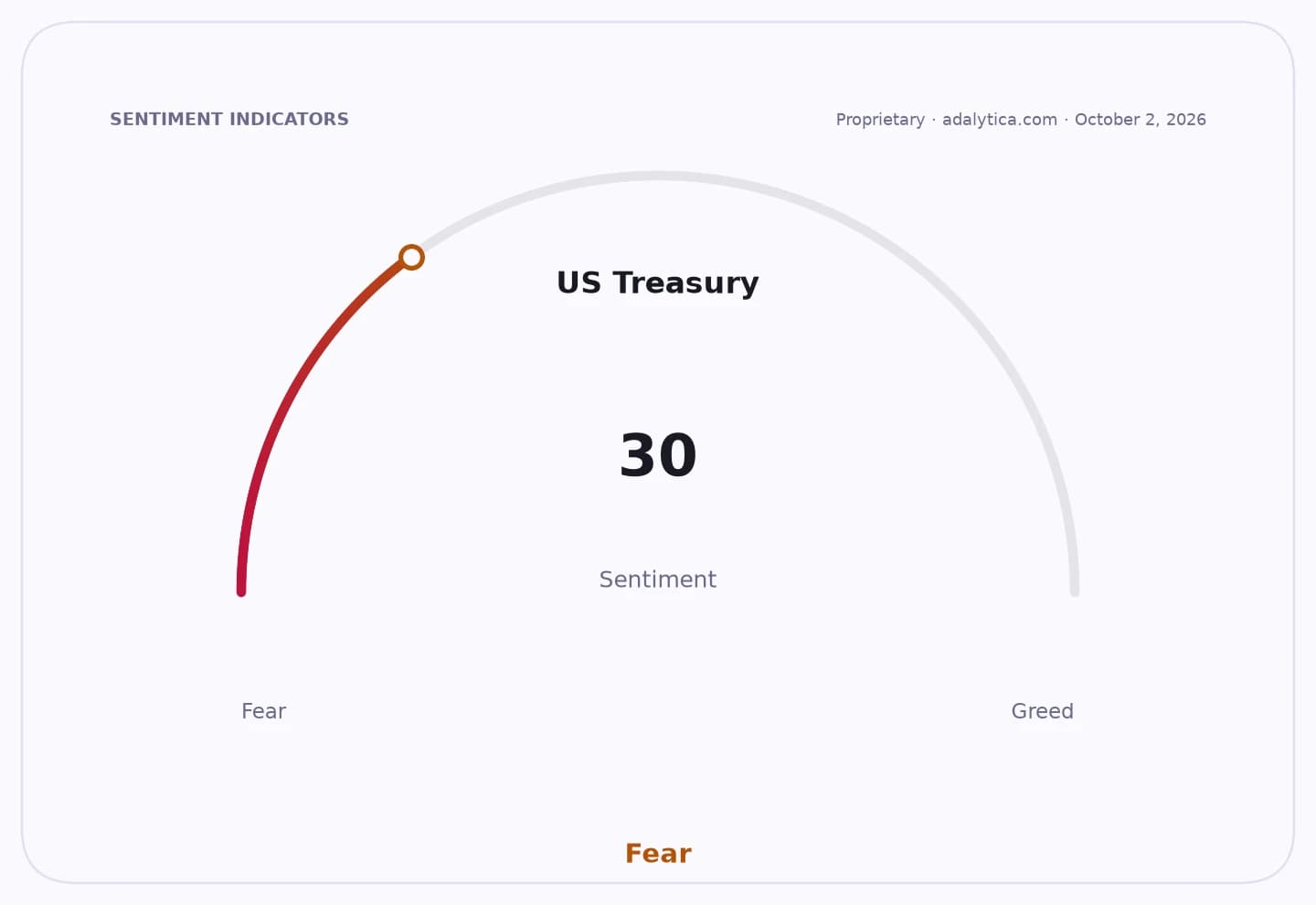
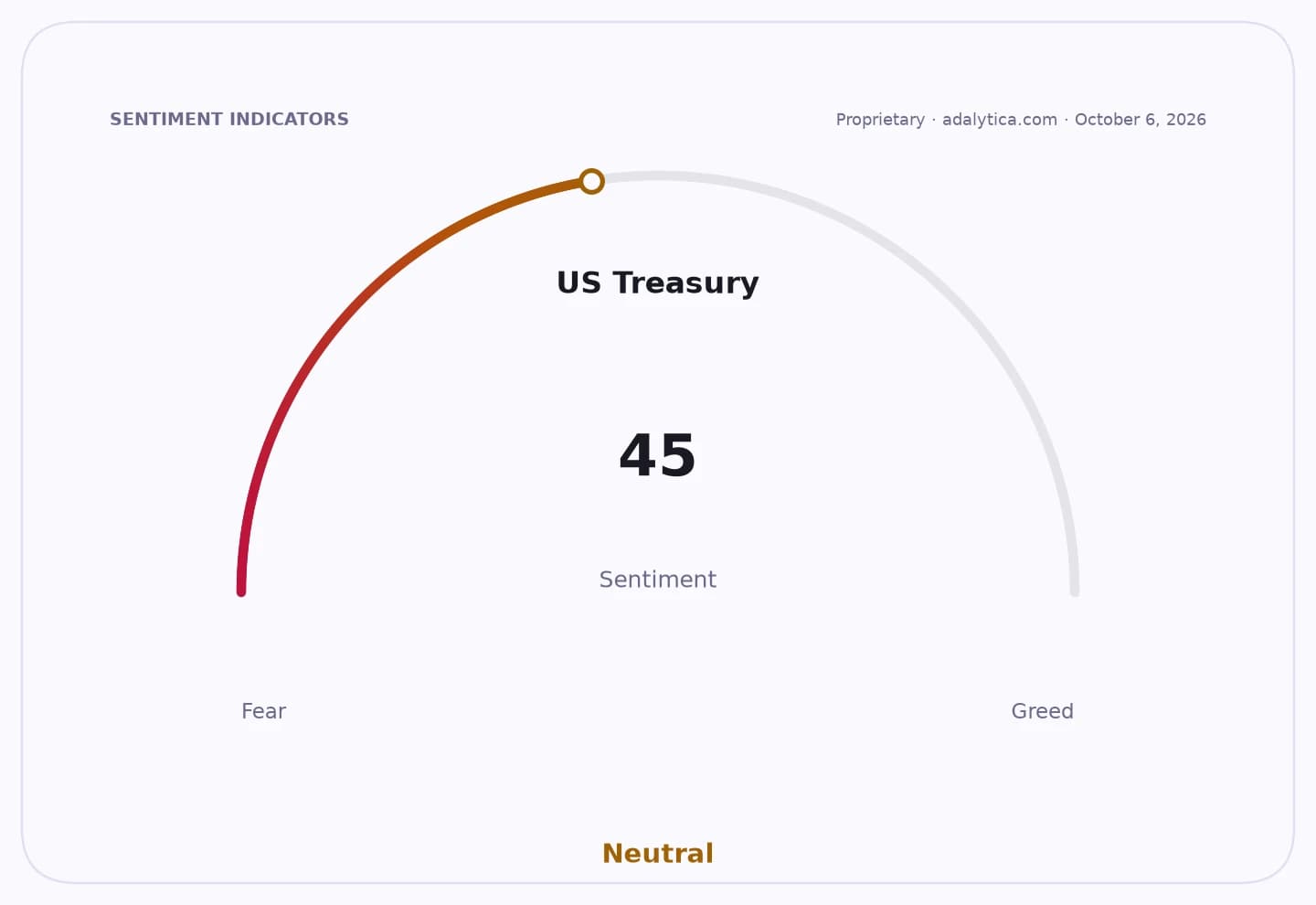
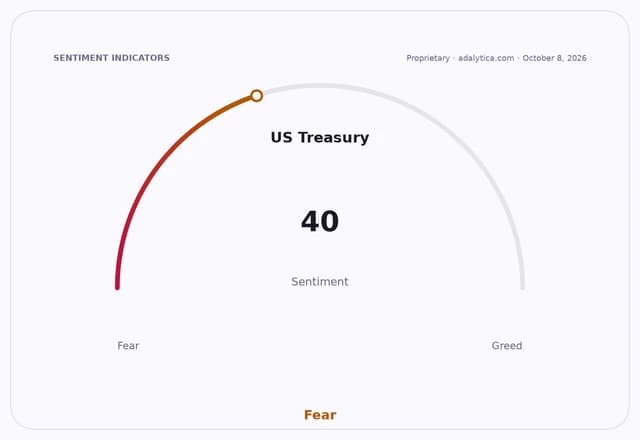
Sentiment IndicatorsⓘProprietary · adalytica.com · October 8, 2026
This is a snapshot — live sentiment, awareness and momentum for 130+ markets update continuously in the dashboard.Open AlphaPulse
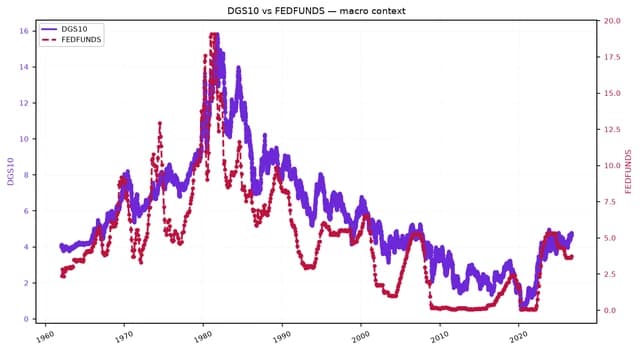
The timing is significant. Ten-year U.S. Treasury yields have risen to about 5.29%, while the two-year sits near 4.79%, levels that tighten financial conditions and raise borrowing costs across the economy. In the U.S., the federal funds rate is around 3.7%, and bond funds have already been under pressure: the iShares 20+ Year Treasury Bond ETF, TLT, closed at 77.15 on Oct. 7, well below its 50-day moving average of 80.81 and 200-day average of 83.62, with a weak RSI reading of 15.4 that points to heavy selling momentum. The intermediate-term Treasury ETF, IEF, was also under its 50-day and 200-day averages, reflecting continued caution in duration-sensitive assets.
For investors, the warning reinforces a market narrative already visible in recent trading: higher sovereign supply, sticky deficits and the prospect of slower policy relief can leave long-duration government bonds vulnerable even when growth softens. The selloff is especially sensitive in Europe, where the spread between French and German government debt has widened sharply enough to revive memories of the eurozone debt crisis. That widening matters because it suggests investors are again differentiating more aggressively between sovereign balance sheets, not just reacting to inflation or rate policy.
Hernandez de Cos said central banks must still act if market volatility threatens financial stability or the transmission of monetary policy. But he warned that in a world of elevated debt and heavy government funding needs, even narrowly designed intervention can be read as fiscal support. That tension is now a major macro risk: the more indebted governments become, the less room central banks may have to cut rates aggressively or backstop bonds without stoking accusations of monetizing deficits.
The BIS chief also put a finer point on who is now at the center of the market structure. Non-bank financial institutions — pensions, asset managers and other leveraged market participants — hold a much larger share of sovereign debt than they did in previous cycles, and that can amplify dislocations when yields spike. March 2020 in the U.S. Treasury market and the 2022 gilt crisis in Britain showed how quickly forced selling can turn a rate move into a funding event. The Bank of England’s emergency bond-buying program was praised by Hernandez de Cos as a template because it was limited in size and duration, with clear governance. Even so, he cautioned that a larger and longer crisis could overwhelm such commitments.
The implications go beyond bonds. If debt markets stay volatile, governments may have to do more of the work themselves through spending restraint, tax reforms or growth measures, as Goldman Sachs International co-head Anthony Gutman also argued in comments to CNBC. For equity investors, persistent pressure in sovereign markets can mean tighter financial conditions, more expensive capital and a weaker case for long-duration assets. For currency markets, the BIS warning underscores why the dollar remains supported when stress rises, even as Adalytica trade signals showed neutral readings for U.S. Treasury bonds and a firmer tone in the greenback.
There is also a forward-looking policy risk. Hernandez de Cos said online banking, social media, stablecoins and AI could accelerate the next crisis by speeding deposit flight and misinformation. That raises the odds that central banks will have to respond faster, not slower, while operating under greater political scrutiny. The message from the BIS is not that crisis response is impossible, but that the next one will be harder to fight because markets are looking at public debt with less patience and governments have less fiscal credibility to spare.
| Entity | Gains | Losses |
|---|---|---|
| Central banks | ▲Crisis-fighting relevance | ▼Policy room and credibility |
| Governments with high debt | ▲Cheap funding in calm markets | ▼Wider spreads and scrutiny |
| Treasury bond bulls | ▲Potential safe-haven bids | ▼Duration losses from higher yields |
| Asset managers and pensions | ▲Trading liquidity in normal times | ▼Forced-selling risk in stress |