Bond investors are starting to question whether higher Treasury yields are a safe bet as debt-service costs swallow a larger share of the budget and Washington’s fiscal path looks increasingly unstable.
Treasury Yields, TLT Fall as Fiscal Anxiety Builds
That shift matters because the Treasury market is not just another asset class: it is the benchmark for global borrowing costs, the anchor for equities and the pricing engine for mortgages, corporate credit and bank lending. If investors begin to demand less compensation for owning long-duration Treasuries, the repricing can be swift, and it can ripple through every risk asset tied to U.S. rates.
Sentiment IndicatorsⓘProprietary · adalytica.com · October 2, 2026
This is a snapshot — live sentiment, awareness and momentum for 130+ markets update continuously in the dashboard.Open AlphaPulse
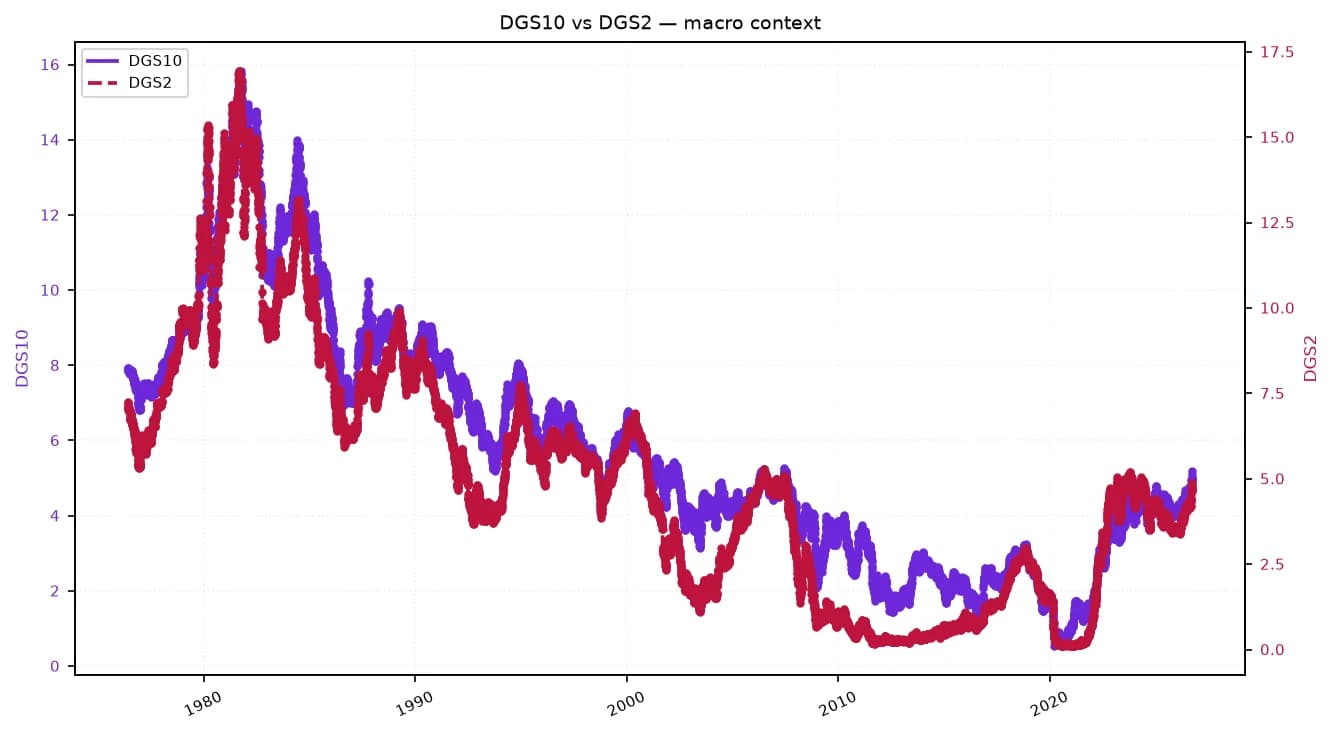
The 10-year Treasury yield was last around 5.32%, up from 5.24% a few days earlier, while the 2-year stood near 4.90%. But the recent move in bond prices tells a different story. TLT, the long-dated Treasury ETF, slipped to 77.52 on Oct. 2 and has fallen below both its 50-day and 200-day moving averages, with RSI readings in the high 20s — a sign of heavy selling pressure in a market that had already been strained. IEF, the intermediate-term Treasury ETF, has also broken below its 50-day and 200-day averages, underscoring that the pressure is not confined to the long end.
The economic backdrop is the real issue. With the federal funds rate at 3.75% and the government rolling over more debt at yields that remain far above the ultra-low-rate era, interest expense is becoming a larger and more politically explosive budget line. That creates a nasty feedback loop: the more the Treasury must borrow to finance deficits and refinance maturing obligations, the more the market worries about supply, fiscal credibility and inflation risk premium.
US Treasury — 30-day sentimentadalytica.com
Explore this data interactively — full history, time series and cross-market comparisons.Open AlphaPulse
Investors should see the setup as a battle between duration bears and fiscal bears. The consensus trade has leaned toward “higher-for-longer” yields, but that view becomes more fragile when the market begins to price the budgetary consequences of those rates themselves. If debt service keeps rising, policymakers will face an ugly mix of spending pressure, slower growth and louder demands for monetary relief — exactly the environment in which long-duration assets can rally hard when the narrative cracks.
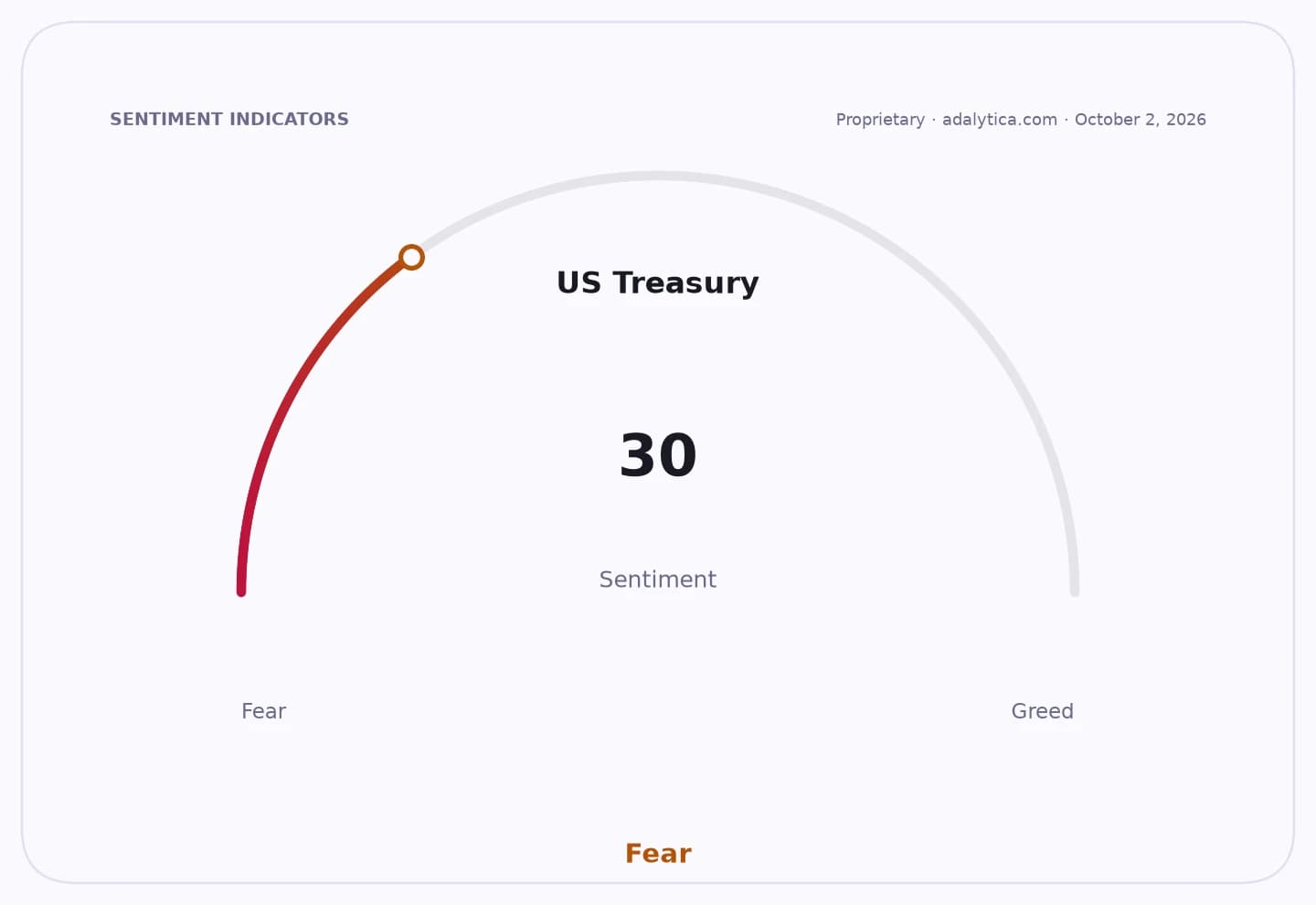
Adalytica’s Treasury signal underscores how crowded the move has become: TLT shows sentiment in “Fear” even as awareness sits at “Extreme Greed,” a combination that often appears when investors are fixated on a theme but increasingly vulnerable to reversal. The dollar is flashing the opposite kind of stress, with its own trade signals in “Extreme Fear,” suggesting capital is already questioning the sustainability of the prevailing macro setup.
The investable conclusion is straightforward. If fiscal anxiety deepens, the biggest opportunity may not be in chasing ever-higher yields but in positioning for a mean reversion in duration once the market decides the budget math has gone too far. That argues for watching Treasuries, rate-sensitive sectors and the financing chains exposed to Washington’s debt burden very closely — because the market may be underestimating how quickly “safe” yields can turn into a crowded and unstable trade.
| Entity | Gains | Losses |
|---|---|---|
| Long-duration Treasuries | ▲Repricing upside on fiscal fear | ▼Higher-rate believers |
| TLT / IEF buyers | ▲Mean-reversion rally if yields top out | ▼Recent duration shorts |
| U.S. Treasury / federal budget | ▲Softer funding costs if yields fall | ▼Taxpayers if yields stay high |
| Banks, homebuilders, rate-sensitive equities | ▲Lower discount rates | ▼Borrowing-cost pressure |