U.S. stocks ended broadly lower on Wednesday as a jump in Treasury yields and fresh evidence of sticky growth and inflation pressure hit the most rate-sensitive corners of the market, with the Russell 2000 falling the most among the major benchmarks.
Russell 2000 Falls as 10-Year Yield Tops 5%

The 10-year Treasury yield surged 14 basis points to 5.1079%, a move that raised the discount rate on future earnings and tightened financial conditions just as traders increased bets on another Federal Reserve hike in October. Small-cap shares, which typically carry heavier debt loads and thinner margins than large-cap peers, were hit hardest: the Russell 2000 dropped 1.77%, while the Nasdaq Composite fell 1.13% and the S&P 500 lost 0.75%. The Dow slipped 0.68%.
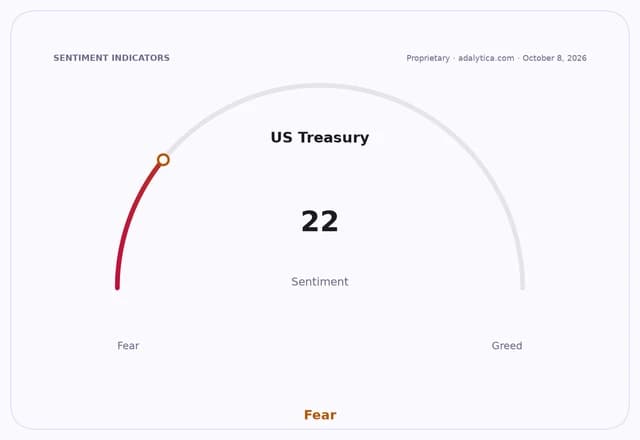
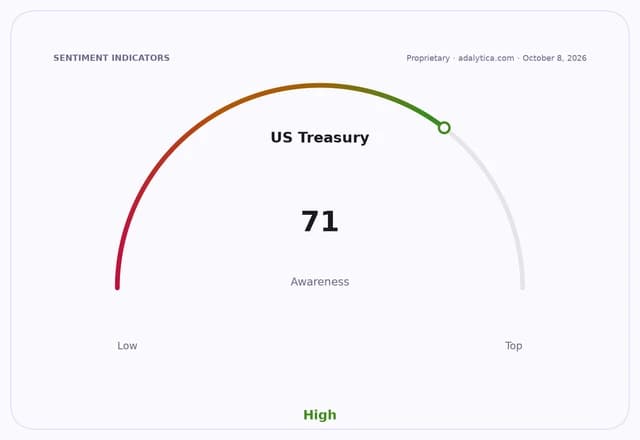
Sentiment IndicatorsⓘProprietary · adalytica.com · October 8, 2026
This is a snapshot — live sentiment, awareness and momentum for 130+ markets update continuously in the dashboard.Open AlphaPulse
The selloff was not just about rates in the abstract. September’s flash U.S. composite PMI rose to 58.4 from 56.0 in August, reinforcing the view that the economy remains firm enough to keep price pressures alive. Fed Governor Michael Barr also said further rate increases are likely needed. Together, the data and policy rhetoric pushed the market toward a higher-for-longer interest-rate path that tends to weigh on valuation-sensitive growth stocks and capital-intensive smaller companies.
The pressure on small caps matters because they are more exposed to borrowing costs and refinancing risk than the mega-cap stocks that have dominated much of the market’s gains in recent years. That makes the Russell 2000 especially vulnerable when Treasury yields rise. The index was also trading below its 50-day and 100-day moving averages in the latest session data, while the Nasdaq 100, though still stronger on a longer-term basis, has shown some short-term cooling after a sharp run-up. The broader S&P 500, meanwhile, remains elevated but is showing signs that investors are becoming more selective.
The move also underscores a shift in market leadership. In recent sessions, selected software and cybersecurity names such as Palo Alto Networks and CrowdStrike have still attracted buyers, suggesting investors are not abandoning equities altogether. But the day’s pattern showed that when bond yields jump, the market’s tolerance for expensive growth and leveraged smaller companies falls quickly. That is especially true with the 10-year yield now above 5%, a level that can compete directly with equity returns and pressure multiples.
For investors, the key question is whether this is a temporary rates repricing or the start of a broader challenge to the small-cap recovery. A sustained rise in yields would likely favor cash-generative large caps and penalize small companies that depend on external financing. If the October Fed meeting delivers another hike, the relative underperformance of the Russell 2000 could deepen, even if parts of the Nasdaq continue to find support in AI-linked and defensive growth themes.
| Entity | Gains | Losses |
|---|---|---|
| Treasury bears | ▲Higher yields | ▼Bond prices |
| Large-cap cash-rich stocks | ▲Relative resilience | ▼Less upside from rate cuts |
| Small-cap Russell 2000 stocks | ▲None | ▼Higher borrowing costs |
| Growth/tech valuations | ▲Selective support | ▼Multiple compression risk |