The U.S. stock market is still making new highs, but the more important story is that the rally has become more fragile just as investors have leaned harder into risk.
S&P 500 Breadth Weakens as Valuations and Leverage Rise
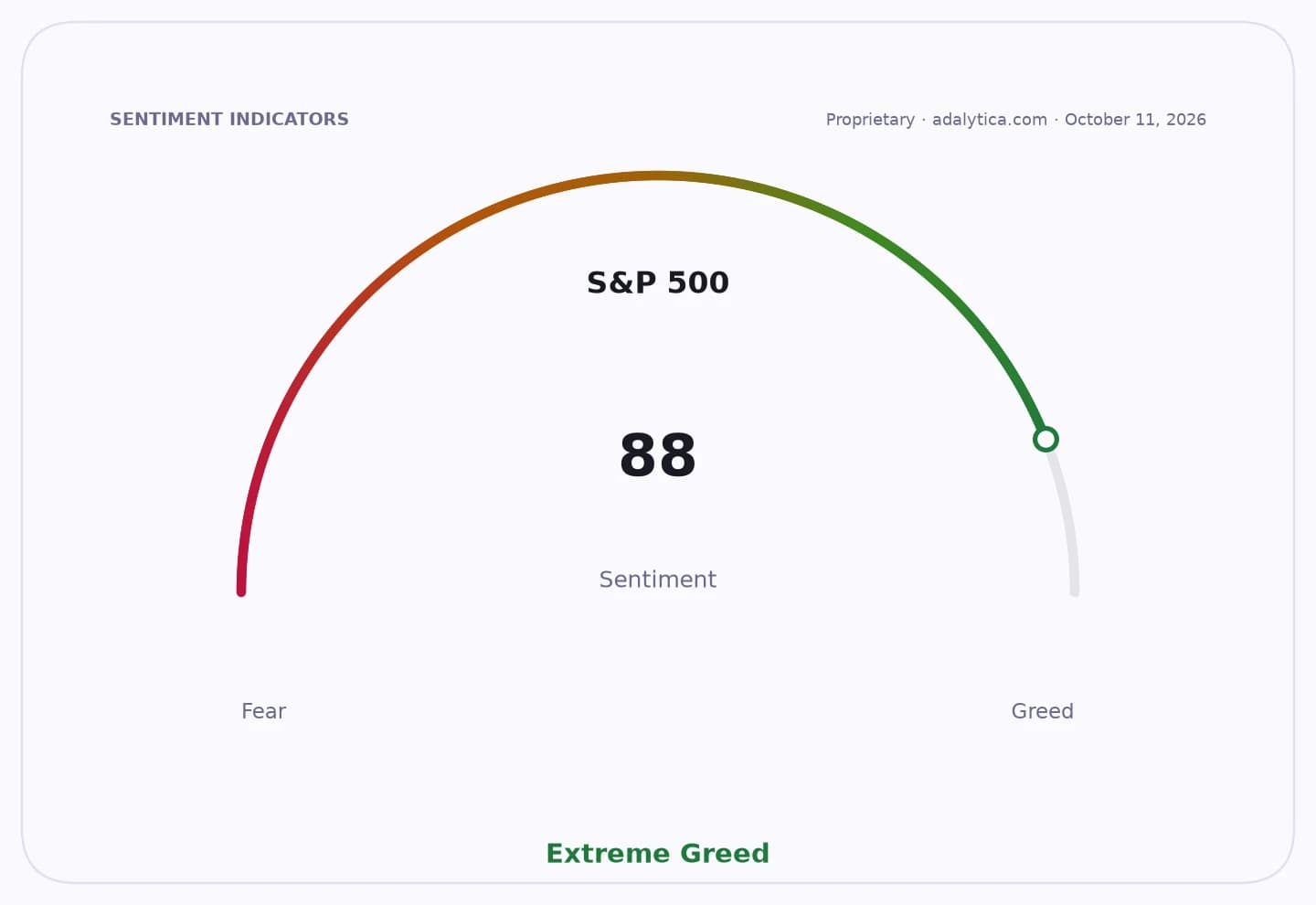
That matters because the market is now being driven by a narrow group of giant winners, expensive valuations and record use of borrowed money — a combination that can keep indexes climbing for now, but also makes the next setback sharper if growth or rates disappoint. In other words, this is not a market screaming bubble; it is a market that looks increasingly vulnerable to a fast repricing.
Sentiment IndicatorsⓘProprietary · adalytica.com · October 11, 2026
This is a snapshot — live sentiment, awareness and momentum for 130+ markets update continuously in the dashboard.Open AlphaPulse
One of the clearest warning signs is breadth. In the S&P 500, only 42% of stocks are trading above their 200-day moving average, well below the long-run average of about 55%. That tells you the index’s strength is increasingly dependent on a small set of mega-caps rather than a broad advance. When the biggest names carry the heaviest weights, as Nvidia and Microsoft do, the whole index becomes more sensitive to a reversal in just a handful of stocks.
For investors, that concentration is the real risk hiding behind the headline highs. Passive money may still be riding the same leaders higher, but the setup leaves portfolios exposed if those winners stumble. That is why equal-weight ETFs, smaller-cap exposure and sector diversification matter now: they reduce dependence on a handful of AI and platform giants that have done most of the work for the market this year.
Valuation adds another layer of pressure. The S&P 500’s Shiller price-to-earnings ratio is around 41, far above the historical average near 17 and not far from the dot-com peak around 44. Rich valuations do not force an immediate correction, but they do lower the margin for error. If earnings growth slows, or if bond yields stay elevated, the market has less room to absorb disappointment.
Leverage makes that tension more dangerous. FINRA member firms reported margin debt of nearly $1.5 trillion at the end of August, up from $797 billion a year earlier. That is an 82% surge in just two years, faster than the S&P 500’s gain over the same period. Historically, that kind of borrowing has tended to rise most aggressively before periods of market stress, because it amplifies both gains and forced selling.
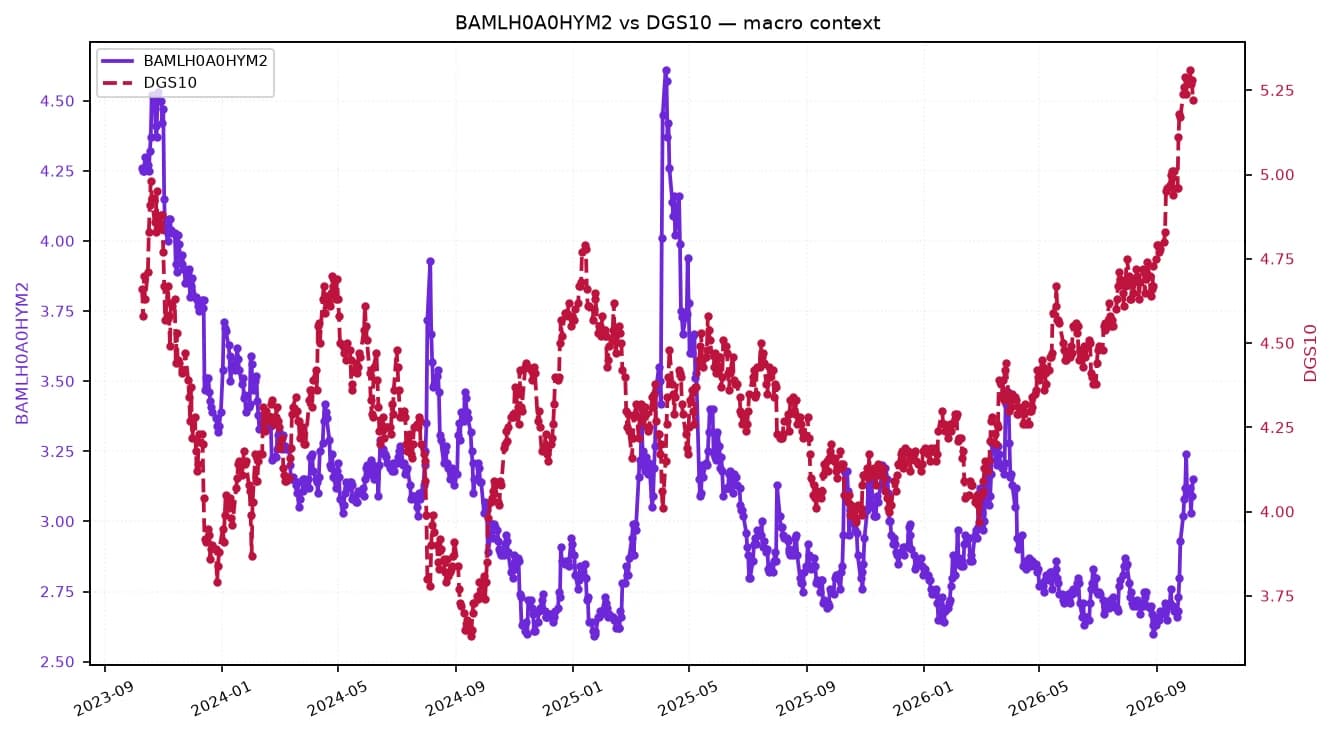
Bond markets are not yet flashing systemic distress, which is why the message is not to flee equities. The high-yield spread remains moderate at about 3.24 percentage points, suggesting credit investors are nervous but not panicking. The Office of Financial Research stress gauge also remains below zero, indicating no broad financial-system strain. But rising Treasury yields and a creeping widening in junk-bond spreads tell you the cost of capital is no longer trivial, especially for the most rate-sensitive and most indebted companies.
That is the central narrative investors should focus on: the bull market is still alive, but the distribution of returns has become much less forgiving. The market is being carried by concentration, liquidity and leverage at a moment when valuations already assume a lot of good news. If the macro backdrop stays benign, the trend can persist. If it turns, the unwind could be fast.
Our thesis is simple: don’t try to short the index just because risk is rising. Instead, rotate toward balance sheets, pricing power and businesses tied to structural spending rather than crowded momentum. In this environment, the best opportunity is not blindly owning the market — it is owning the infrastructure, energy, defense and AI supply-chain names that can compound even if the broad tape gets choppy.
| Entity | Gains | Losses |
|---|---|---|
| Mega-cap leaders | ▲Index weight, passive inflows | ▼Narrow-margin for error |
| Equal-weight ETFs | ▲Diversification demand | ▼Mega-cap concentration |
| High-quality bonds | ▲Relative defensiveness | ▼Borrowers facing higher funding costs |
| Highly leveraged traders | ▲More upside in momentum | ▼Forced selling risk |