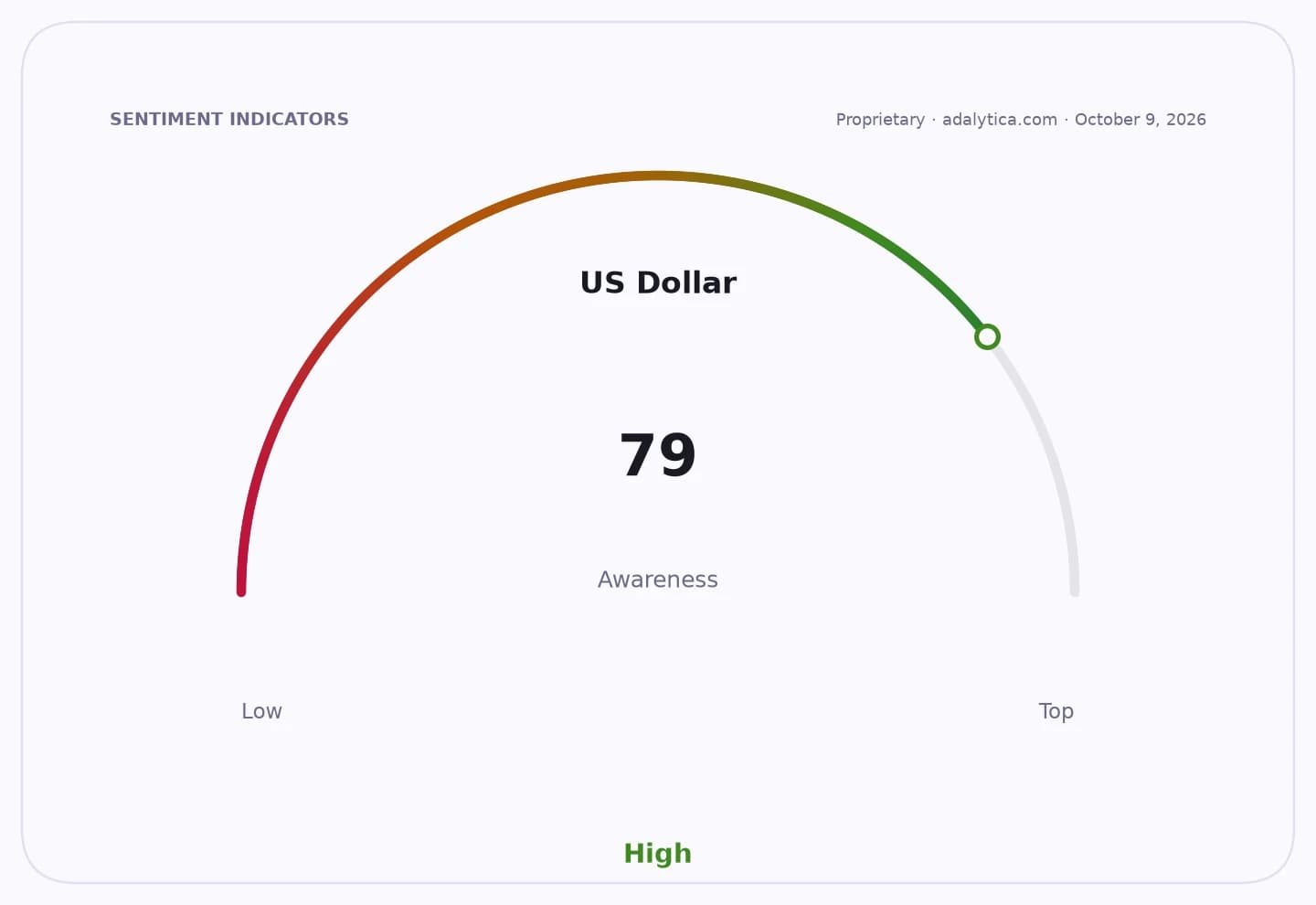
U.S. stocks are entering the final quarter with the broad market already looking expensive, technically extended and vulnerable to disappointment, which is why picking the right companies matters more than simply owning the index.
S&P 500 Near Records as Q4 Stock Picking Matters

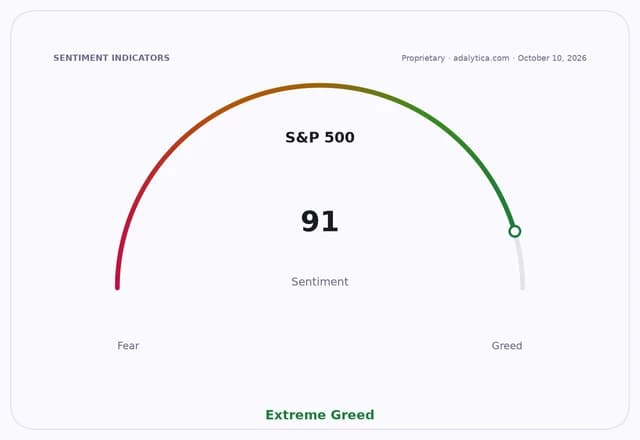
That is the message for investors after the S&P 500 pushed back up near record highs, with the SPY ETF closing at 778.57 on Oct. 9 and trading well above its 50-day and 200-day moving averages. But the rally’s strength has also pushed the market into a more selective phase. SPY’s 14-day RSI sat at 55.6, a sign of a market that is no longer washed out, while Adalytica’s S&P 500 trade snapshot showed “Extreme Greed” sentiment of 91. In plain English: the easy money from a broad rebound has already been made, and the next stretch is more likely to reward fundamentals than index exposure.
That matters because the macro backdrop is no longer giving every stock the same lift. The 10-year Treasury yield is hovering around 5.23%, a level that keeps pressure on valuations, especially for long-duration growth names and companies that still need years of earnings to justify today’s prices. At the same time, unemployment is still relatively low at 4.2% and inflation is running around 334 on the CPI index, suggesting the economy is neither recessionary nor especially friendly to a full-throttle multiple expansion. In that kind of market, investors have to separate businesses with real pricing power, durable cash flow and clear secular growth from the rest.
That is exactly why the Q4 setup favors stock picking over passive index chasing. When rates are high and the market is already optimistic, even good companies can diverge sharply. The strongest names can keep compounding as artificial intelligence spending, cloud adoption, energy buildouts and industrial reshoring create genuine earnings tailwinds. Weaker businesses, by contrast, can get exposed quickly if growth cools or margins compress. For long-term investors, that creates opportunity: volatility is not a reason to retreat, but a reason to be selective.
S&P 500 — 30-day sentimentadalytica.com
Explore this data interactively — full history, time series and cross-market comparisons.Open AlphaPulse
The relative performance data point the same way. The Nasdaq-100 proxy QQQ has held up better than the Russell 2000 proxy IWM, which is a reminder that large-cap winners continue to command the market’s attention while smaller companies remain more dependent on the economic cycle and financing conditions. QQQ closed at 751.27 on Oct. 9, with price still above both its 50-day and 200-day moving averages. IWM, by contrast, ended at 278.94 and remained below its 50-day average, showing how much harder it has become for smaller, less-proven businesses to win capital in a higher-rate world.
For investors, the lesson is not to abandon indexes entirely. Broad diversification still matters, and for many people, owning a core portfolio of index funds is the right anchor. But the days when almost any stock could ride the tide higher are fading. In Q4, the market is likely to reward companies that can grow earnings through a more demanding macro backdrop, not just ride momentum.
The bottom line: this is a market where selection will matter more than ever. If you are investing for the next three to 10 years, focus on businesses with durable moats, healthy free cash flow and secular tailwinds, and keep the index as your foundation. That is the kind of environment where patience and discipline can still lead to outstanding results.
| Entity | Gains | Losses |
|---|---|---|
| High-quality individual stocks | ▲Valuation support from earnings growth | ▼Broad market complacency |
| S&P 500 index investors | ▲Exposure to megacap strength | ▼Limited upside from weaker names |
| Smaller-cap stocks | ▲Select firms with real profits | ▼Rate-sensitive, unprofitable companies |
| Long-term diversified investors | ▲Opportunity to buy quality on dips | ▼Short-term traders chasing momentum |