Wall Street is starting the session with a familiar split screen: stocks are climbing on hopes that corporate profits will keep expanding, even as a stubborn rise in Treasury yields reminds investors that financing costs are still a real threat to valuations.
Stocks Rise as 10-Year Yield Climbs to 5.27%

That matters because the market’s advance is being driven less by policy relief or a softer macro backdrop than by the idea that earnings can outrun the pressure from rates. For long-term investors, that is the central question of this cycle: can corporate America keep delivering enough growth to justify elevated prices when the risk-free rate is still near levels that compress equity multiples?
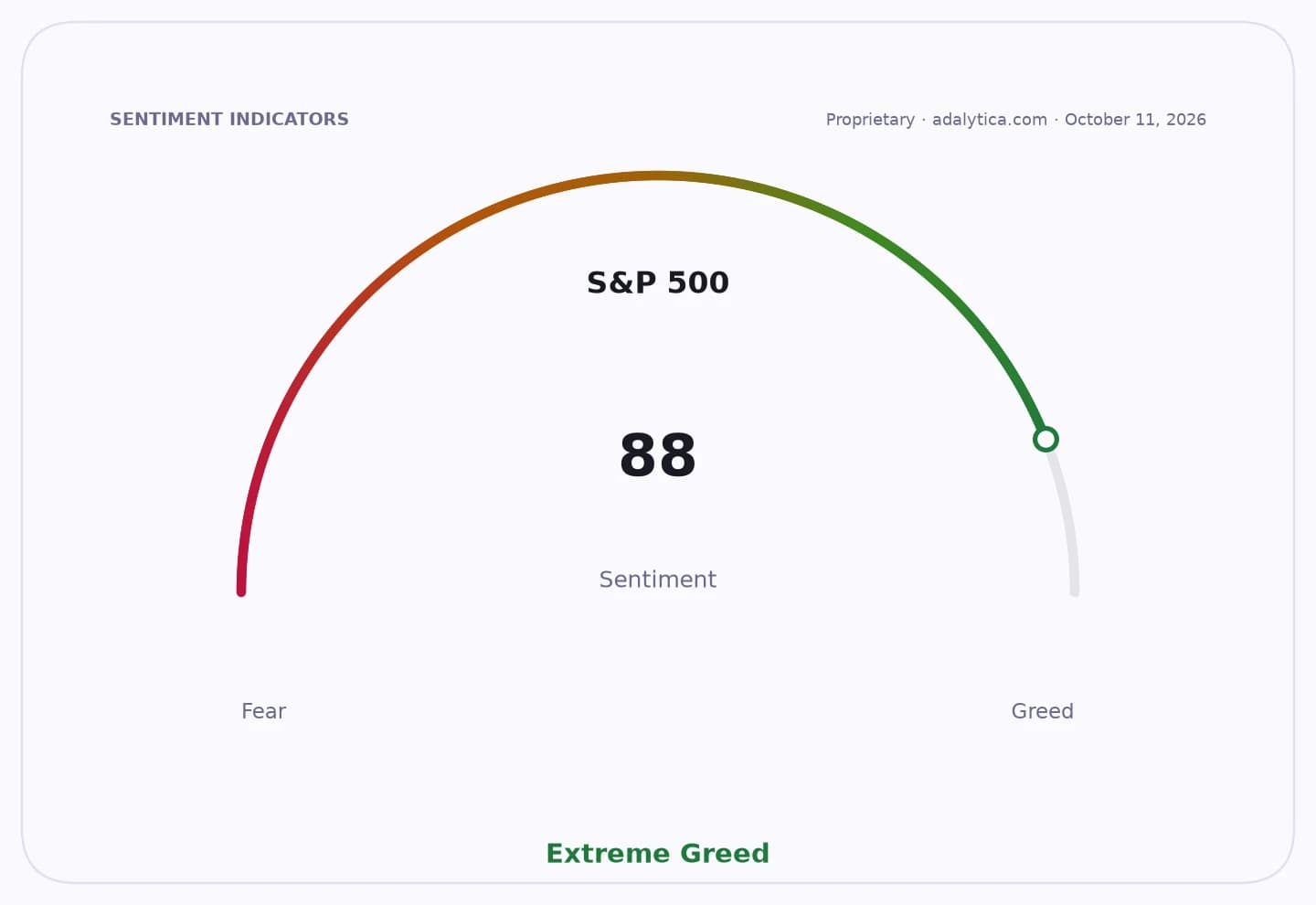
Sentiment IndicatorsⓘProprietary · adalytica.com · October 12, 2026
This is a snapshot — live sentiment, awareness and momentum for 130+ markets update continuously in the dashboard.Open AlphaPulse

Technology shares are leading the rebound, with the Nasdaq up 0.4% in early trading. The S&P 500 ETF, SPY, has also held up well, and that fits a market that is still willing to pay for companies tied to artificial intelligence, cloud spending and digital advertising. But the bond market is not cooperating. The yield on the U.S. 10-year Treasury rose another 4 basis points to 5.27%, and PIMCO’s investment managers have said they are considering a scenario in which it could reach 6%, the highest since 2000.
Higher yields are not just a headline for bond traders. They affect everything from mortgage costs to corporate borrowing and the discount rate investors use to value future profits. When the 10-year Treasury pushes higher, the market has to work harder to defend high earnings multiples, especially in the technology sector where much of the value depends on profits years down the road.
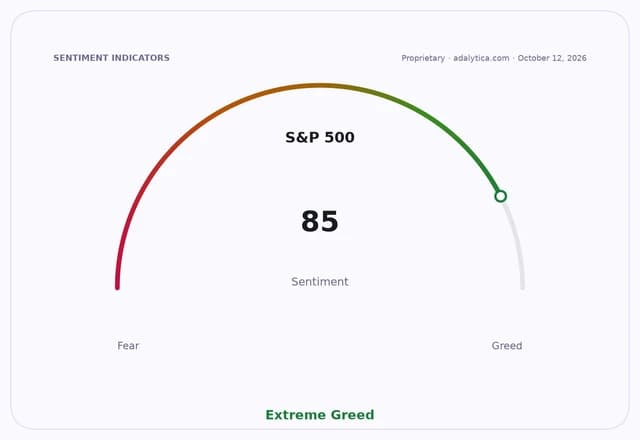
That tension helps explain why the recent move in the S&P 500 has been powerful but not effortless. On the technical side, SPY remains above its 50-day moving average and well above its 200-day moving average, which says the longer-term trend is still constructive. But short-term momentum has cooled from stretched levels, and the ETF has been trading just under recent highs after a sharp run. In other words, investors are still buying the earnings story, but they are not ignoring the rate story.
Financial stocks have also been in focus, with XLF showing a more mixed picture. Banks and brokers can benefit from higher rates in some parts of their business, but a sustained move toward 5.5% or even 6% in the 10-year would likely tighten financial conditions across the economy and test credit-sensitive sectors. That makes the next round of earnings especially important: it is where investors will learn whether companies are absorbing higher funding costs or passing them through without damaging demand.
For patient investors, the message is straightforward. This market is still being pulled by one of the strongest forces in investing: earnings growth. But the other force is just as important, and it is working in the opposite direction. If profits keep surprising to the upside, stocks can keep climbing. If yields keep rising faster than earnings, valuations will have a harder time holding together.
For now, the best reading is that Wall Street remains resilient, not risk-free. That makes broad diversification and a long horizon more important than trying to call every move in rates. Investors should keep watching earnings, because that is where this market’s next big move is likely to come from.
| Entity | Gains | Losses |
|---|---|---|
| Tech stocks | ▲Higher earnings multiple if profits grow | ▼Sensitive to rising yields |
| Bond investors | ▲Higher yields on new purchases | ▼Existing bond prices |
| Banks and financials | ▲Better net interest income potential | ▼Tighter financial conditions |
| Long-term equity investors | ▲Earnings-driven upside | ▼Near-term valuation pressure |