Retirement savers are getting a fresh reason to shift out of stocks and into bonds as U.S. Treasury yields sit near multi-year highs, creating income that can now compete with equity risk for the first time in years.
Treasury Yields Near Multi-Year Highs Attract Retirees

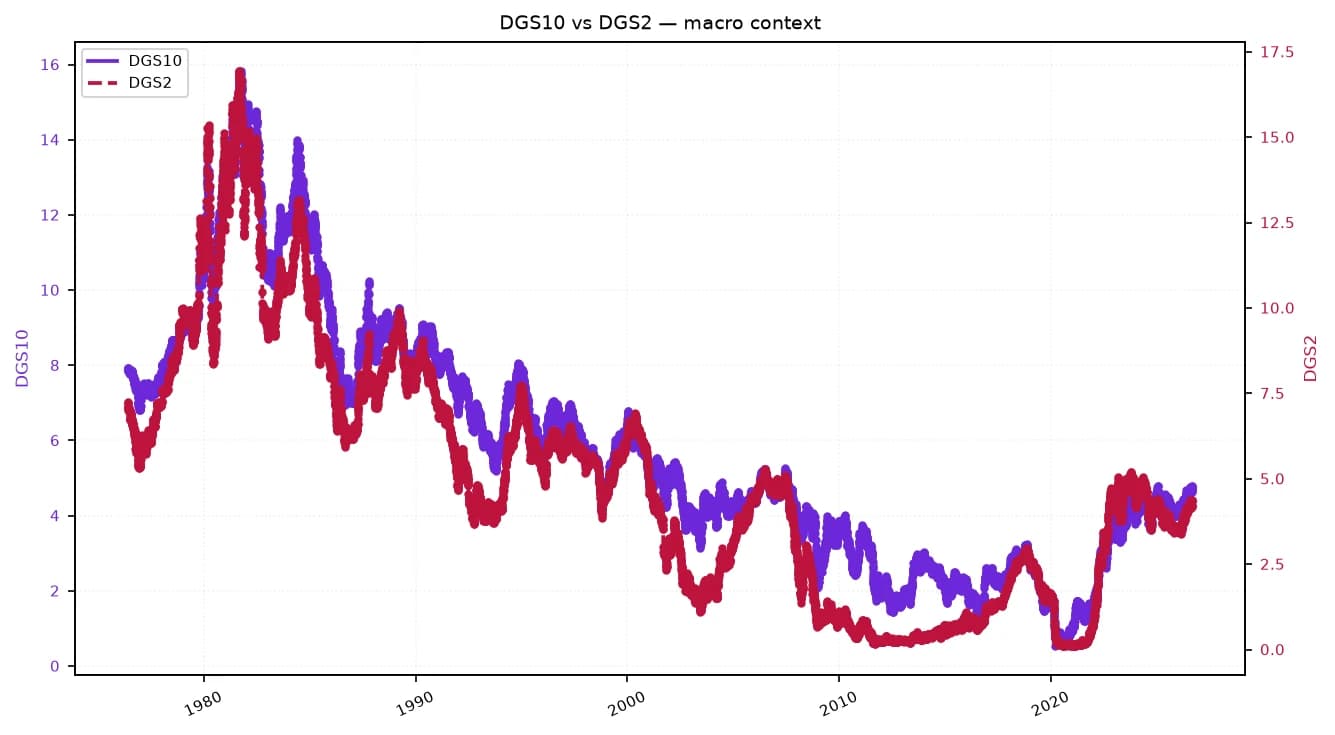
That matters because the market has spent much of the last decade forcing investors to reach for return: when the 10-year Treasury yields 0.73% or even 3.61%, bonds could not do the heavy lifting for a retirement portfolio. Now the 10-year is around 4.8% and the 2-year near 4.4%, giving savers a credible alternative for capital preservation and income at a time when equity valuations remain elevated.
Sentiment IndicatorsⓘProprietary · adalytica.com · September 8, 2026
This is a snapshot — live sentiment, awareness and momentum for 130+ markets update continuously in the dashboard.Open AlphaPulse
For investors approaching retirement, the message is simple: sequence-of-returns risk is back in focus. If you need to draw down assets in the next five to 10 years, a 4%-plus government bond yield can materially reduce the need to sell stocks into a drawdown. That is why the classic “move gradually from growth to bonds” advice is becoming more than a textbook rule — it is becoming a live allocation decision again.
The shift is already visible in the market. The iShares 20+ Year Treasury Bond ETF, TLT, has been trying to stabilize after a long slide, with its 50-day moving average still below its 200-day average, but recent trading has been firmer and RSI readings have recovered into neutral territory. The broad bond market ETF, AGG, has also held up better, suggesting investors are not chasing duration aggressively but are reintroducing fixed income as a core retirement asset rather than a placeholder.
DGS10 vs DGS2 — macro contextadalytica.com
Explore this data interactively — full history, time series and cross-market comparisons.Open AlphaPulse
That is the economic significance of this move: higher Treasury yields make the government itself a more attractive retirement partner. Every basis point of yield is a basis point less dependency on capital gains, and that can change household behavior at scale. More money sitting in bonds and bond funds also means less marginal demand for the most expensive parts of the equity market, especially growth stocks that rely on distant earnings.
The stock market is not cheap enough to ignore that backdrop. SPY is still far above its long-term trend, and even after recent volatility the S&P 500 is priced as though growth can keep compounding without interruption. Adalytica.com’s S&P 500 trade signals show extreme fear in sentiment even as awareness remains elevated, a combination that often reflects investors trying to reconcile rich equity prices with higher-for-longer rates.
For retirement investors, that is the opportunity. The market underestimates how powerful a 4.8% risk-free anchor can be when combined with inflation-aware planning and disciplined rebalancing. I believe the best trade here is not to abandon equities, but to shorten the portfolio’s dependence on them: build a ladder of Treasuries and high-quality bonds, use dividend growers for equity income, and keep the most volatile growth exposure for money you do not need for years.
The next catalyst is not just the Fed — it is the next retirement contribution, rollover, and allocation review. As more savers see that bonds finally pay them to wait, the rotation out of pure equity risk and into income-producing assets should continue, and that will reshape where returns come from in the years ahead.
| Entity | Gains | Losses |
|---|---|---|
| Treasury bonds | ▲Income-focused buyers | ▼Cash left on sidelines |
| Retirees near drawdown | ▲Capital preservation | ▼Pure equity exposure |
| Bond ETFs like TLT and AGG | ▲Inflows from rebalancing | ▼High-volatility growth stocks |
| S&P 500 growth names | ▲Lower only if rates fall | ▼Rich valuation support |