A sharp rise in Treasury yields is reviving an old retirement debate: whether older savers should keep shifting toward bonds, or stay invested in equities longer to preserve returns.
Treasury Yields Near 5% Reignite Bond Debate

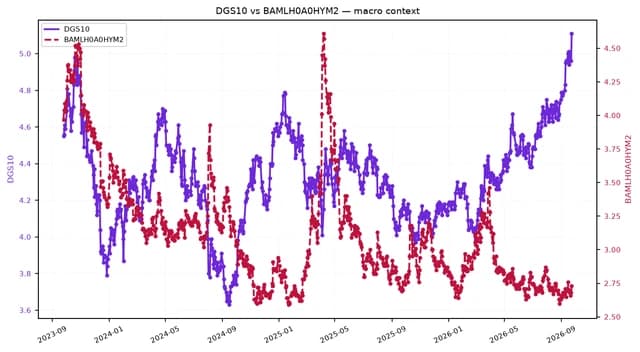
Finance personality Dave Ramsey is leaning hard against the conventional glide path, calling the move into conservative bond-heavy portfolios “mathematically stupid” after telling a caller to fire a fiduciary adviser whose stock-and-bond allocation left her down $8,000. His argument lands at a moment when the market itself is showing why the question is not theoretical: the 10-year Treasury yield has pushed to 5% for the first time since 2023 and is near a 19-year high, while bond-fund performance has lagged badly versus equities.
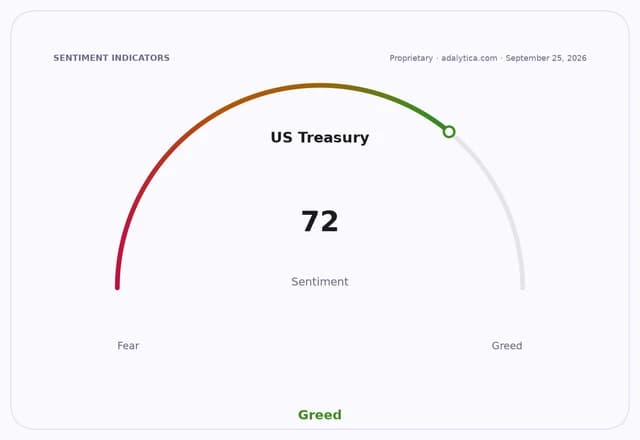
Sentiment IndicatorsⓘProprietary · adalytica.com · September 25, 2026
This is a snapshot — live sentiment, awareness and momentum for 130+ markets update continuously in the dashboard.Open AlphaPulse
The policy backdrop matters because higher yields change the retirement calculus in two directions at once. On one hand, income investors can finally get meaningful nominal returns from government debt after years of ultralow rates. On the other, a 5% Treasury yield still looks meagre once inflation, taxes and portfolio fees are deducted, especially against an equity market that, in Ramsey’s example, has been running around 12.2% year to date in his growth-stock mutual fund versus less than 1% for the bond market.
That spread is central to the story. For retirees with long horizons, a move into bonds may reduce day-to-day volatility but can also lock in a much lower expected real return, which raises the risk of running short of money later in life. In other words, the “safety” trade-off is not just about price swings; it is about whether the portfolio can still compound fast enough to fund a retirement that may last two or three decades.
Market data underline the point. iShares’ long-duration Treasury ETF TLT fell to 79.42 on Sept. 24, below both its 50-day and 200-day moving averages, with its RSI reading at 29.5, a level technicians often view as oversold. The broader bond gauge AGG was also under pressure, slipping to 94.95 and sitting under its own 50-day and 200-day averages, while its RSI fell to 24.8. Those are not the signs of a market rewarding conservative duration bets.
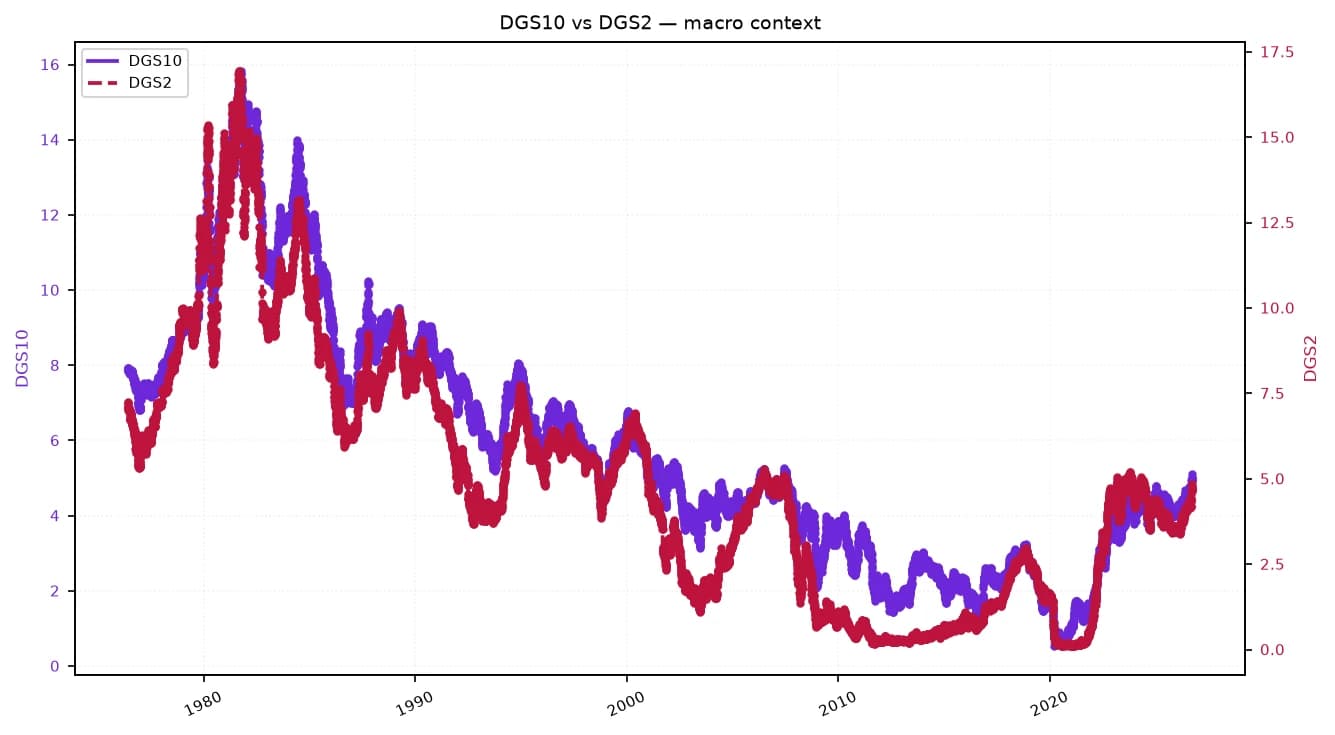
The fundamental picture is no kinder. The spread between the 10-year and 2-year Treasury yields has widened to about 0.31 percentage point, suggesting the market is still pricing a restrictive rate environment rather than an imminent return to easy money. Credit risk is also present: the high-yield spread has eased to 2.73 percentage points from April peaks above 4 percentage points, but that still reflects a market that is far from carefree.
For investors, Ramsey’s bluntness is less important than the larger market message: retirement allocations are being reshaped by a higher-rate world, but not necessarily in favour of bonds as a default safety asset. Bulls on fixed income can argue that yields are finally attractive enough to rebuild income portfolios after a long drought. Bears counter that duration risk remains real, bond returns are still vulnerable if yields rise further, and inflation-adjusted returns may remain unsatisfying compared with equities.
The most investable takeaway is that asset allocation can no longer be treated as a simple age-based formula. With Treasury yields back near 5%, bond funds have more income than they did three years ago, but the market is also warning that conservative portfolios can still lose money on price, as TLT and AGG have shown. The question for retirees is not whether to own bonds at all, but whether a blanket shift into them still makes sense when the cost of missing equity compounding could be larger than the benefit of lower volatility.
| Entity | Gains | Losses |
|---|---|---|
| Equity investors | ▲Higher expected compounding | ▼More volatility risk |
| Bond buyers seeking income | ▲Better nominal yields | ▼Price risk if yields rise |
| Retirees with long horizons | ▲Potentially longer growth runway | ▼Conventional “safe” allocation thesis |
| Treasury market skeptics | ▲Support for higher-for-longer rates | ▼Lower returns on bond-heavy portfolios |