Bond laddering is regaining relevance as US interest rates remain elevated, giving investors a way to lock in income without committing all their money to a single maturity and then being forced to reinvest at the wrong time.
Bond laddering gains appeal as US rates stay high
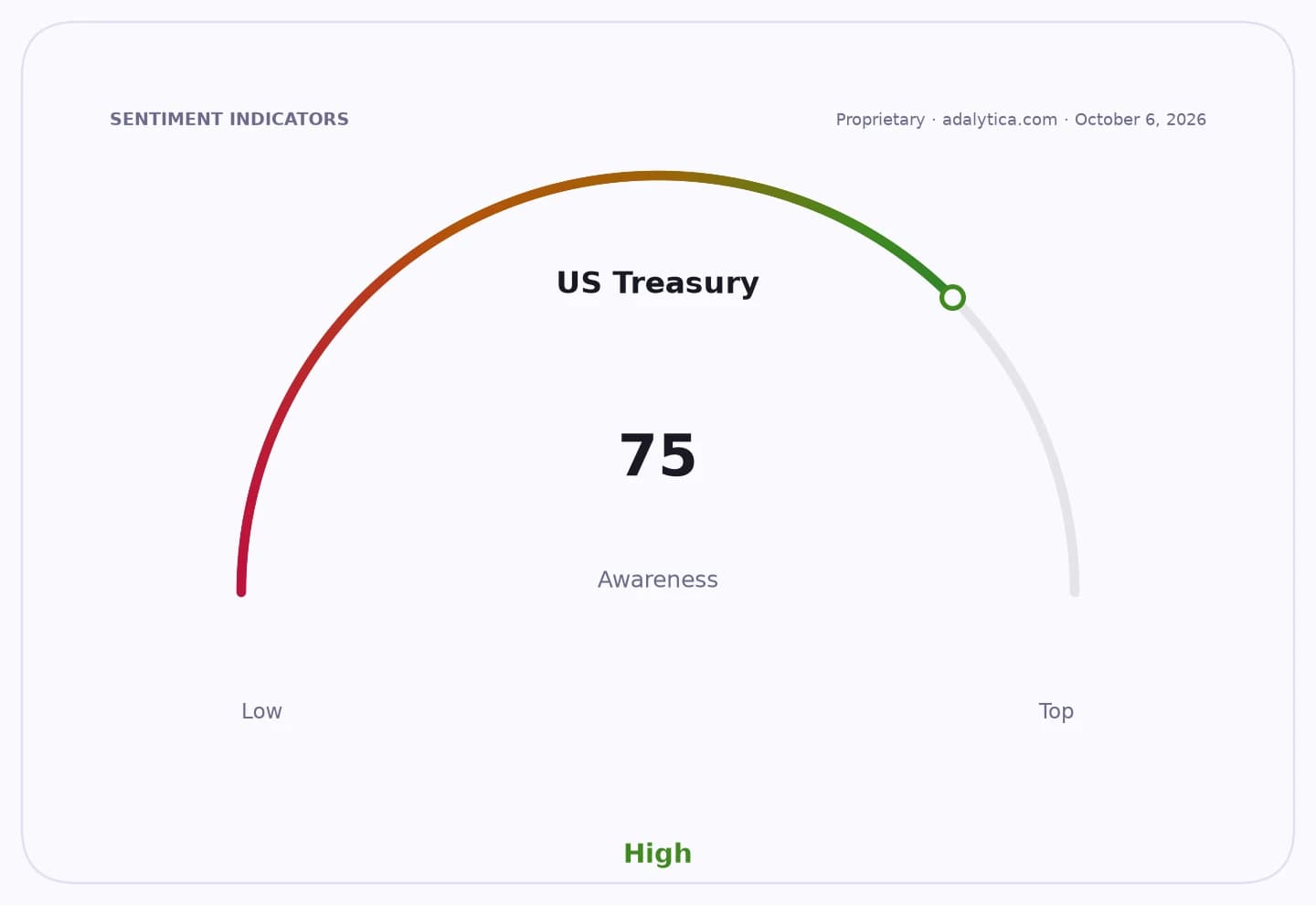
With the 10-year Treasury yield near 5.30% and the 2-year around 4.80%, the curve still offers attractive yields, but it also leaves savers exposed to sharp changes in bond prices and reinvestment income if the Federal Reserve shifts policy again. The Fed funds rate is running at about 3.75%, far below recent Treasury yields, underscoring why fixed-income investors are still being forced to choose between locking in longer-dated income and preserving flexibility.
Sentiment IndicatorsⓘProprietary · adalytica.com · October 6, 2026
This is a snapshot — live sentiment, awareness and momentum for 130+ markets update continuously in the dashboard.Open AlphaPulse
A ladder addresses that problem by splitting capital across bonds or fixed deposits with staggered maturities, typically one year apart. In the example of a ₹10 lakh portfolio, an investor might place ₹2 lakh each into one-, two-, three-, four- and five-year instruments. As each rung matures, the proceeds are rolled into a new longer-tenor security, creating a rolling stream of cash flow and reducing the chance that the entire portfolio is reinvested at an unfavorable rate.
That matters economically because rate cycles tend to punish concentrated bets. If yields rise after an investor buys a long bond, the market value of that bond falls. If rates later fall, investors who stayed too short can quickly find themselves rolling over into lower yields. Laddering softens both risks by ensuring only part of the portfolio comes up for reinvestment each year, while the rest continues earning a longer-term rate.
DGS10 vs DGS2 — macro contextadalytica.com
Explore this data interactively — full history, time series and cross-market comparisons.Open AlphaPulse
The case for ladders is stronger when volatility in rates is still elevated. TLT, the long-duration US Treasury ETF, has fallen to about $77.28, well below its 50-day moving average of roughly $80.93 and 200-day average near $83.65, while its RSI reading of 26.6 points to deeply oversold conditions. The move reflects how sensitive long-duration assets remain to rate expectations. For investors, that reinforces the appeal of a staggered maturity profile over a single large duration bet.
The trade-off is straightforward: laddering usually sacrifices the highest possible return in any one period because part of the portfolio is always held in shorter-dated paper, which typically yields less than longer maturities. But that lower upside buys predictability, liquidity and less need to time the market. For retirees, households with scheduled expenses or investors parking a lump sum in fixed income, that can be more valuable than chasing the last basis point of yield.
Target-maturity funds have made ladders easier to build for smaller investors because they package bonds into fixed end-dates without requiring direct bond selection. The key, however, remains credit quality and matching maturities to actual cash needs. In a market still shaped by rate uncertainty, the strategy’s appeal is not that it maximizes returns, but that it helps investors avoid making a single large mistake.
| Entity | Gains | Losses |
|---|---|---|
| Laddered bond investors | ▲Smoother returns | ▼Peak-yield potential |
| Long-duration bond holders | ▲Higher income if rates fall | ▼Mark-to-market risk |
| Short-term cash investors | ▲Liquidity and flexibility | ▼Lower current yields |
| Target-maturity fund providers | ▲Higher demand | ▼Direct bond sellers |