India’s government bond curve is set to flatten further as the Reserve Bank of India drains liquidity from the banking system, a shift that is pushing investors toward 10-year debt and away from five-year notes.
India Bonds Curve Flattens as RBI Drains Liquidity
The market implication is straightforward: when the RBI absorbs surplus cash, short-dated borrowing costs tend to rise first, compressing the spread between intermediate and longer maturities. That matters for funding conditions across the economy, because the five- to 10-year segment is a key pricing benchmark for corporate debt, bank portfolios and sovereign issuance. It also matters for investors because a flatter or even inverted curve changes the relative value of duration, making the 10-year bond more attractive than the five-year note if policy tightening continues.
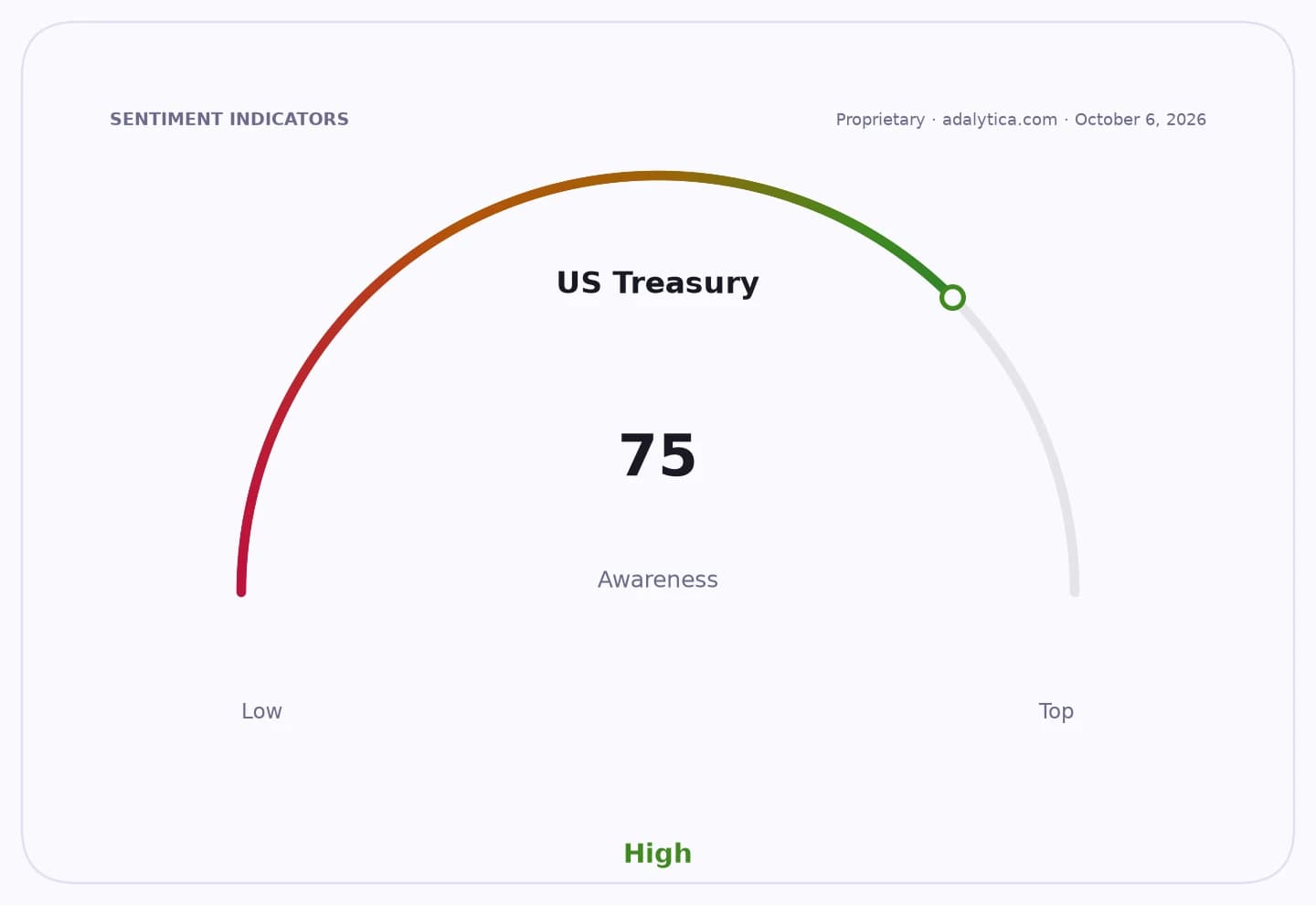
Sentiment IndicatorsⓘProprietary · adalytica.com · October 5, 2026
This is a snapshot — live sentiment, awareness and momentum for 130+ markets update continuously in the dashboard.Open AlphaPulse
The central bank has already withdrawn more than 1 trillion rupees, or about $10.4 billion, and traders say further liquidity absorption will determine how much more the curve flattens. ICBC and Anand Rathi Global Finance both expect the five-year to 10-year yield gap to narrow, while ICICI Securities Primary Dealership sees the five-year yield rising toward 7% from 6.94% if the RBI stays aggressive. That would leave the short end more exposed than the 10-year, particularly if overnight rates are pushed closer to, or even above, the repo rate.
This is less about a broad repricing of Indian growth and more about policy transmission. The RBI has been draining excess liquidity because surplus banking-system cash has kept overnight rates below the policy rate, diluting the effect of previous tightening. By absorbing funds, the central bank is trying to force money-market rates back toward the repo rate and keep inflation pressures in check. The next policy meeting, where economists broadly expect a 25-basis-point hike to 5.50%, will be crucial. Any guidance that points to more increases would likely hit the front and belly of the curve harder than the 10-year.
That is why some investors are already positioning for a flatter curve. Anand Rathi recommends selling the five-year benchmark and buying the 10-year bond, a trade that benefits if the yield gap narrows further. The bull case for the 10-year is that it offers comparatively better carry if the RBI focuses on liquidity management rather than a prolonged rate cycle. The bear case is that if the central bank surprises with a more hawkish path, the entire curve could sell off, with the five-year still underperforming most.
The backdrop is not supportive for risk assets more broadly. Rising US Treasury yields and a firmer dollar have tightened global financial conditions, weighing on emerging markets including India. That has already fed into domestic equity weakness and foreign outflows, while the bond market faces the additional drag of central-bank liquidity withdrawal. For fixed-income investors, the key question now is not whether rates are high, but where the curve stops steepening and starts flattening enough to make duration trades meaningful again.
If the RBI keeps draining cash at the current pace, the next move in India’s bond market is likely to be less about outright yield direction and more about relative-value positioning. The 10-year bond may continue to outperform the five-year note, but only so long as policy tightening remains measured and the central bank avoids pushing short-end rates decisively above the repo rate.
| Entity | Gains | Losses |
|---|---|---|
| 10-year Indian government bonds | ▲Relative demand rises | ▼Less attractive yield premium compresses |
| Five-year Indian notes | ▲— | ▼Higher yields, lower relative value |
| RBI | ▲Better policy transmission | ▼Risk of tighter financial conditions |
| Banks and borrowers | ▲— | ▼Higher short-term funding costs |