Global bond yields are climbing again, and that is starting to look like a direct financing risk for India as higher rates lift borrowing costs across markets.
India faces higher borrowing costs as yields rise

The 10-year U.S. Treasury yield is forecast to edge up to 4.836% from 4.79%, while the gap between U.S. 10-year and 2-year notes has widened to 0.43 percentage point, a sign investors are still pricing a sturdier growth and inflation backdrop rather than an imminent recession. The move comes as global investors fret over swelling debt loads, sticky inflation and renewed geopolitical strain, keeping yields elevated even as U.S. Treasuries themselves have seen bouts of buying.
Sentiment IndicatorsⓘProprietary · adalytica.com · September 4, 2026
This is a snapshot — live sentiment, awareness and momentum for 130+ markets update continuously in the dashboard.Open AlphaPulse

For India, the pressure shows up in both bonds and equities. The NSE Nifty 50 fell to 23,949.15, below its 50-day moving average of 24,208.95 and its 200-day average of 24,622.15, while the India ETF INDA closed at 49.97, still under its 200-day moving average of 50.49. That combination suggests investors remain cautious on Indian risk assets even after a rebound from March lows.
The currency is not offering much relief either. The rupee traded around 94.49 per dollar, leaving it close to the lower end of its recent range and above its 50-day average of 95.55 in the data snapshot, a reminder that higher global yields can keep pressure on capital flows and imported inflation. In a world where dollar funding costs are volatile, that matters for Indian corporates, banks and the government’s refinancing needs.
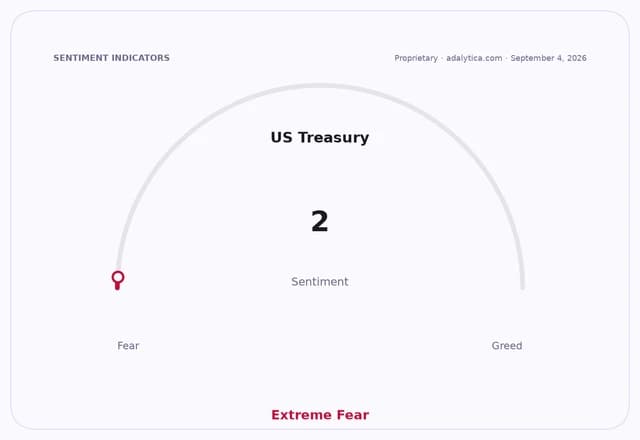
Credit markets are also flashing caution. The U.S. high-yield spread sits at 2.66 percentage points, still tight by recent stress episodes but directionally sensitive to any further jump in benchmark yields, while Adalytica’s treasury-bond signal shows extreme fear around U.S. duration. For India, the broader message is that a higher-for-longer global rate regime could constrain fiscal room, raise the cost of sovereign issuance and make foreign investors more selective.
The immediate test is whether upcoming inflation data and central-bank commentary keep long-end yields pinned near current levels. If they do, India’s borrowing costs, currency stability and equity valuations are likely to stay under pressure even if domestic growth holds up.
| Entity | Gains | Losses |
|---|---|---|
| Global lenders | ▲Higher interest income | ▼Borrowers’ refinancing pressure |
| Indian government | ▲None | ▼Higher sovereign funding costs |
| Indian corporates | ▲None | ▼Costlier debt and capex financing |
| Bond holders in long duration | ▲Yield repricing opportunities | ▼Price losses on existing bonds |