Rising U.S. Treasury yields are doing more than moving bond prices; they are pushing up the borrowing costs that shape mortgages, student loans, credit cards and corporate finance, and that matters for almost every investor’s long-term return.
Treasury Yields Push Up Mortgage and Borrowing Costs

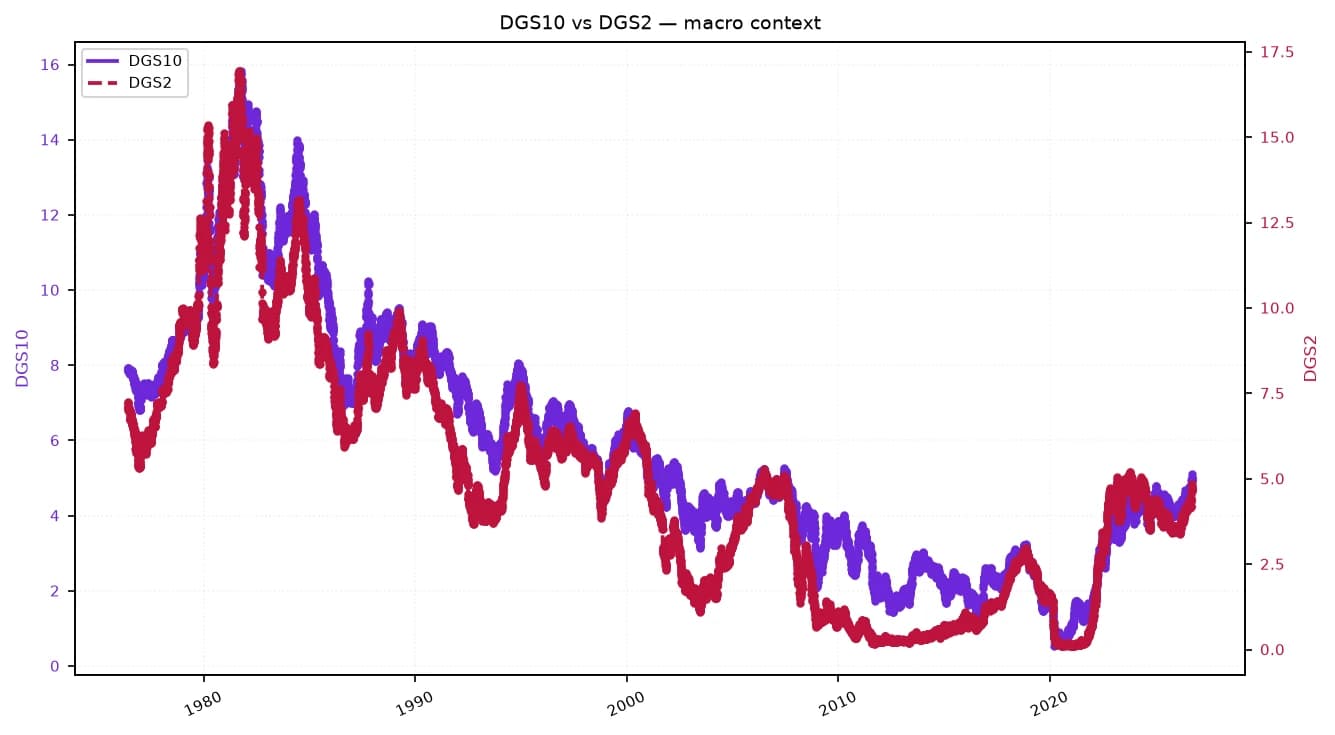
The benchmark 10-year Treasury yield was around 5.04% in the latest forecast, with the two-year at 4.74%, levels that keep pressure on the entire lending chain. The 30-year mortgage rate was 7.4% in early October and is forecast to edge up to 7.593%, a reminder that households do not borrow off the headlines, but off the Treasury market. When government rates rise, banks and lenders tend to reprice consumer loans higher, and the result is slower refinancing activity, bigger monthly payments and less room in household budgets for spending elsewhere.
Sentiment IndicatorsⓘProprietary · adalytica.com · October 20, 2026
This is a snapshot — live sentiment, awareness and momentum for 130+ markets update continuously in the dashboard.Open AlphaPulse
That is why bond-market moves matter to investors even when they own stocks. Higher rates raise the hurdle rate for every asset class. Future earnings are discounted more heavily, which makes expensive growth stocks harder to justify. The impact can show up in equity valuations, especially if long-duration assets are already priced for perfection. At the same time, some financial firms can benefit from a steeper return environment. JPMorgan’s latest filing pointed to stronger net interest income from higher balances and lending activity, while Bank of America highlighted its sensitivity to rate shifts. In plain English: lenders can gain from a higher-rate world, but borrowers and rate-sensitive sectors usually do not.
Exchange-traded funds tied to longer Treasuries have also reflected the strain. TLT, which tracks long-dated government bonds, recently traded around $80, below its 200-day moving average of roughly $83.36. Its 50-day moving average has also slipped beneath the longer trend, a conventional technical sign that bond investors are still wrestling with the path of yields. Adalytica’s treasury-bond trade signals show extreme greed in TLT alongside extreme fear in awareness, underscoring how quickly sentiment can swing when rates are moving this fast.
DGS10 vs DGS2 — macro contextadalytica.com
Explore this data interactively — full history, time series and cross-market comparisons.Open AlphaPulse
The broader economic story is simple: governments are borrowing more, inflation is still complicating the picture and central banks are being asked to defend price stability without choking growth. That combination can keep bond yields elevated for longer than many households or investors expect. For consumers, that means the cost of money is likely to stay high. For investors, it means balance sheets, cash flow and valuation discipline matter more than ever.
The long-term lesson is not to panic, but to prepare. If rates remain anchored near these levels, the winners are likely to be companies with strong free cash flow, pricing power and modest debt. The losers are the borrowers who depended on cheap money. For patient investors, this is a reminder to favor quality, diversification and a multi-year horizon, not rate guesswork.
| Entity | Gains | Losses |
|---|---|---|
| Lenders and banks | ▲Higher net interest income | ▼More credit stress risk |
| Savers and bond buyers | ▲Better yields on new money | ▼Lower existing bond prices |
| Homebuyers and borrowers | ▲None | ▼Higher mortgage and loan costs |
| Rate-sensitive stocks | ▲Possible valuation reset | ▼Higher discount rates |