The surge in U.S. Treasury yields is bruising markets, but BNY chief executive Robin Vince is arguing that the 10-year note’s move to around 5.2% is less an economic rupture than a belated return to something closer to normal.
BNY Says Higher 10-Year Yields Are Normal
That matters because the 10-year Treasury is the benchmark for global borrowing costs, from mortgages and corporate loans to equity valuations and private-market financing. If investors increasingly accept that the ultra-low-rate era is over, the repricing of risk assets may prove more durable than many had hoped, while companies and households face a structurally higher cost of capital.
Sentiment IndicatorsⓘProprietary · adalytica.com · October 17, 2026
This is a snapshot — live sentiment, awareness and momentum for 130+ markets update continuously in the dashboard.Open AlphaPulse
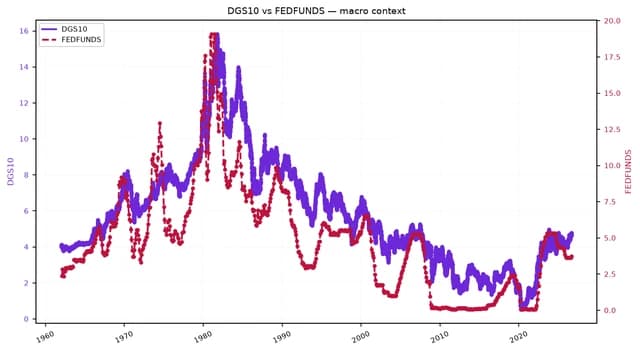
Vince told Reuters the recent level around 5.25% was “nothing particularly unusual in history,” adding that markets may simply be adjusting after “a very long time” of unusually low rates. The 10-year yield touched 5.21% on Oct. 13, the highest in the data supplied since the early 2000s, before easing to 5.10% on Thursday. That remains far above the 50-day moving average of 4.94% and the 200-day average of 4.50%, underscoring how far yields have moved outside the range that prevailed for much of the post-crisis decade.
The move has real economic consequences. Higher Treasury yields feed directly into government financing costs, corporate debt pricing and consumer lending rates, tightening financial conditions even without further action from the Federal Reserve. They also pressure the present value of future earnings, which is why high-growth technology shares have been especially sensitive to the selloff in bonds. The 10-year’s jump has been driven by persistent inflation concerns, resilient U.S. activity and a market that is still trying to settle on where policy rates and term premiums should sit in a more inflation-prone world.
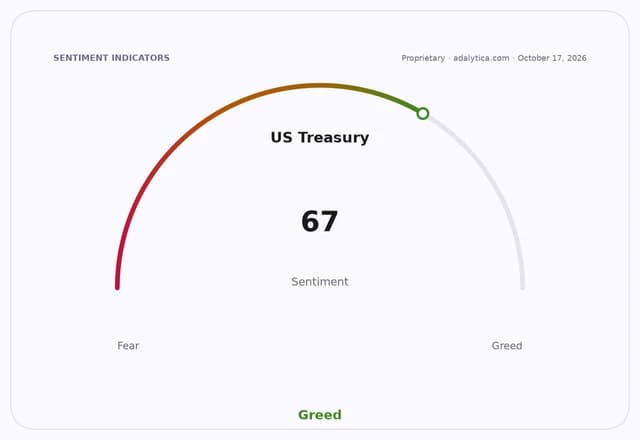
Vince’s comments echo a broader shift among investors and strategists who say the challenge is as much psychological as macroeconomic. Brian Jacobsen of Annex Wealth Management said borrowers and businesses may simply need to get used to these levels and should not assume a return to the “ultra-low-rate world” soon. That view fits a market in which the 10-year’s three-day slide this week reflects a partial safe-haven bid after the latest AI-led equity selloff, even as the longer-term backdrop remains one of elevated borrowing costs.
For BNY, the move is more than an academic debate. The custodian and asset-servicing giant reported a 20% rise in third-quarter profit to $1.61 billion as higher interest income and stronger market levels boosted client assets, while assets under custody and administration climbed 10% to $63.4 trillion. Chief financial officer Dermot McDonogh said average deposits should pick up in the fourth quarter, and the bank is reinvesting maturing securities at higher yields. Net interest income makes up about a quarter of revenue, so a steeper rate environment can support earnings even as it strains clients and capital markets activity.
The wider market implication is that higher yields are now doing two jobs at once: they are squeezing valuation multiples and testing weaker financial structures, particularly in capital-intensive sectors such as AI, while also improving returns for cash-rich institutions and bond buyers willing to lock in higher coupons. Whether the recent selloff in Treasuries becomes the new normal will depend on the next inflation prints and the Fed’s response, but Vince’s point is clear: the market may not be facing an anomaly, only a return to a regime investors had forgotten how to price.
| Entity | Gains | Losses |
|---|---|---|
| BNY | ▲Higher reinvestment yields | ▼Client financing costs |
| Treasury bond buyers | ▲Better coupon income | ▼Price volatility |
| Borrowers and equity valuations | ▲— | ▼Higher discount rates |
| AI and other capital-heavy firms | ▲— | ▼Costlier funding |