U.S. banks are still making money, but they are increasingly warning that inflation and high interest rates are now the bigger story for the economy and markets.
JPMorgan, Goldman Post Q3 Profits as Rate Risks Rise

That is the key takeaway from third-quarter earnings at JPMorgan Chase, Goldman Sachs, Citigroup and Wells Fargo, which all posted year-over-year profit gains even as executives pointed to persistent price pressure, elevated borrowing costs and uncertainty about how long consumers and companies can keep absorbing them. For investors, the earnings show that bank profits can remain resilient while the macro backdrop quietly deteriorates.
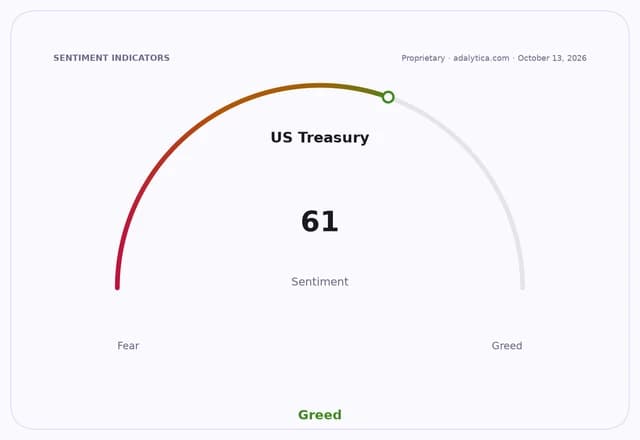
Sentiment IndicatorsⓘProprietary · adalytica.com · October 13, 2026
This is a snapshot — live sentiment, awareness and momentum for 130+ markets update continuously in the dashboard.Open AlphaPulse
JPMorgan, the country’s biggest lender by assets, reported profit of $15.3 billion, up from $14.4 billion a year earlier, and Jamie Dimon said business investment and consumer spending are still supporting growth. But he also flagged large budget deficits, stubborn inflation, high asset prices and rising rates as meaningful risks. Goldman Sachs posted profit of $5.29 billion, helped by a 72% jump in equity-trading revenue, while Citigroup’s earnings rose 40% and Wells Fargo delivered $5.95 billion, beating expectations.
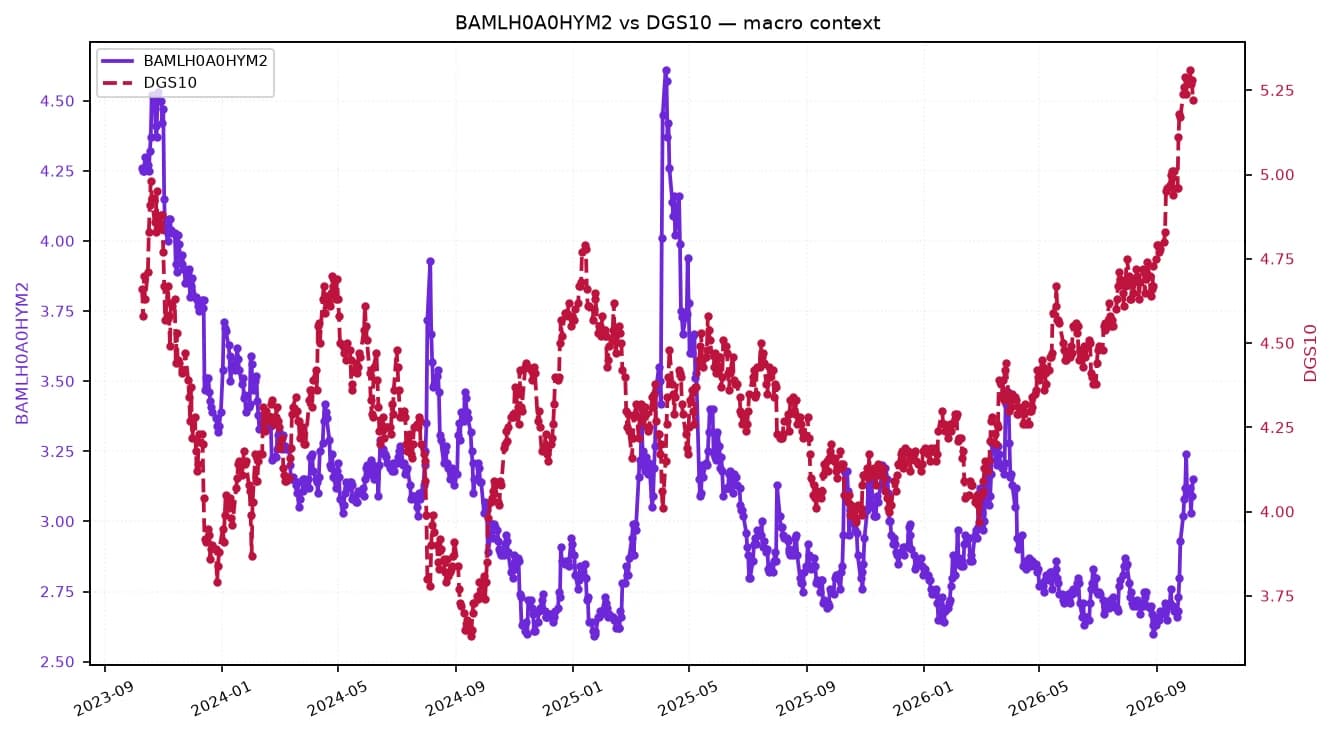
The numbers matter because they show the U.S. economy is not yet breaking, but it is becoming more vulnerable to tighter financial conditions. FactSet expects S&P 500 earnings per share to rise nearly 30% in the third quarter, underscoring that corporate America still has momentum. Yet that strength is colliding with a bond market that has already repriced for slower growth and stickier inflation. The U.S. 10-year Treasury yield has climbed to around 5.2%, near multi-year highs, while the 30-year yield has also been pushed higher by worries over government spending and inflation persistence.
That combination is exactly what banks are warning about. Higher rates support net interest income in the near term, but they also raise debt-service costs for households, pressure commercial borrowers and make it harder for the Fed to declare victory over inflation. The Fed’s benchmark rate is about 3.75%, and the central bank moved higher last month amid gains in diesel, technology and food prices, leaving policy restrictive even as growth cools.
For investors, this is a classic late-cycle setup: the banks look healthy on the surface, but the market is being told to prepare for a tougher second half of the economic cycle. That favors lenders with diversified trading and fee income, and it keeps pressure on rate-sensitive sectors such as real estate, utilities and highly levered small caps. It also argues for staying selective in bank stocks: JPMorgan and Goldman are better insulated by scale and market activity, while lenders more dependent on plain-vanilla lending could see margin pressure if credit quality weakens.
The bigger trade is not that banks are in trouble now. It is that they are often the first to see when the economy is approaching the point where higher borrowing costs stop being a tailwind and start becoming a drag. If inflation stays sticky and Treasury yields stay elevated, the winners will be institutions that can monetize volatility and liquidity, not just loan growth. Investors should treat the strong earnings as confirmation of resilience — and the warnings as an early signal that the next macro move may be slower growth, not easier policy.
| Entity | Gains | Losses |
|---|---|---|
| JPMorgan, Goldman Sachs, Citigroup, Wells Fargo | ▲Strong 3Q profits | ▼Higher funding and credit risk |
| U.S. consumers and businesses | ▲Still-supportive spending conditions | ▼Higher borrowing costs |
| Treasury bondholders | ▲Potential flight-to-safety demand | ▼Higher yields and price pressure |
| Rate-sensitive sectors | ▲— | ▼Slower growth and tighter financial conditions |