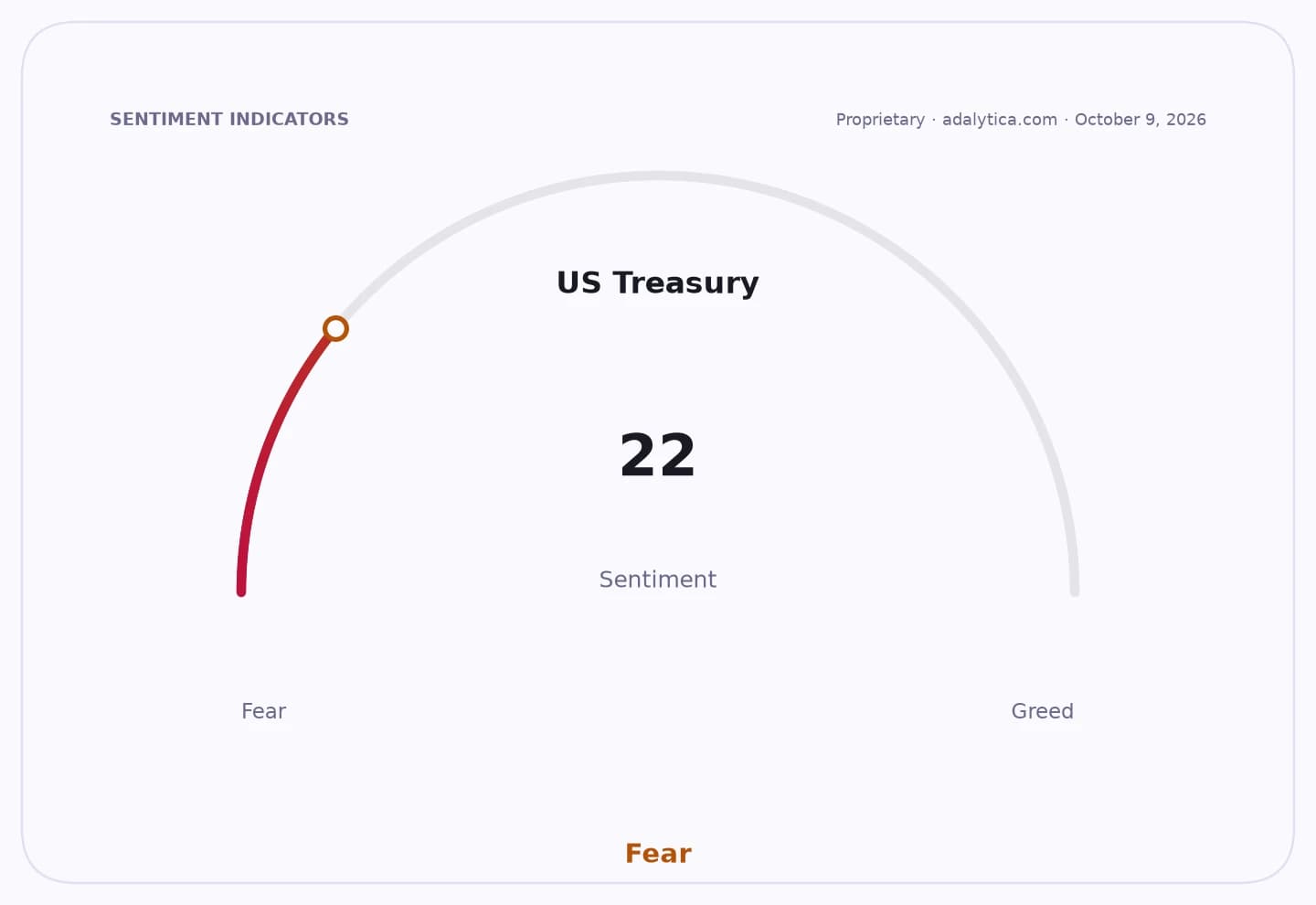
Jamie Dimon’s warning that federal debt is pushing bond volatility and higher rates lands at exactly the wrong moment for markets already relearning that long-dated Treasuries can no longer be treated as a one-way safe haven.
Treasury yields near 5% as debt concerns rise
The benchmark 10-year Treasury yield is holding near 5.1%, far above the 3.63% average federal funds rate implied for July and September and well above the levels that defined the post-pandemic bond rally. That gap matters because it shows investors are demanding a meaningful premium to finance Washington’s borrowing, even as the policy rate itself is expected to edge lower toward 3.73% next month. In other words, the market is not just pricing the Fed — it is pricing the supply of debt.
Sentiment IndicatorsⓘProprietary · adalytica.com · October 17, 2026
This is a snapshot — live sentiment, awareness and momentum for 130+ markets update continuously in the dashboard.Open AlphaPulse

For investors, that is the real message. A 10-year yield anchored around 5% changes the cost of capital for everything from mortgages and corporate issuance to equity valuations. It also keeps duration risk alive in portfolios that had counted on rate cuts to revive bond prices. TLT, the iShares 20+ Year Treasury Bond ETF, has rebounded to around 80, but that recovery sits on top of a year in which long-bond sentiment has been whipsawed. Adalytica’s US Treasury Bonds Trade Signals show sentiment at 80, or “Greed,” even as awareness remains at “Extreme Fear,” a combination that underscores how fragile the bid for duration remains.
Dimon’s point is not just about government finance. It is about the knock-on effects of persistent issuance in a market where the 10-year yield has already swung sharply from the lows that fueled the old 60/40 playbook. Treasury volatility feeds directly into bank balance sheets, capital-markets activity and the discount rates used across the market. That helps explain why JPMorgan’s own shares have been pressured even as the stock remains well above its 200-day moving average; higher rates can support net interest income, but volatile bonds complicate risk management, trading books and valuation multiples.
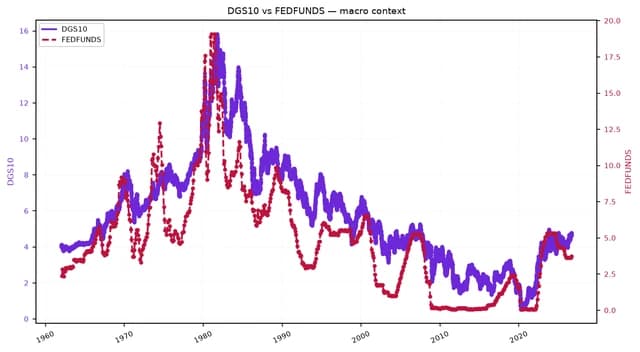
The setup is also a warning for policymakers. The U.S. does not need a debt crisis to create market stress; it only needs enough supply to keep term premiums elevated while the Fed eases. The current curve, with the 10-year around 5.10% and the 2-year near 3.75%, suggests investors are still pricing a growth-and-inflation premium on top of monetary easing expectations. If fiscal deficits continue to swell, that spread can widen again, and the bond market will force the conversation long before Congress does.
That is why the investable response should be to own businesses that benefit from higher-for-longer volatility rather than fight it. Banks with strong trading and asset-sensitive balance sheets can still perform, but the better asymmetric opportunities may be in hedged financials, market infrastructure, short-duration fixed income and cash-rich equities that do not rely on cheap capital. The market underestimates how durable this regime can be: a world of heavy Treasury issuance, sticky term premium and periodic bond selloffs is not a temporary headline — it is an investment environment.
Dimon is effectively telling investors that fiscal excess has become a market variable, not a political talking point. The next move in bonds may not come from the Fed at all, but from supply, confidence and the cost of financing America’s debt load. Position for volatility, not complacency.
| Entity | Gains | Losses |
|---|---|---|
| Bond volatility traders | ▲Higher trading opportunities | ▼Calm carry strategies |
| Banks with rate sensitivity | ▲Wider lending spreads | ▼Duration-heavy portfolios |
| Treasury buyers at long maturities | ▲Higher yield income | ▼Price stability |
| Equity valuations | ▲Cash-rich, low-duration names | ▼Long-duration growth stocks |