U.S. stocks eased as Treasury yields stayed elevated, keeping pressure on rate-sensitive corners of Wall Street and forcing investors to reassess how long the Federal Reserve can hold policy tight.
U.S. Stocks Ease as Treasury Yields Stay Elevated

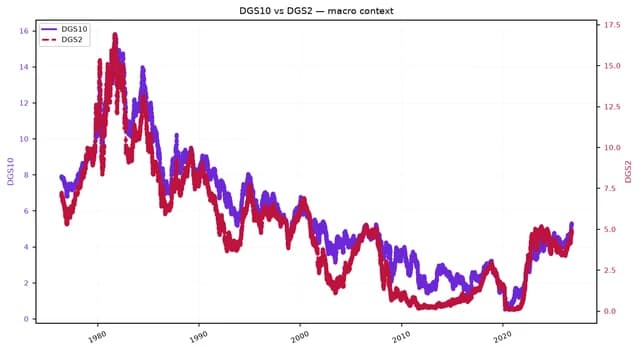
The benchmark 10-year Treasury yield fell 2.72 basis points to 5.22%, but it remained close to a 24-year high and well above levels that have been weighing on equities in recent weeks. The move comes as traders wait for Wednesday’s inflation report, with fed-funds futures now pricing an 80.6% chance the Fed leaves rates unchanged this month, up sharply from 51% a month ago.
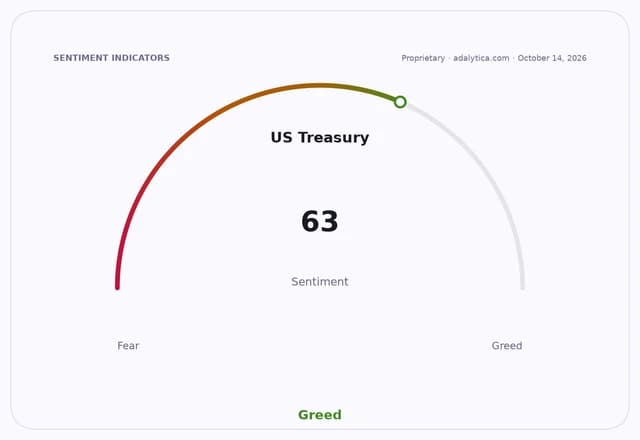
Sentiment IndicatorsⓘProprietary · adalytica.com · October 14, 2026
This is a snapshot — live sentiment, awareness and momentum for 130+ markets update continuously in the dashboard.Open AlphaPulse
That shift matters because higher long-term borrowing costs raise discount rates across asset classes, squeeze valuations and increase financing pressure on companies, banks and heavily indebted borrowers. The selloff in global government bonds has already pushed borrowing costs to multi-decade highs, with markets still digesting inflation pressure from energy and concerns over ballooning public debt.
The stock market action showed the strain. The S&P 500 ended near flat but under the surface the Nasdaq logged 47 new highs and 408 new lows, while the PHLX chip index slipped for a fifth straight session and has fallen more than 8% over the past five trading days. Micron Technology dropped 3.6% and Applied Materials fell almost 7%, reflecting renewed pressure on semiconductor shares even as the sector remains up more than 70% this year.
Financials were mixed after a raft of earnings. Citigroup fell 5.6%, Wells Fargo dropped 3.1% after net interest income missed estimates, and JPMorgan Chase slipped 0.9% after an uncommon profit miss. Goldman Sachs gave back 0.2% after beating expectations, while Apple climbed to an intraday record and briefly pushed its market value to $4.98 trillion, underscoring how a handful of mega-cap names are still carrying index-level support.
Oil eased, with Brent crude down 0.9% to $105.69 a barrel, but that offered only limited relief to markets still focused on the inflation outlook. The 10-year yield’s pullback from last week’s 24-year high of 5.364% helped steady bonds, and trade signals tracked by Adalytica showed U.S. Treasury sentiment improving even as market fear remained extreme.
For investors, the key test is whether Wednesday’s inflation data confirms the case for higher-for-longer rates or gives bond buyers enough cover to push yields back down. Until then, equities are likely to remain vulnerable to another leg higher in Treasury yields, especially in semiconductors, regional lenders and other groups most exposed to tighter financial conditions.
| Entity | Gains | Losses |
|---|---|---|
| Treasury bond buyers | ▲Higher yields / income | ▼Price volatility |
| Equity bulls | ▲Mega-cap support | ▼Rate-sensitive stocks |
| Banks | ▲Wider asset yields | ▼NII misses, loan pressure |
| Chipmakers | ▲AI demand narrative | ▼Valuation compression |