Australia’s public service wage bill has jumped 7.2% as the Reserve Bank warns that fast-growing government pay is becoming a problem for inflation expectations and, by extension, the central bank’s credibility.
Australia Public Service Wage Bill Rises 7.2%
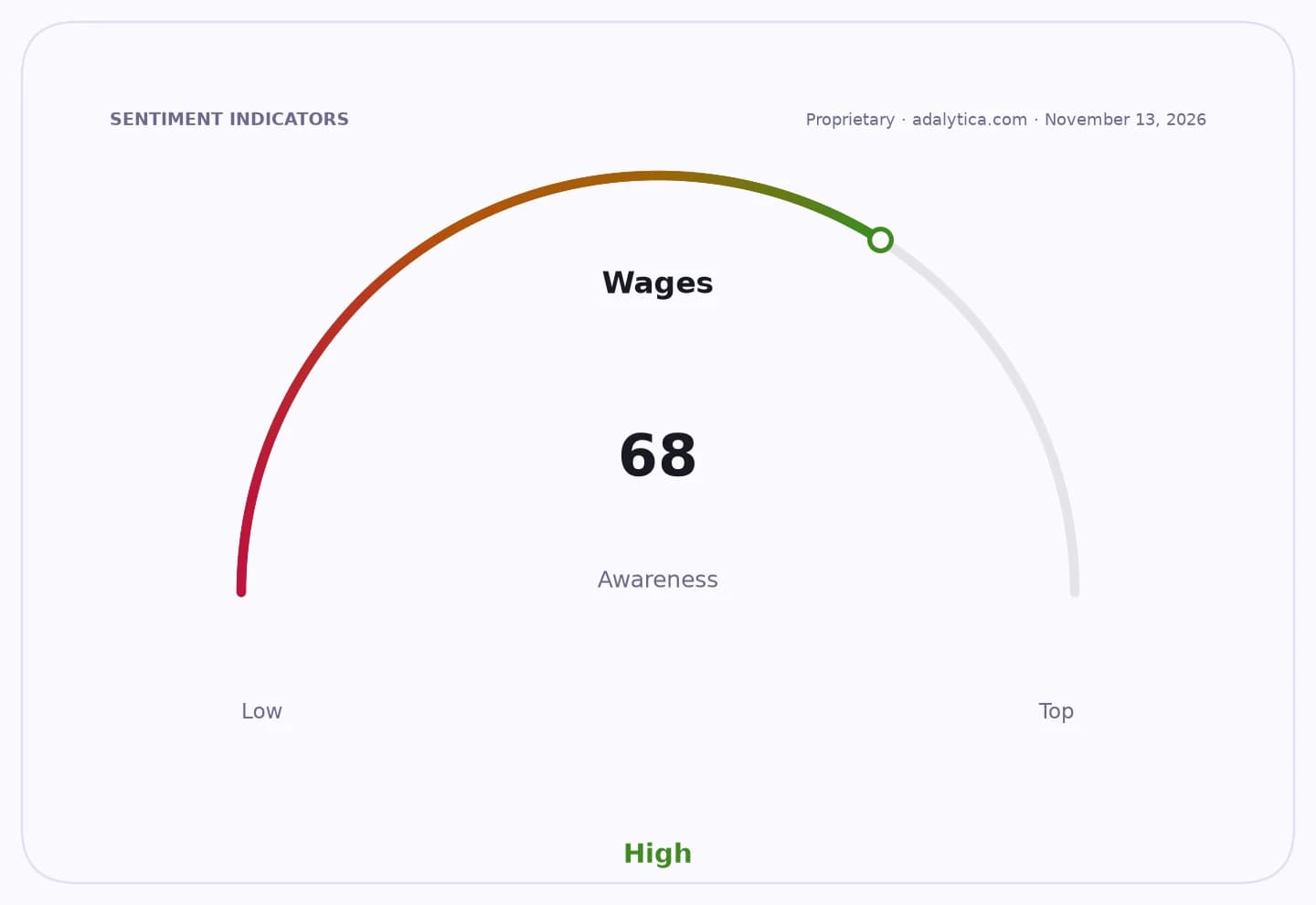
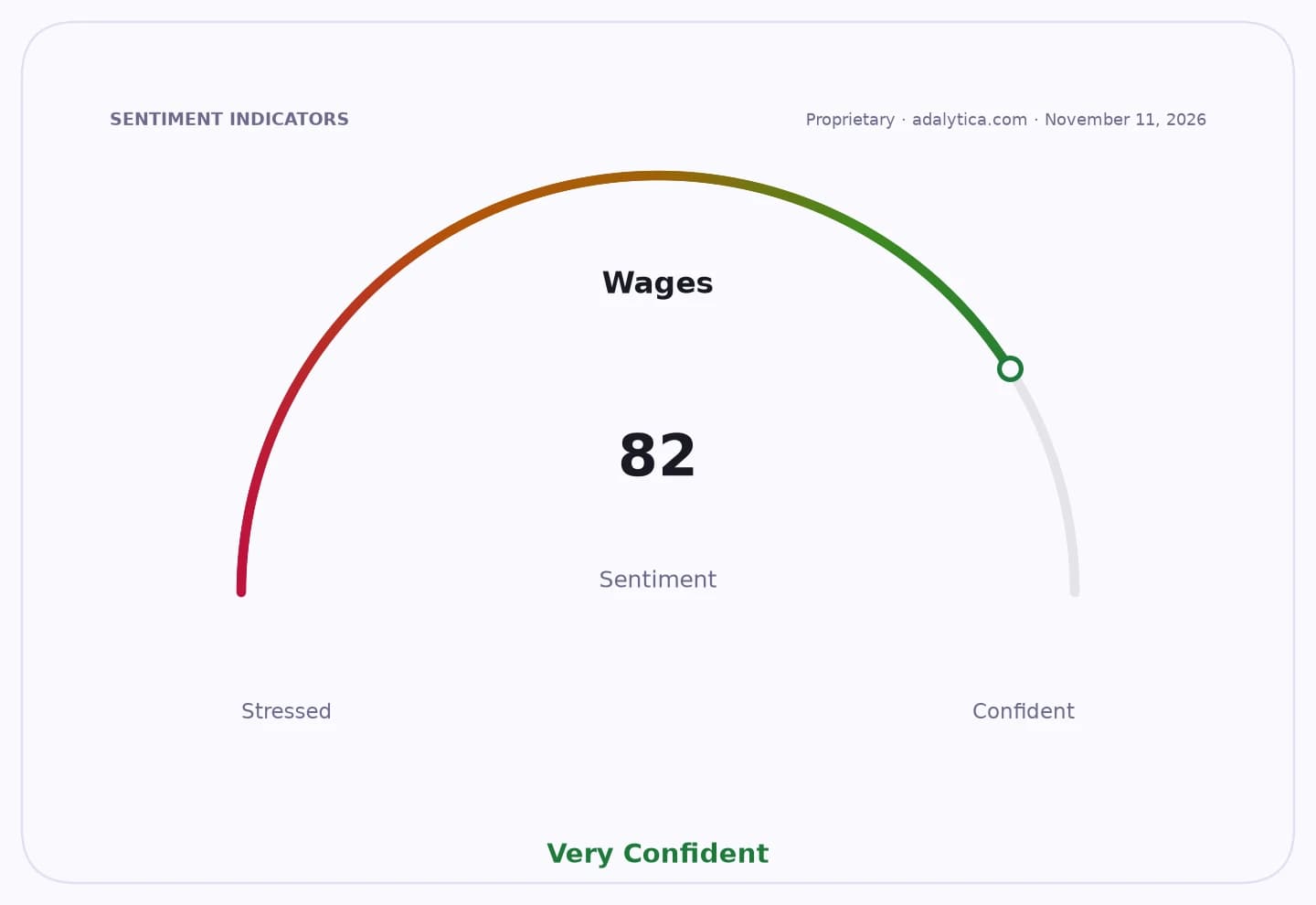
Wages
That matters because wage growth is one of the clearest channels through which inflation becomes persistent. If public-sector pay is rising well ahead of prices, it can lift household incomes, support spending and keep services inflation sticky even as goods-price pressures ease. For the Reserve Bank, the risk is not just a higher near-term CPI reading but a perception that policy is failing to restrain broad-based cost growth.
Sentiment Indicators
The warning from deputy governor Andrew Hauser lands at a delicate moment for policymakers. Australia’s unemployment rate has been holding around 4.1% to 4.2%, a level consistent with a still-tight labour market, while payroll employment has continued to edge higher. That combination leaves limited room for employers to absorb wage gains without passing on costs. In that environment, a 7.2% rise in the federal government’s wage bill looks less like a one-off administrative increase and more like a benchmark for wage expectations across the economy.
The inflation backdrop makes the issue more sensitive. The latest CPI reading was 337.476 in October, up 0.35% on the month, with a forecast increase of another 0.35% for November. While that is not the sort of surge that would force an emergency policy response, it is enough to keep inflation above the RBA’s comfort zone if wage costs continue to build. Adalytica’s CPI sentiment gauge is also flashing “Extreme Greed,” suggesting market attention around inflation remains elevated and that any evidence of wage pressure is likely to be read through a hawkish lens.
For investors, the significance is twofold. First, persistent wage growth raises the odds that rates stay higher for longer if the central bank concludes inflation is proving sticky. That tends to support the currency and short-dated yields, while weighing on rate-sensitive sectors such as housing, consumer discretionary and heavily leveraged firms. Second, it increases the risk of margin pressure for employers that cannot fully pass higher labour costs into prices, particularly in services industries where wages are a large share of operating expenses.
There is also a broader political economy issue. Public-sector pay gains can be hard for governments to resist when living costs are still elevated, but they can undercut the inflation narrative they want to project. If households see government wages rising faster than headline inflation while the central bank insists demand remains too strong, faith in the anti-inflation effort can erode quickly. That is the credibility risk Hauser is highlighting: once wage growth becomes embedded in expectations, it is harder to bring inflation back down without a sharper slowdown in activity.
The bull case is that higher public wages help support real incomes without immediately reigniting demand across the economy, especially if private-sector wage growth remains contained. The bear case is that government pay sets a template for the rest of the labour market, keeping services inflation sticky and forcing the RBA to keep policy restrictive for longer than markets expect.
What happens next will hinge on whether wage growth broadens beyond the public sector and whether inflation forecasts keep creeping higher. If they do, the central bank’s message will become harder to sell to households and markets alike.
| Entity | Gains | Losses |
|---|---|---|
| Public-sector workers | ▲Higher nominal pay | ▼None immediate |
| Reserve Bank | ▲Stronger case for caution | ▼Credibility if inflation persists |
| Government | ▲Can support household incomes | ▼Bigger wage bill, fiscal pressure |
| Borrowers and rate-sensitive sectors | ▲Stable wages if inflation cools | ▼Higher-for-longer rates if wage pressures spread |