The Reserve Bank of Australia’s fight against inflation now depends as much on credibility as on interest rates, with signs that households and markets are losing confidence in the central bank’s 2% to 3% target.
RBA credibility and inflation expectations slip

That matters because inflation is still running above goal, core price pressures remain sticky and the RBA is being forced to keep policy tight longer than many borrowers, businesses and politicians want. If the public starts to doubt that the bank — or the government backing it — is fully committed to bringing inflation back down, wage demands, price-setting behavior and borrowing costs can all stay elevated, making the task of restoring price stability more expensive.
Sentiment Indicators

Deputy governor Andrew Hauser has argued that public trust is central to the inflation battle. That is the right emphasis: modern inflation control works best when households believe the central bank will act decisively enough to keep expectations anchored. But the harder question is whether Australia’s political leadership is prepared to accept the growth and fiscal costs of getting inflation back into range. When that commitment is in doubt, the RBA’s policy signal weakens.
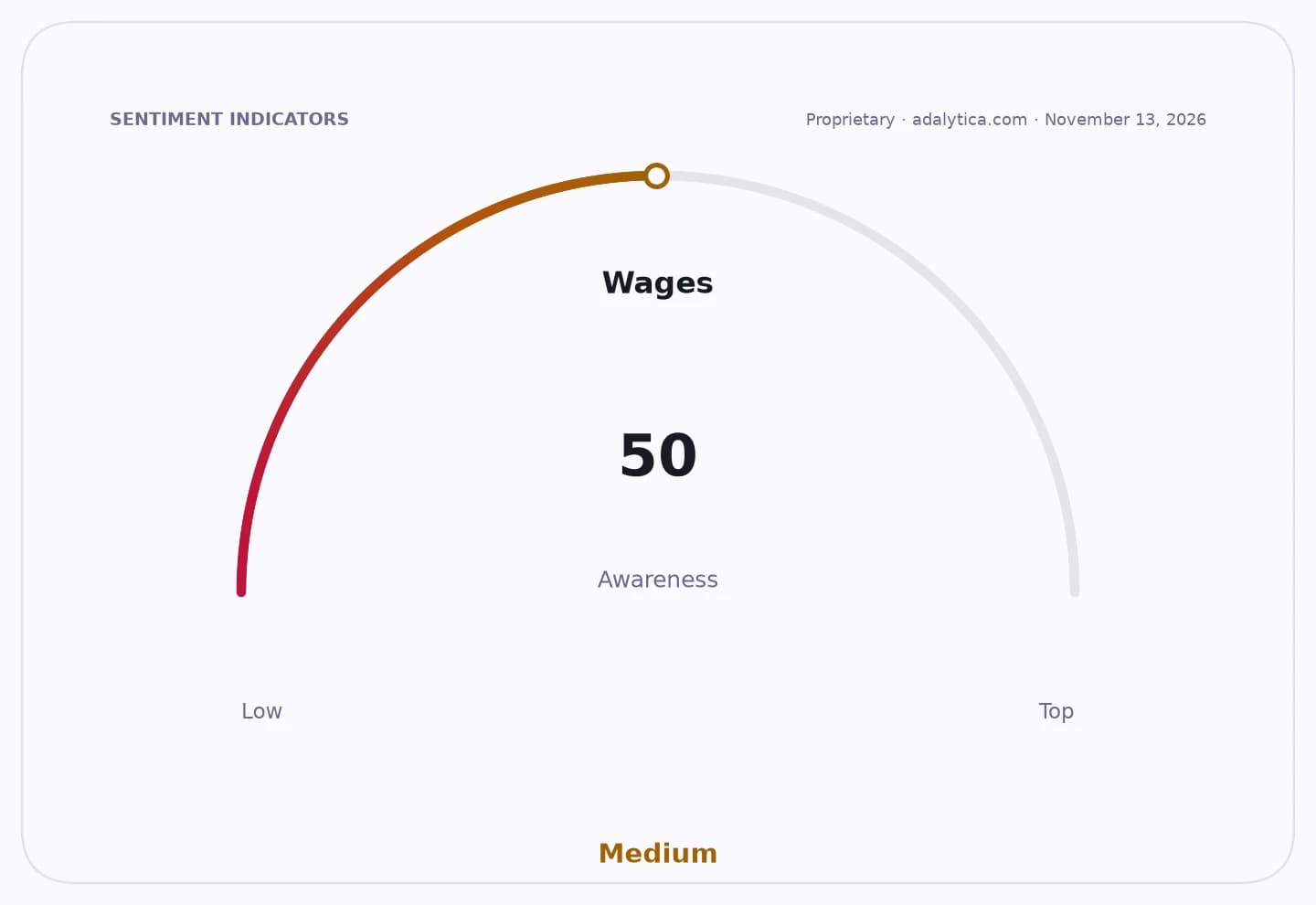
The stakes are evident in the market data. Confidence in the RBA’s 2% inflation target, tracked by Adalytica’s INFL2 gauge, has fallen to 25, labeled “Fear,” after dropping 29 points over the past month. Long-term inflation expectations have also softened only partly, with the LTINF sentiment gauge at 57, still neutral but below earlier readings, while the 5-year breakeven sentiment sits at 55. Those are not panic levels, but they point to a fraying anchor rather than a stable one.
2% Target Confidence
At the same time, the policy backdrop is still restrictive. Australia’s benchmark inflation pressures remain well above the RBA’s comfort zone, and markets are pricing only limited near-term easing. That is consistent with the broader message from the yield curve, where the 10-year minus 2-year spread is around 0.24 percentage point, indicating investors still expect policy to remain tight in the near term before inflation is finally subdued.
The political dimension is what makes this episode especially important. Central banks can usually tolerate public frustration while inflation is moving down. They struggle when voters conclude the target is negotiable, or when governments appear unwilling to back the central bank through a period of slower growth and weaker demand. In that setting, every rate decision becomes harder to sell and every inflation surprise becomes more damaging.
For investors, the risk is that a loss of trust keeps Australian rates higher for longer, pressuring rate-sensitive sectors such as housing, retail and highly leveraged corporates. The upside case is that if the RBA can re-establish credibility with a clear anti-inflation stance, expectations will stay anchored and the eventual disinflation process will be less disruptive. The next test is whether the December decision and the accompanying communication are strong enough to convince markets that the target is still the target, not just a guideline.
| Entity | Gains | Losses |
|---|---|---|
| RBA hawks | ▲Credibility support | ▼Policy flexibility |
| Borrowers | ▲Lower-rate hopes delayed | ▼Higher debt service |
| Inflation believers | ▲Tighter expectations anchor | ▼Easier price-setting |
| Government critics | ▲More scrutiny of fiscal stance | ▼Political pressure |