A Russian mortgage scam that promises debt relief but ends with a home sale at a punitive 182.5% annualized cost is exposing a broader problem in a high-rate, high-stress lending market: financially vulnerable borrowers are being pushed out of their homes through documents that look like refinancing but function like asset stripping.
Russian mortgage scam leads to home sale
The case, centered on a Moscow region homeowner who says she believed she was restructuring a troubled loan, illustrates how fraud thrives when credit is tight and people cannot access conventional refinancing. That matters economically because housing is often a household’s largest store of wealth, and once ownership is transferred, the losses are not just personal — they can spill into banks, courts, bankruptcy proceedings and the wider mortgage market.
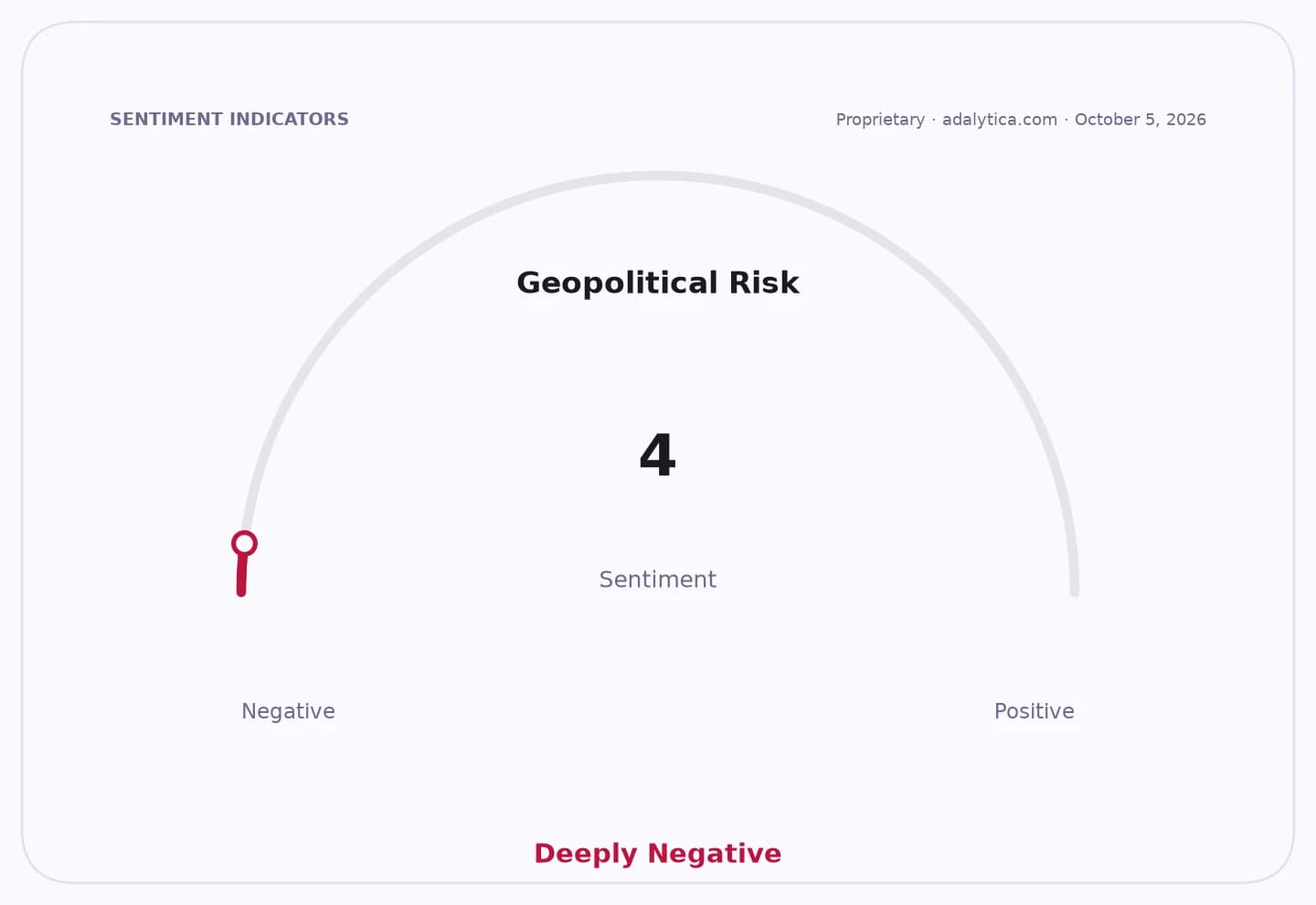
Sentiment IndicatorsⓘProprietary · adalytica.com · October 6, 2026
This is a snapshot — live sentiment, awareness and momentum for 130+ markets update continuously in the dashboard.Open AlphaPulse
According to the account, Elena Bykovskaya fell two months behind on a loan secured by her apartment, with an outstanding balance of about 4.5 million rubles. Banks refused to refinance her debt, but she was then approached by intermediaries who promised a better loan. Instead, she says she signed a 7.2 million-ruble borrowing agreement backed by her flat, with a one-month maturity and a penalty of 0.5% a day for late payment, equivalent to 182.5% a year. Soon after, the same intermediaries arranged a sale of her apartment for 11.6 million rubles, while the paperwork was framed as part of the refinancing process.
The mechanics are what make the case economically consequential. The apparent loan repayment was used to lift the encumbrance on the property, after which the apartment was transferred to a third party and then registered with a new owner. Bykovskaya says she believed the residual cash from the deal — 1.25 million rubles — was simply the remainder of a refinancing transaction. Instead, the family lost control of the home while continuing to make payments to what they thought was a lender. That sequence shows how fraud can exploit the gap between civil law paperwork and criminal intent.
The case also underscores the fragility of the market when mortgage stress is high. Russia’s Finance Ministry has tightened family-mortgage rules from Oct. 1, 2026, even as mortgage rates have risen to as much as 8% at some lenders, according to the context provided. In that environment, borrowers with thin liquidity, weak credit profiles or collateral-backed consumer loans become prime targets for brokers offering “solutions” outside the mainstream banking system. The broader data backdrop — elevated U.S. Treasury yields, firmer inflation and a stressed household debt environment — reinforces a simple point: when financing costs stay high, demand for desperate workarounds rises.
For investors, the immediate read-through is not to mortgage stocks in Russia, but to credit risk more broadly. High-rate environments tend to increase distress, and distress creates room for predatory intermediaries, litigation risk and title disputes. In markets with securitization, servicing or collateral exposure, the consequence is not just higher delinquencies but legal uncertainty around property ownership, recoveries and the enforceability of signed documents.
The story also has implications for lenders and regulators. Banks may face criticism for refusing viable restructurings quickly enough, but the larger lesson is that poor access to safe refinancing channels can drive borrowers into shadow credit. That can worsen eventual losses for lenders and create reputational risk if consumers are funneled toward fraudulent “investment” schemes masquerading as debt relief.
Court outcomes in similar Moscow cases suggest the issue is not isolated. One October 2025 case ended in prison terms and a 24.5 million-ruble damages award after a victim was told to sell a flat while continuing to live in it. Another related case involving the person to whom Bykovskaya gave power of attorney also led to a conviction in 2025. Yet lawyers say many victims still struggle even to get criminal cases opened, highlighting how the combination of notarized contracts, video recordings and formally signed sales agreements can make prosecution and asset recovery difficult.
For investors and policymakers, the key risk is that the same conditions that make refinancing attractive — rising debt service, weak affordability and pressure to preserve cash — are precisely those that fraudsters exploit. If rates stay elevated and households remain under strain, more borrowers may be tempted into transactions that look like rescue financing but end in forced dispossession.
| Entity | Gains | Losses |
|---|---|---|
| Shadow intermediaries | ▲Fees and control | ▼Legal exposure |
| Fraud victims/borrowers | ▲Short-term debt relief hopes | ▼Home ownership |
| Banks/formal lenders | ▲Fewer bad loans on paper | ▼Missed refinancing demand |
| New “buyers”/nominees | ▲Asset transfer opportunities | ▼Criminal and bankruptcy risk |