Snowflake is being punished for a good problem: if its AI tools help customers do more work with less data spend, the company could improve retention and productivity while still risking slower consumption growth, which is what Wall Street ultimately pays for.
Snowflake AI Tools May Slow Consumption Growth
That tension sits at the heart of the Snowflake story and explains why the stock has been so volatile even as the company pushes deeper into AI data services. Snowflake’s model depends on customers consuming more of its platform over time, so any technology that makes workloads cheaper or more efficient can cap near-term revenue growth even if it strengthens the product’s long-term value. In other words, the market is not just pricing AI adoption — it is pricing how much of the efficiency gain Snowflake itself gets to keep.
Sentiment Indicators
The latest price action shows investors still unsure how to handicap that trade-off. Snowflake closed at $254.82 on Nov. 20, well below its 50-day moving average near $318.72, while the RSI sat at 35.2 and the MACD remained negative, signaling the stock is still under technical pressure. The share price is also far below the levels it traded at earlier in the year, when enthusiasm around AI infrastructure sent it sharply higher. That is a reminder that even in a market obsessed with AI, investors are increasingly asking which companies monetize the boom and which merely enable customers to become more efficient.
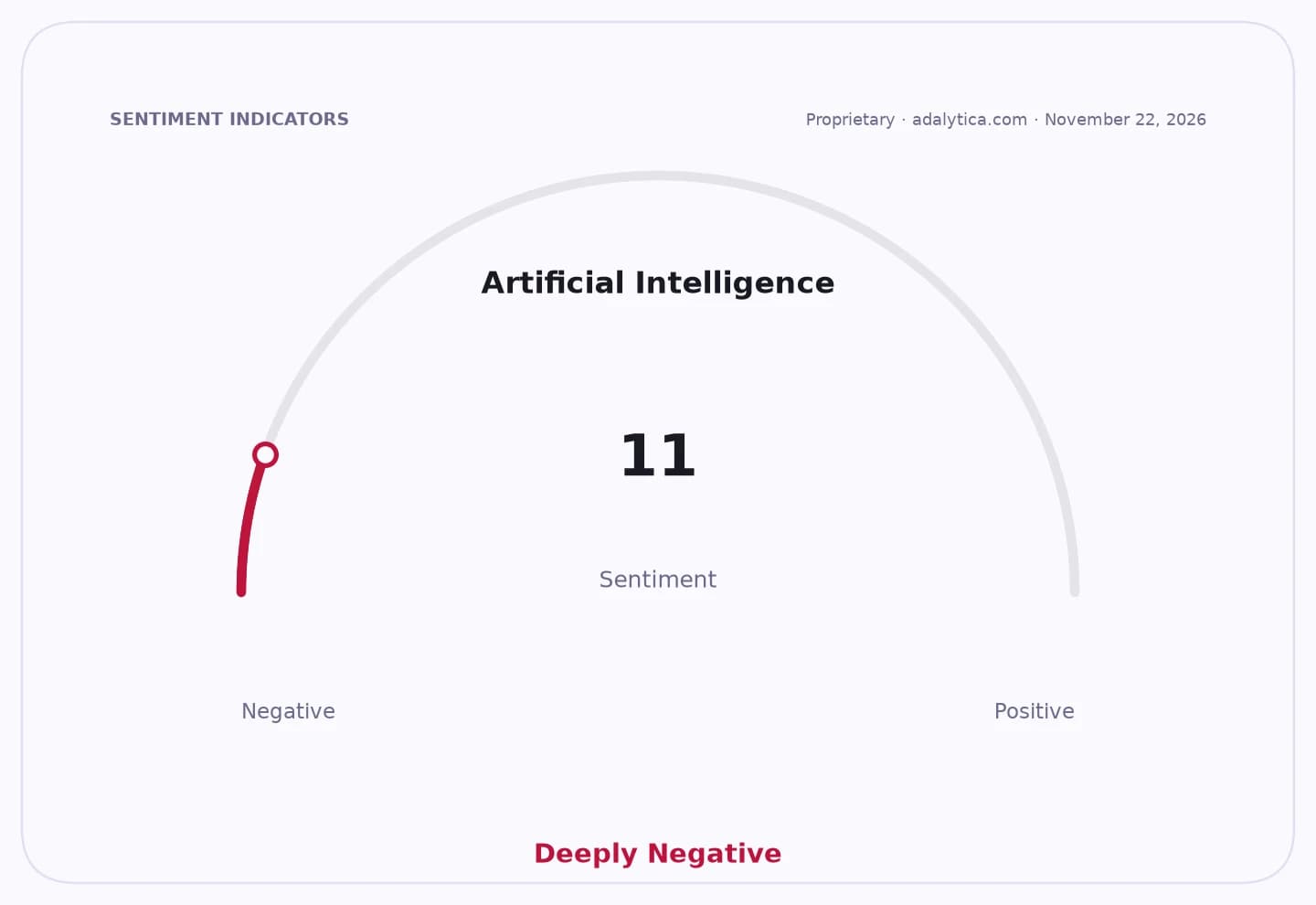
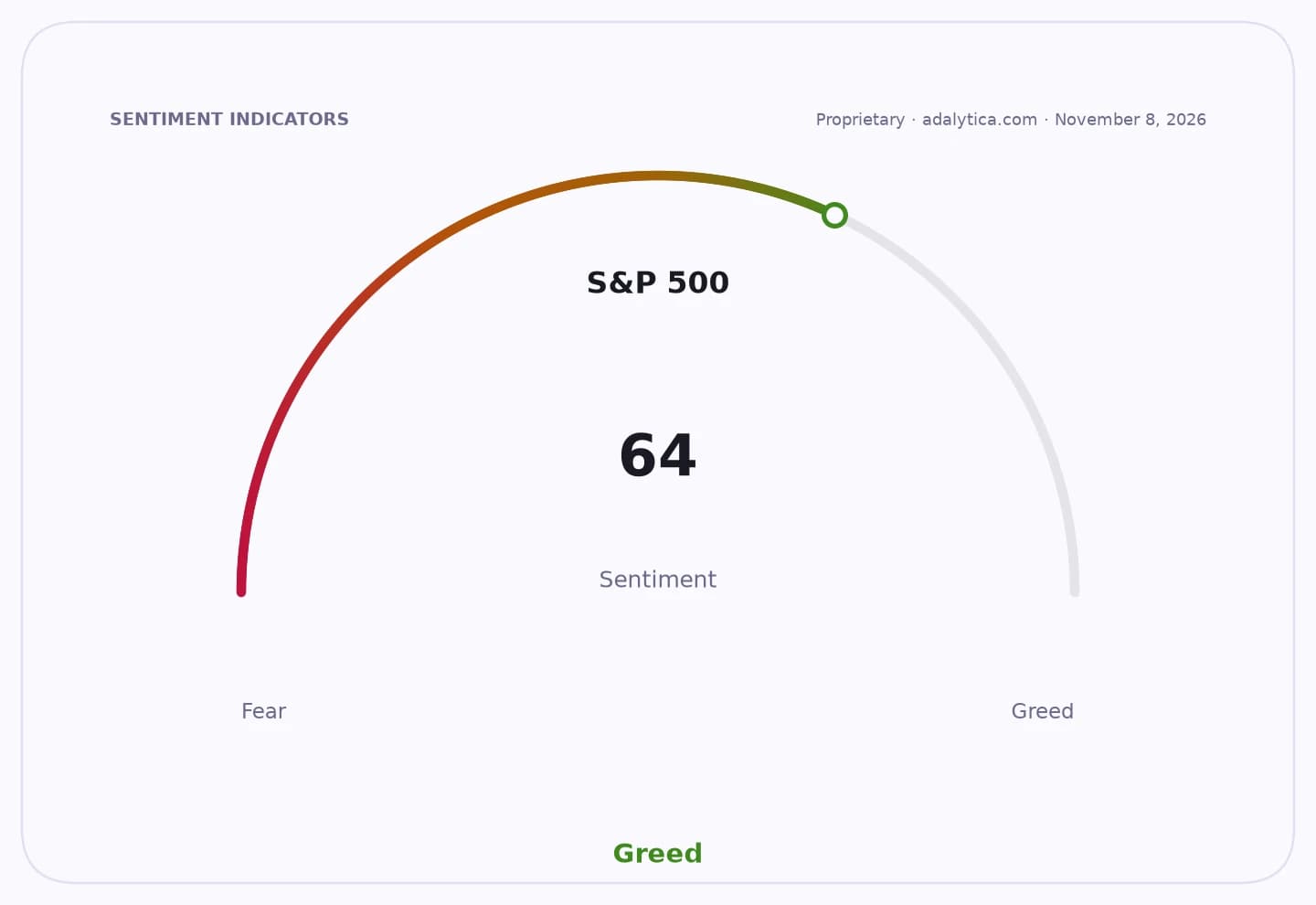
For investors, that distinction matters. Snowflake is not just a software vendor; it is a usage-based consumption story. If AI features like Snowpark, Marketplace and Cortex make enterprises able to process data more efficiently, then customers may need fewer credits to achieve the same outcome. That can improve customer satisfaction and stickiness, but it can also delay the revenue acceleration bulls are counting on. The risk is especially relevant now, with consumer-spending sentiment in Adalytica’s gauge sitting in fear territory and broader S&P 500 trade signals flashing extreme fear, a backdrop that typically rewards companies with visible, defensible monetization rather than abstract AI promise.
The same dynamic is showing up across the software complex. Salesforce, another consumption and workflow giant, has also come under pressure, with its shares recently below both the 50-day and 200-day moving averages. The market is re-rating software names that can prove AI drives higher budgets, not just lower customer costs. Snowflake’s problem is that its best sales pitch may also be its best bear case.
Alibaba’s strong AI cloud growth underscores the upside path if the company can turn AI into a spending engine rather than a savings tool. For Snowflake, that is the bull case investors need to see: AI not as a shrink-ray on usage, but as a reason customers expand into more data-heavy workloads, more governance, more analytics and more enterprise AI applications. Until then, the stock is likely to trade on one question: does AI make Snowflake more indispensable, or simply cheaper to use?
For now, I believe the market is underestimating how powerful Snowflake’s AI platform could be over the next several years, but it is also rational to demand proof that efficiency gains will translate into net-new consumption. That makes Snowflake a high-conviction watchlist name, not a blind buy — and it keeps the real upside in investors’ favor only if management can show AI expands the wallet share, not just the value per dollar spent.
| Entity | Gains | Losses |
|---|---|---|
| Snowflake | ▲Stickier customers, deeper platform use | ▼Near-term consumption growth |
| Customers | ▲Lower data and AI costs | ▼Higher dependence on one platform |
| Salesforce | ▲Validation of enterprise AI demand | ▼Software multiples if AI savings dominate |
| AI cloud leaders | ▲More workloads and adoption | ▼Vendors tied to usage-based spend |