Cognition AI’s talks for at least $2 billion at a potential $75 billion valuation show that capital is still pouring into the most ambitious AI software plays, even as public-market names tied to the boom are under pressure.
Cognition AI Talks for $2B at $75B Valuation
Artificial Intelligence
That matters because the next phase of the AI trade is no longer just about chip demand; it is about whether software agents can turn model advances into recurring enterprise revenue. If Cognition can command a valuation jump from its last disclosed $48 billion Series E just weeks ago — and from $26 billion in May — it would reinforce the market’s belief that autonomous coding tools are becoming a major budget line inside large companies.
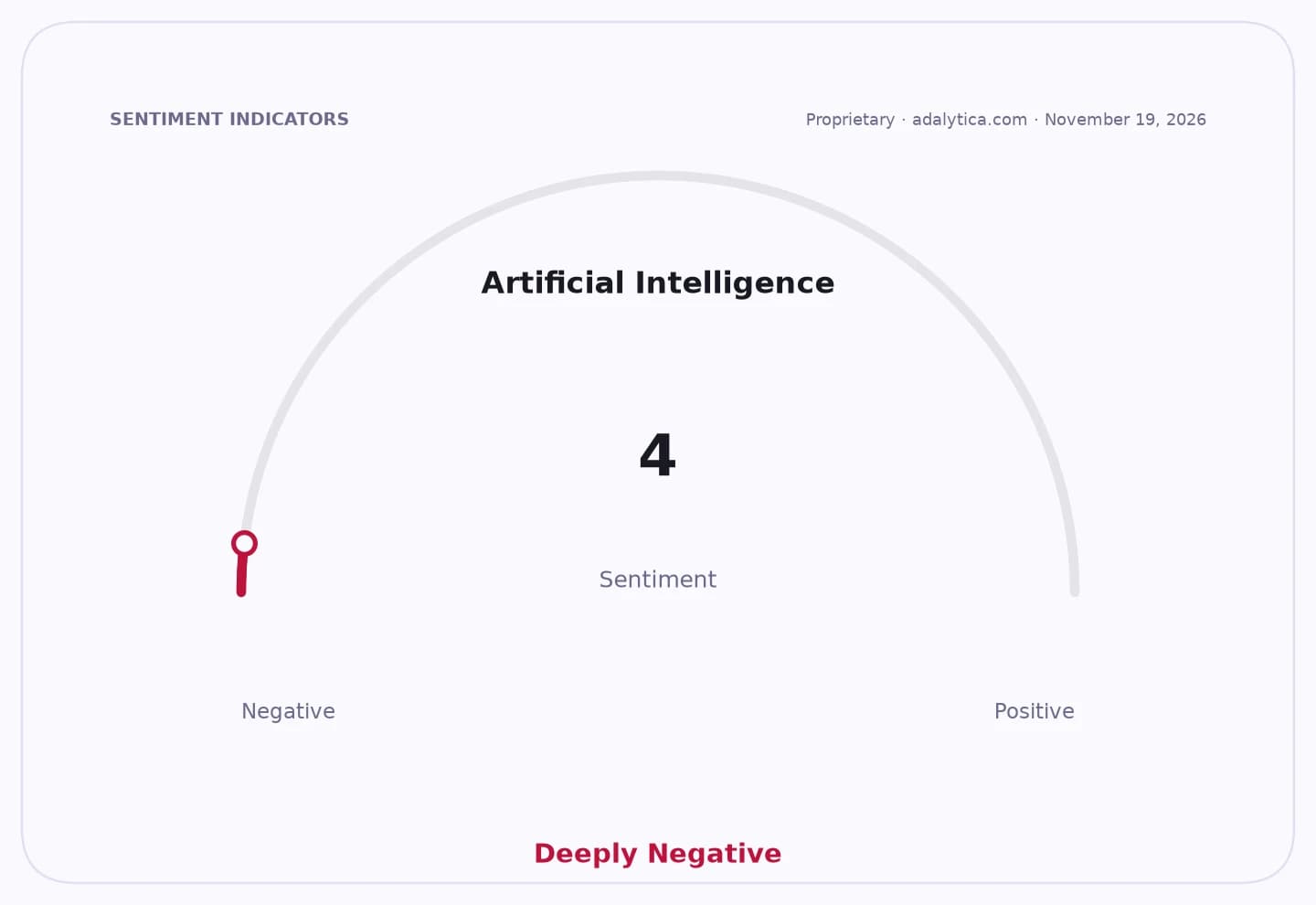
Sentiment Indicators
Artificial Intelligence
Cognition’s Devin product sits squarely in the highest-conviction corner of AI: software that writes, tests and deploys code. The company says engineering teams at NVIDIA, GE Aerospace, Citi, Mercedes-Benz and Modal are already using it, and it has said run-rate revenue climbed from $492 million in May to almost $900 million by Sept. 8. That is not full-year revenue, but it is the kind of growth profile private investors have been willing to price as if the category is still in its hypergrowth phase.
For investors, the bigger story is the capital cascade. A $75 billion mark for Cognition would underscore how aggressively venture and crossover money is chasing AI infrastructure and AI applications with clear enterprise monetization paths. It would also deepen the divide between private-market winners and public-market skeptics, especially in software names that face the threat of agentic tools compressing labor costs and accelerating delivery times.
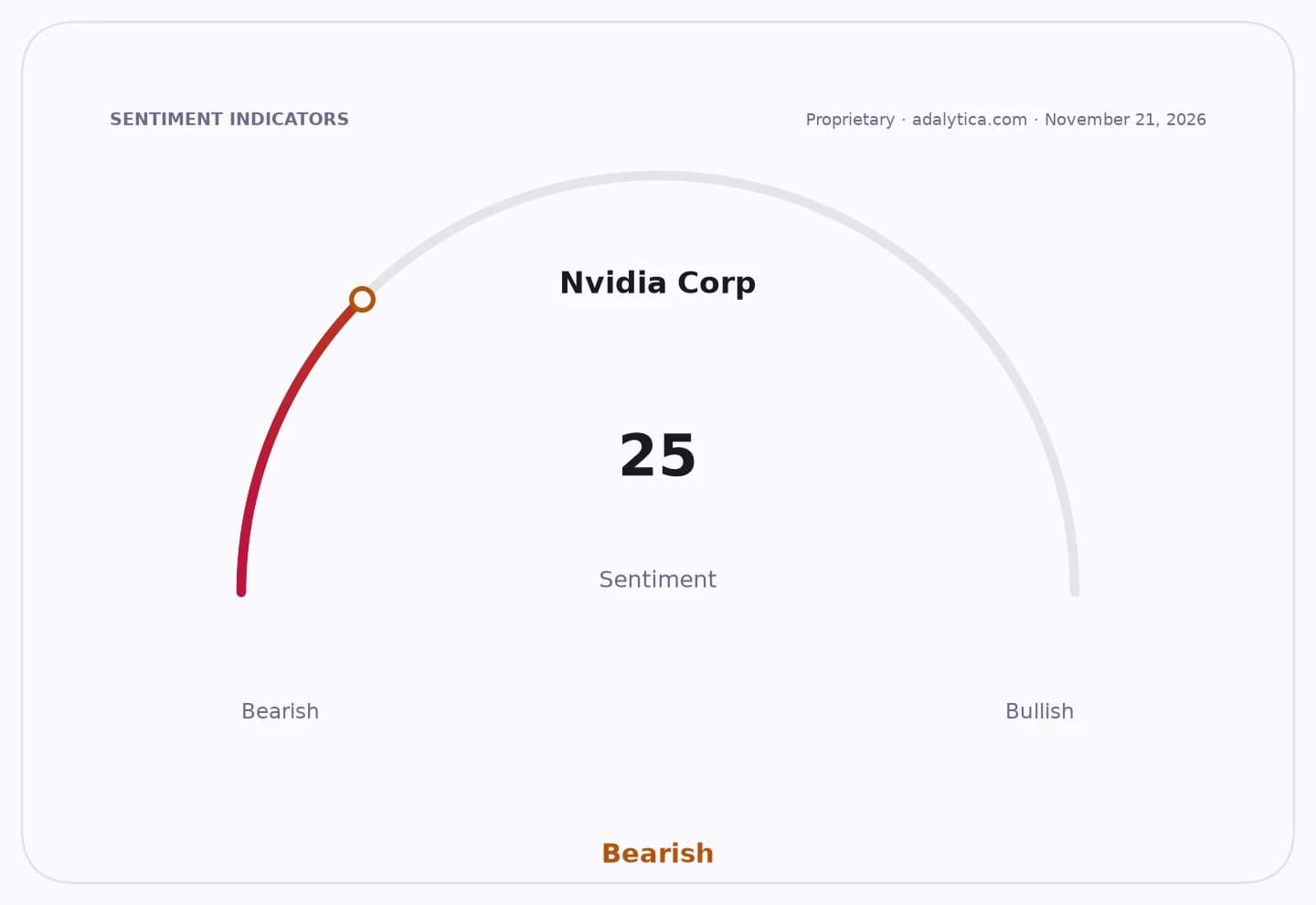
The implication for the broader market is straightforward: AI capex is no longer just about compute, it is about distribution. Nvidia remains the key pick-and-shovels beneficiary as model builders and agent developers keep spending on training and inference, while Microsoft and other platform owners must defend their share of the workflow layer. Microsoft shares have been volatile, and sentiment around the stock has weakened sharply even as the company remains central to enterprise AI adoption.
The market underestimates how quickly this spend can compound. If enterprise adoption keeps broadening and Cognition’s agent lab can combine multiple AI models for software work, the category could become one of the clearest productivity winners in the economy — and one of the hardest to benchmark with old software multiples. For now, the trade is to stay aligned with the arms dealers of the AI boom, not the parts of the market most exposed to disruption.
| Entity | Gains | Losses |
|---|---|---|
| Cognition AI | ▲Higher private valuation | ▼Execution scrutiny |
| Nvidia | ▲More AI infrastructure demand | ▼None directly |
| Microsoft | ▲Copilot/agent ecosystem relevance | ▼Margin pressure from AI competition |
| Legacy software vendors | ▲Faster enterprise automation adoption | ▼Pricing power and labor leverage |