Y Combinator Chief Executive Garry Tan is putting a price tag on the next phase of artificial intelligence: up to $200,000 a year in token spending, a level that underscores how quickly agentic AI is becoming both a productivity tool and a costly operating expense.
Garry Tan Says AI Token Spending Can Reach $200000

Tan’s comments matter because they go beyond novelty. He said AI agents are now reading his email, Dropbox files, Apple Notes and even 20 years of therapy notes, while also helping with coding, research and interview prep. That is a vivid example of how far users are willing to let software penetrate personal and professional workflows once it can anticipate needs rather than simply respond to prompts.
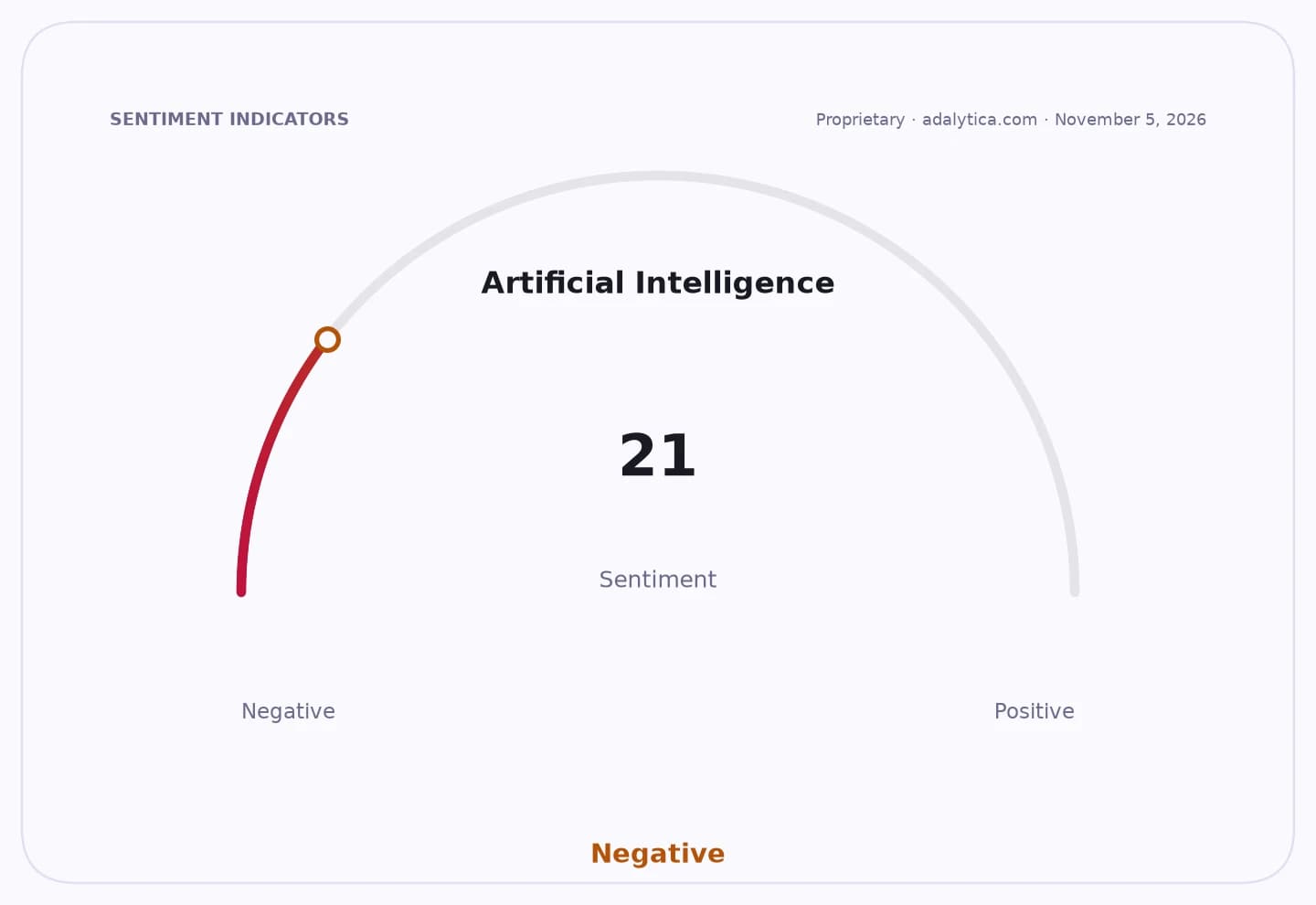
Sentiment Indicators
For investors, the significance is twofold. First, it signals that the AI boom is moving deeper into recurring usage, where the economics depend not just on model quality but on how often people are willing to pay for inference. Second, it highlights the widening gap between heavy users who can absorb the cost and the broader market that still needs cheaper, more efficient products before agents can scale beyond enthusiasts and well-funded companies.
The spending level also feeds into a bigger debate across the technology sector: whether AI demand can justify the massive capital and operating outlays now being poured into the buildout. Tan called his own use of the tools “a crazy privilege,” acknowledging that the price of advanced agents remains a barrier. That candid assessment lands as investors increasingly question how quickly AI spending turns into durable returns, particularly after warnings from rating agencies and market participants about margin pressure from the race to deploy more compute.
At Y Combinator itself, the technology is already reshaping operations. Tan said the accelerator uses an internal agent called Stray Light that pulls from founder data, prior applications and correspondence, which he described as a “company brain.” That is important because YC sits at the center of startup formation; if it is automating institutional memory with AI, many smaller firms will view that as a template for replacing manual workflows with persistent, data-rich assistants.
Still, Tan’s remarks also expose the tensions inside the AI market. The bull case is straightforward: if users are willing to hand over sensitive records and pay materially for persistent agents, the addressable market for enterprise and personal AI expands well beyond chatbots. The bear case is that token economics remain too expensive for mass adoption, and the companies supplying the models will face pressure to cut prices even as infrastructure costs stay elevated.
That tension is why the story matters economically. AI is no longer only a capex race among hyperscalers; it is becoming an operating-cost story for end users. The next phase will be judged less by flashy demos than by whether agents can become cheap enough, safe enough and reliable enough to justify spending at scale.
| Entity | Gains | Losses |
|---|---|---|
| AI model providers | ▲Higher token demand | ▼Price pressure from scale |
| Heavy AI users | ▲Productivity gains | ▼Rising operating costs |
| YC and startups using agents | ▲Faster workflows | ▼Privacy and governance risk |
| Consumers needing low-cost AI | ▲Better future tools | ▼High current access barriers |