Franklin Templeton’s push to find opportunities in AI beneficiaries lands just as the market is punishing the sector’s most visible winner, Nvidia, in a selloff that has erased about a third of its value in three trading sessions and spilled into broader large-cap tech.
Nvidia Selloff Shifts Focus to AI Beneficiaries
That matters because the AI trade is moving from a simple “own the hardware leader” narrative toward a more selective phase in which investors are asking which companies can keep monetizing AI spend as enthusiasm cools and valuations reset. The rotation is important for asset managers, because it tends to reward businesses with clearer earnings power and punish crowded names whose prices had already discounted years of growth.
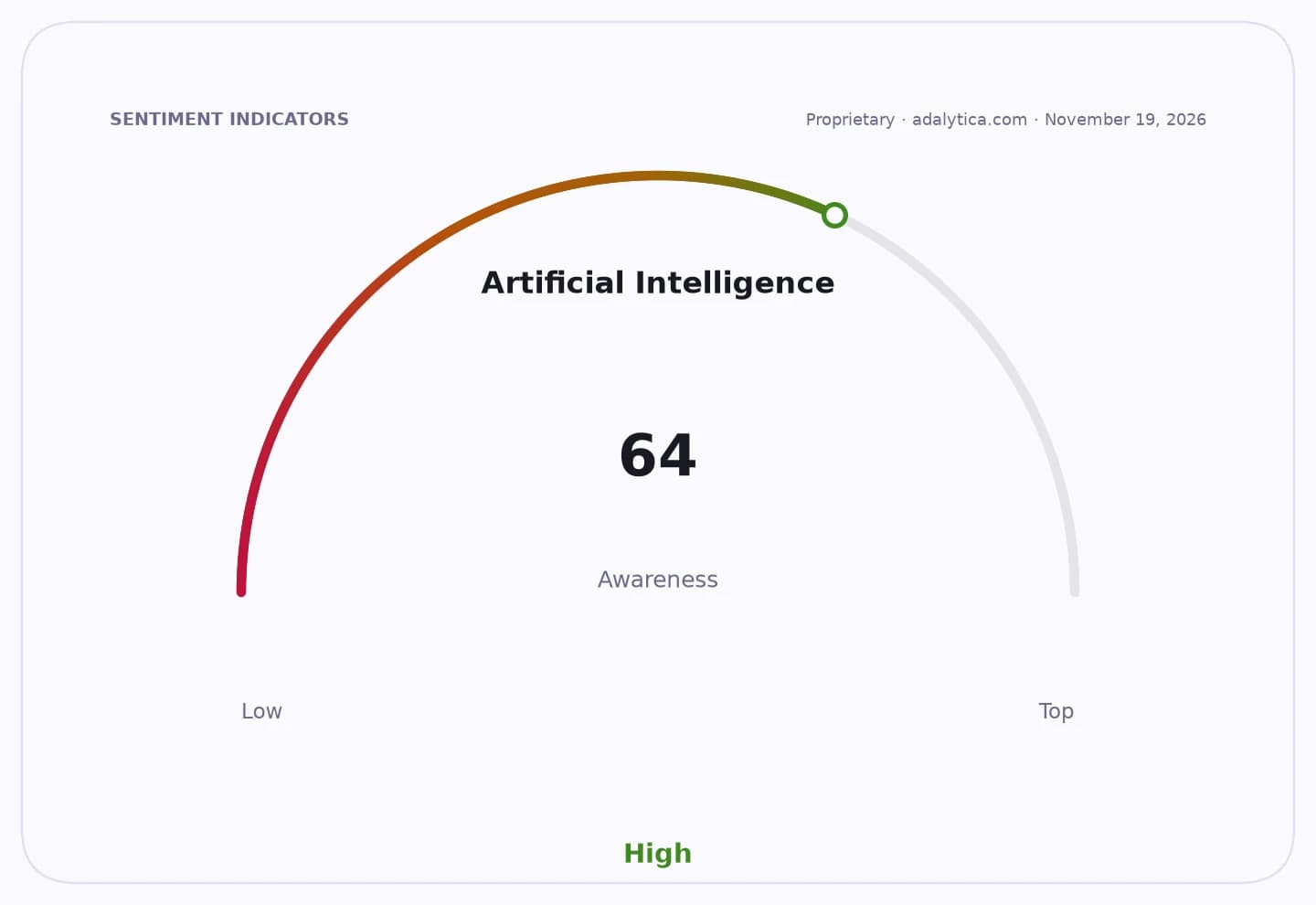
Sentiment Indicators

Nvidia closed at $125.53 on Friday, down from $181.60 on Wednesday and far below its 50-day moving average of $207.00, according to the price data. The stock’s relative strength index has fallen to 13.7, a level that typically indicates deeply oversold conditions, while the MACD remains sharply negative. Trading volume surged to 626 million shares, underscoring the scale of the unwind.
The decline has not been limited to Nvidia. Microsoft fell to $484.52 from $554.73 earlier in the month, while Alphabet slid to $265.29 from $288.93 in early November. The weakness suggests investors are reassessing the second-order beneficiaries of the AI boom alongside the chipmakers that powered the first leg of the rally.
Artificial Intelligence vs NVDAadalytica.com
Explore this data interactively — full history, time series and cross-market comparisons.
That leaves Franklin Templeton and other active managers with a window to argue that the real opportunity may sit in companies supplying infrastructure, software and services that capture AI demand without carrying the same level of valuation risk as the marquee names. In practical terms, that could include cloud platforms, enterprise software, data tools and firms tied to AI deployment, compliance and governance.
The backdrop is still constructive for the sector over the medium term. AI-related spending is broadening into healthcare, social care and assurance services, while fresh funding continues to flow to startups building around regulation and responsible deployment. But the market’s message is that growth alone is no longer enough; investors are demanding evidence of durable margins, lower execution risk and faster payback.
For Nvidia, the question is whether the current slide is a pause in a longer uptrend or the start of a deeper repricing after an extraordinary run. For AI beneficiaries more broadly, the test will be whether they can convert AI adoption into recurring revenue fast enough to justify renewed capital inflows. As Franklin Templeton sees it, that is where the next opportunity may lie.
| Entity | Gains | Losses |
|---|---|---|
| Franklin Templeton | ▲Selective AI stock picks | ▼Broad index-style exposure |
| AI beneficiaries | ▲Infrastructure and software demand | ▼Simple chip-only trade |
| Nvidia | ▲Potential oversold rebound | ▼Momentum and valuation support |
| Microsoft and Alphabet | ▲AI monetization narrative | ▼Near-term share-price confidence |