Nvidia’s move toward a more “disciplined and selective” approach to AI investments matters less as a portfolio strategy than as a signal that the AI boom is entering a second phase: one in which access to chips, capital and ecosystem support may become harder to take for granted.
Nvidia Shares Fall as AI Investment Screen Tightens

For startups building voice models, foundation tools and agent software, that could change the economics of growth. Nvidia has been one of the industry’s most important enablers, not only selling the GPUs that power model training and inference but also backing parts of the software stack and the broader developer ecosystem. A tighter screening of bets would likely favor companies with clearer monetization, stronger technical differentiation and nearer-term commercial paths, while leaving weaker or more speculative ventures with less access to strategic capital and potentially less visibility in the Nvidia orbit.
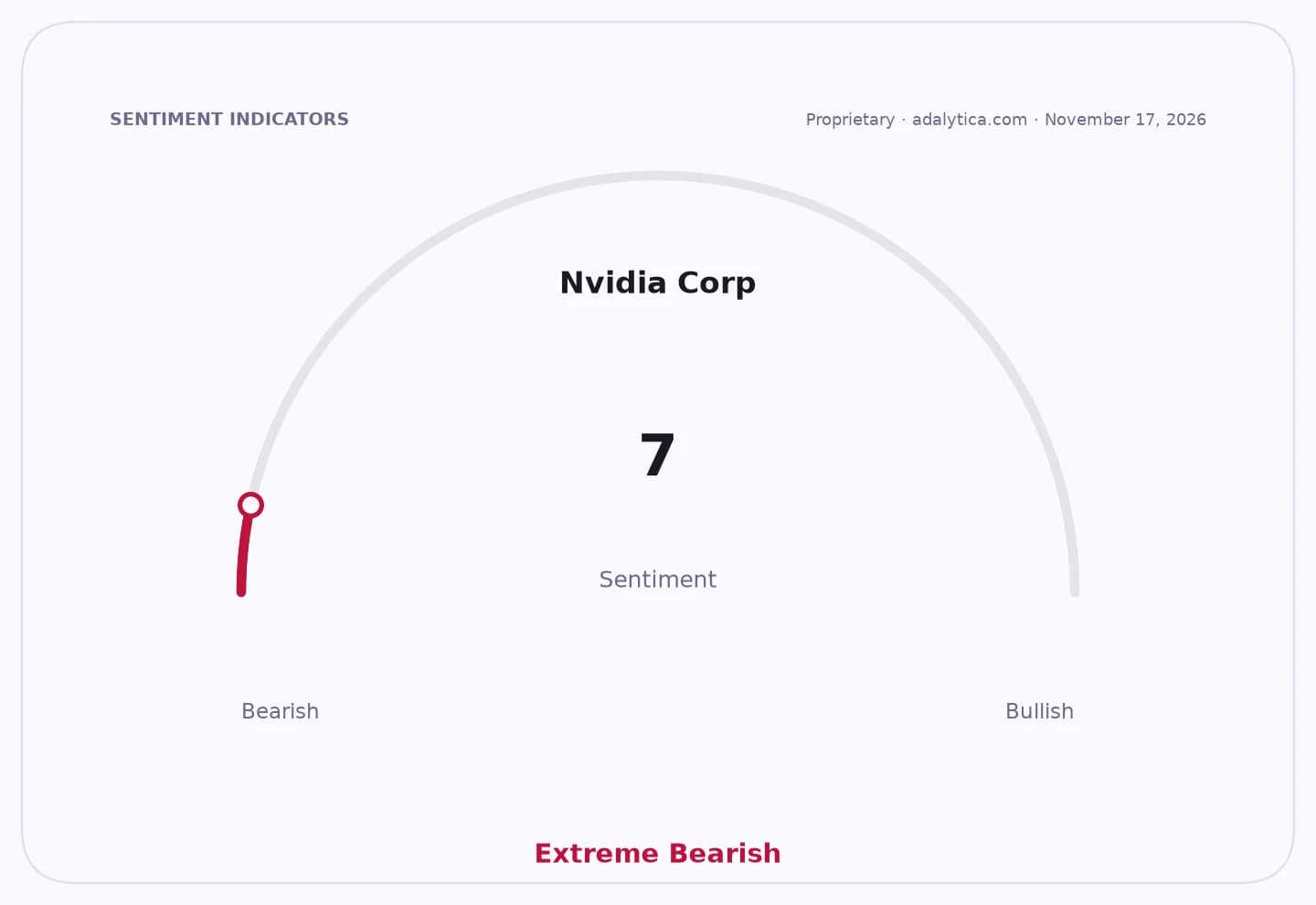
Sentiment Indicators
The market backdrop underscores how quickly sentiment around AI can swing. Nvidia’s shares have fallen to $150.96 from $235.20 in mid-May, a drop of about 36%, with the stock now trading well below its 50-day moving average of $210.3 and its 200-day average of $203.45. The relative strength index at 15.8 suggests the shares are deeply oversold, while the MACD remains sharply negative. Adalytica’s NVIDIA earnings sentiment gauge is also at 18, or “Fear,” even as awareness stays elevated at 89, reflecting a market that is still intensely focused on the company but far less confident in the near-term setup.
That matters because Nvidia is no longer just a semiconductor vendor; it is an allocator of scarce AI infrastructure and, increasingly, a gatekeeper in an ecosystem where capital intensity is rising. The AI startup market is already consolidating, as shown by ElevenLabs’ planned acquisition of Kotoba in a deal exceeding $100 million to expand multilingual voice capabilities and deepen its Japanese presence. The rationale is clear: as legal, product and distribution hurdles rise, startups need scale and defensible use cases. A more selective Nvidia would reinforce that sorting process by rewarding the firms most likely to become durable customers or strategic partners.
The question for investors is whether this marks discipline or retrenchment. The bull case is that Nvidia is protecting returns by concentrating on the best opportunities, which could improve capital efficiency and reduce the risk of funding marginal projects during an overheated cycle. The bear case is that a narrower engagement model could slow experimentation across the AI stack and weaken the broad ecosystem that helped Nvidia dominate the first wave of model training demand.
For now, the signal from the market is that investors are pricing in more selectivity, more competition and less forgiveness for weaker AI business models. If Nvidia is becoming choosier, startups will need more than GPU access and AI branding to win capital, customers and long-term relevance.
| Entity | Gains | Losses |
|---|---|---|
| Nvidia | ▲Higher capital discipline | ▼Broader startup exposure |
| AI startups with clear revenue paths | ▲Better access to strategic support | ▼Less-funded speculative peers |
| Early-stage AI ventures | ▲More ecosystem focus on winners | ▼Easier capital, looser backing |
| Investors in durable AI platforms | ▲Stronger differentiation | ▼Smaller, weaker AI startups |