The AI buildout is entering the stage investors have been waiting for: not just faster demand, but a fight over who will pay for the power, data centers and chips needed to keep it going. That matters because the winners of the AI race will increasingly be determined by balance-sheet strength, access to electricity and the ability to turn capex into durable cash flow, not just by model performance or branding.
Nvidia, Microsoft, Amazon Face AI Capex Shift
The market is still pricing AI like an open-ended growth story, but the economics are becoming more ruthless. The European Central Bank has warned that overvalued AI investments, rising public debt and geopolitical tensions could threaten financial stability, a reminder that the boom is now large enough to matter beyond tech earnings. When policymakers start talking about systemic risk, it usually means the capital cycle is getting too big to ignore.
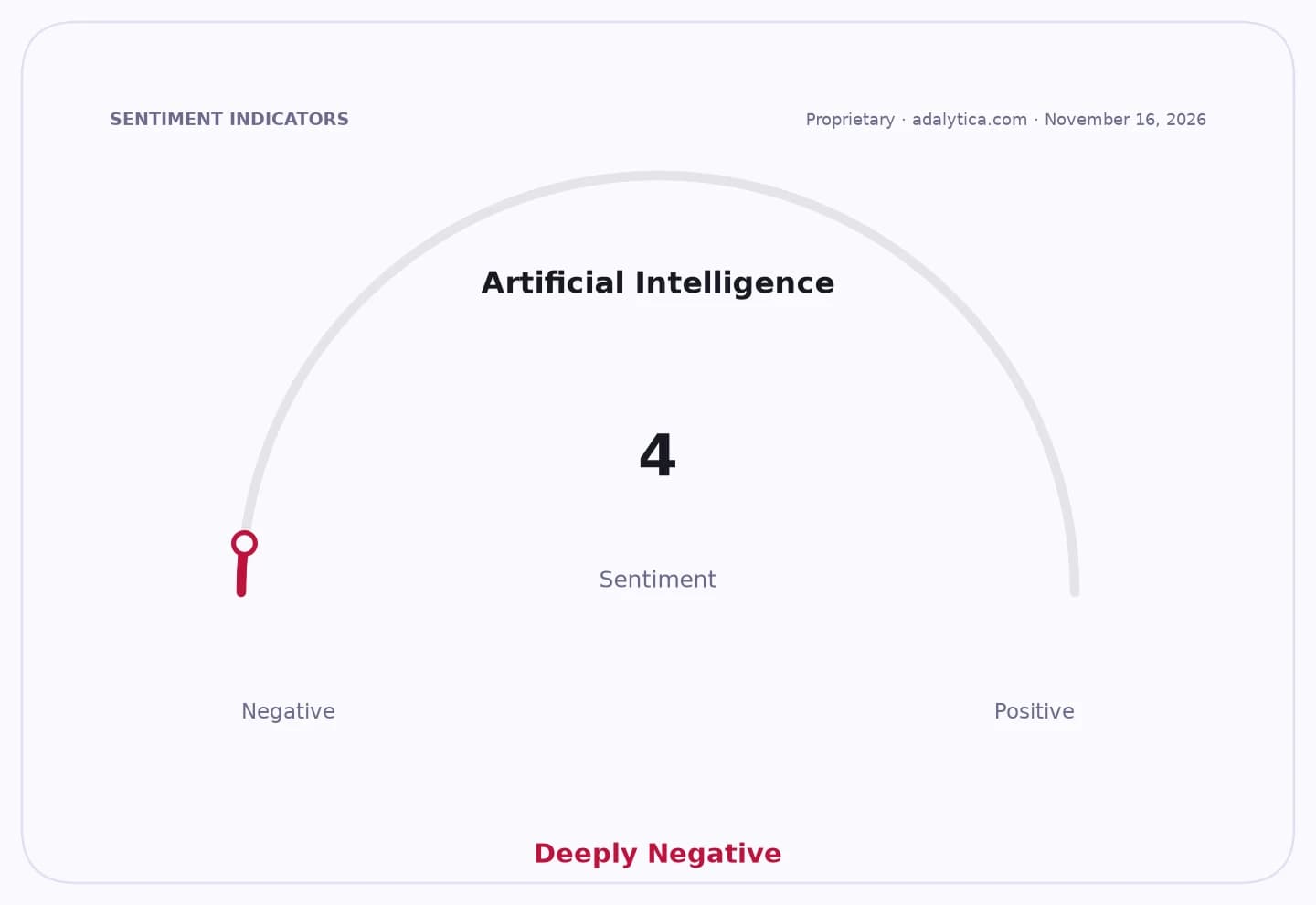
Sentiment Indicators
Artificial Intelligence
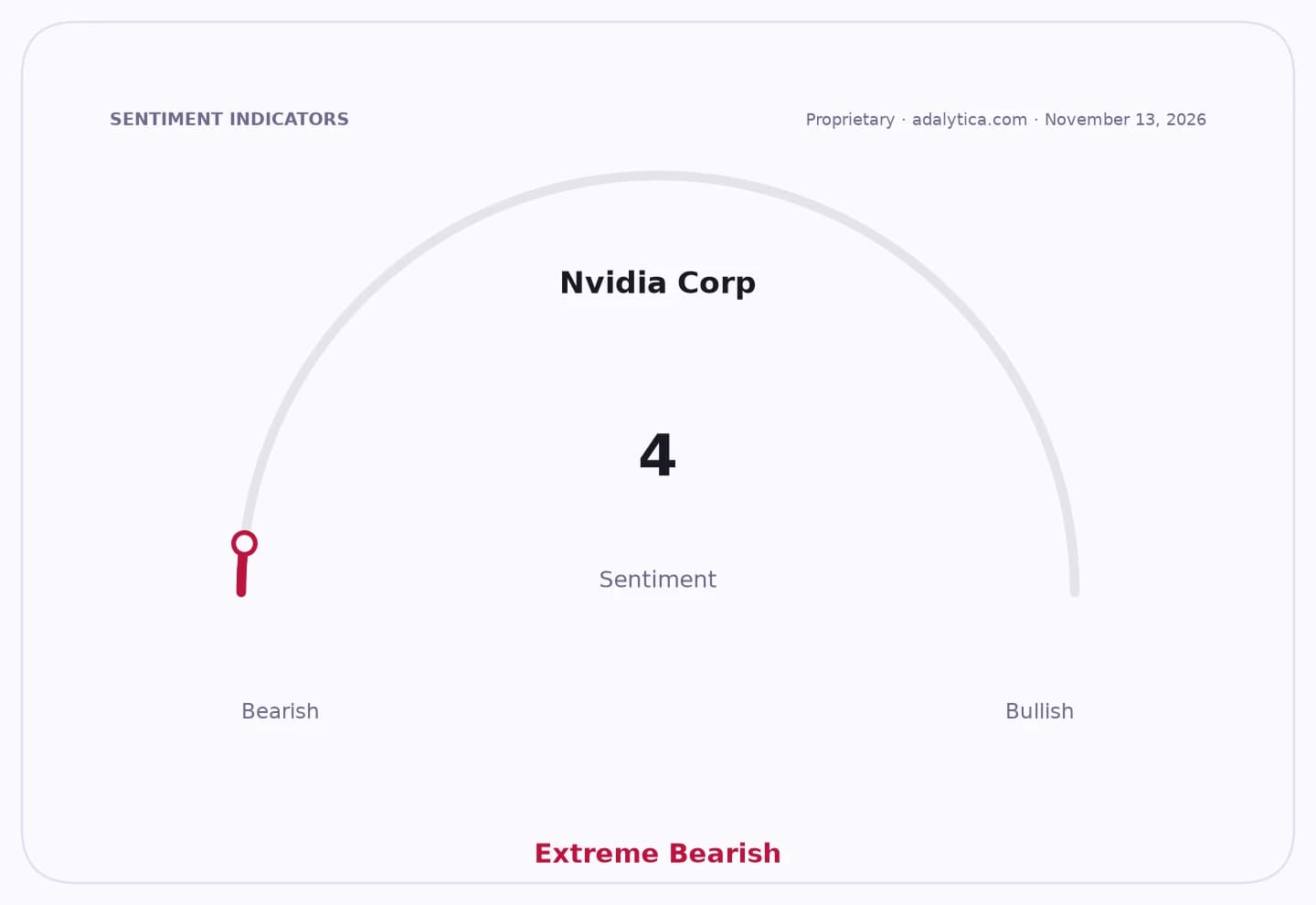
That shift helps explain why the biggest AI names are already moving in different directions. Nvidia, the clearest barometer of the compute trade, has been punished hard despite its central role in the buildout. Its shares closed at $155.46 on Nov. 17, down from above $227 in late August, while conventional technical indicators show the stock deeply oversold, with a 14-day RSI of 16.3 and price far below its 50-day moving average of $211.75. Sentiment around the stock, tracked by Adalytica.com, shows “Extreme Fear” even as awareness remains “Extreme Greed,” a classic sign that the crowd still knows Nvidia matters, but is suddenly questioning how much upside is left after a massive run.
Microsoft and Amazon tell a more nuanced version of the same story. Microsoft, which has spent aggressively to secure cloud and AI capacity, closed at $506.24 on Nov. 17, below its 50-day moving average of $519.61, after sliding from a recent peak above $555. The stock’s 42.1 RSI suggests the market has cooled on the near-term pace of returns from that spending. Amazon, by contrast, has held up better, ending at $257.89 and sitting close to its 50-day average, a sign investors still view AWS and its infrastructure buildout as one of the cleaner ways to monetize AI demand over time.
The real investment issue is not whether AI spending slows. It is who can keep spending while preserving returns. In that framework, the companies with the strongest access to cash, energy supply, cloud distribution and developer ecosystems should keep compounding, while pure hardware beneficiaries may face more volatile pricing if the market starts demanding proof that each wave of capex translates into durable earnings power.
That is why the next leg of the AI trade may be less about chasing the fastest-rising stock and more about owning the toll roads of the buildout: cloud platforms, chip designers, data-center enablers and grid-linked suppliers. The market underestimates how quickly the AI power scramble can become a bottleneck — and a sorting mechanism. Investors looking for the highest-conviction opportunity should focus on the companies that control infrastructure, not just the names that sell the picks and shovels.
| Entity | Gains | Losses |
|---|---|---|
| Amazon | ▲AWS AI demand | ▼Higher capex burden |
| Microsoft | ▲Azure scale advantage | ▼Margin pressure from spending |
| Nvidia | ▲Chip demand remains intense | ▼Valuation resets and volatility |
| Electric grid / data-center suppliers | ▲More power and buildout spending | ▼Capacity constraints if investment stalls |