Worries about an AI bubble are real, but the bigger investing edge may be resisting the urge to react to every swing in Nvidia, Microsoft and the rest of the megacap tech complex.
Nvidia and Microsoft Face AI Bubble Concerns
That is the core message for investors as AI stocks remain the market’s dominant force. Tech and AI-related companies now account for about 45% of the S&P 500, while Goldman Sachs estimates roughly half of next year’s expected S&P 500 earnings growth is tied to AI-driven capital spending such as data-center construction. That concentration is exactly what unnerves bears — and exactly why selling on fear can be a costly mistake.
Sentiment Indicators
The market is not just trading a few hot names. It is trading a capital cycle. Nvidia, the clearest symbol of the AI boom, has been swinging violently: after touching $235.20 in May, it has slid to $186.64, with its relative strength index deep in oversold territory and its price below the 50-day moving average. Microsoft has also given back some of its gains after a run that pushed it above $555, though it still sits far above its 200-day average. Even C3.ai, a more speculative AI name, has been chopped around near $11.69 after a year of extreme volatility.
That kind of action is enough to shake confidence, especially when some analysts warn that hundreds of billions of dollars in semiconductor, memory and data-center spending may not earn an adequate return. The market has already shown it can punish excess enthusiasm. Recent AI-related selloffs have erased trillions in market value across technology shares and reminded investors how fast a crowded trade can unwind.
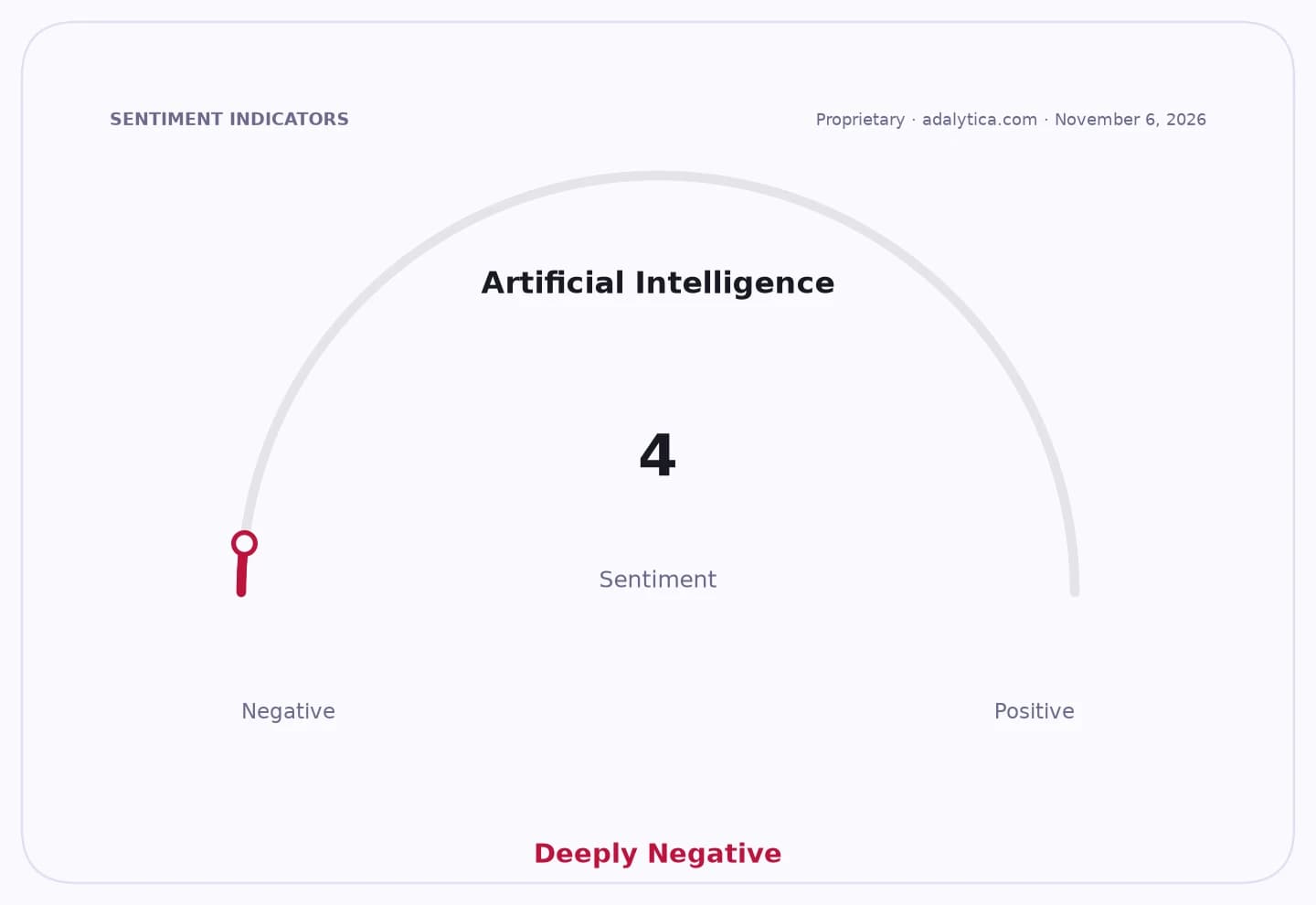
Artificial Intelligence — 30-day sentimentadalytica.com
Explore this data interactively — full history, time series and cross-market comparisons.
But the strategic mistake is assuming investors can reliably time the end of the AI cycle. They usually cannot. What looks overdone today can stay overdone, or become even more expensive, if earnings keep surprising and capital spending keeps cascading through the ecosystem. The same hyperscalers now under scrutiny could still drive another leg of profit growth if demand for compute, cloud infrastructure and power keeps expanding.
That is why “do nothing” is not complacency; it is discipline. For long-term investors, the best response to an uncertain AI backdrop is often to stay diversified and stay invested rather than try to outguess the next drawdown. A broad S&P 500 fund still gives exposure to the AI winners while diluting the risk that any one valuation breaks the thesis.
The real opportunity, in my view, is not to chase every dip in the hottest names, but to own the infrastructure behind the buildout and let time do the work. The AI trade is increasingly a capex supercycle, and supercycles are rarely won by the most anxious traders. They are won by investors who can hold through volatility, collect the gains from the next wave of spending, and avoid turning temporary fear into permanent underperformance.
If you are already positioned, the highest-conviction move may be patience. If you are not, use weakness to build exposure gradually rather than trying to call the top. In this market, the biggest mistake may be thinking you need to do something right now.
| Entity | Gains | Losses |
|---|---|---|
| Long-term diversified investors | ▲Stay exposed to AI upside | ▼Avoid mistimed exits |
| Nvidia and megacap AI leaders | ▲Capital stays in the trade | ▼Valuation froth gets hit |
| Data-center and AI infrastructure suppliers | ▲Continued capex tailwind | ▼Slower spending cycle |
| Market timers / concentrated shorts | ▲Limited certainty | ▼Risk being too early |